 |
|
|
|
|
|
|
|
|
|
|
|
|
|
|
|
|
|
|
|
|
|
|
|
|
|
|
|
|
|
|
|
|
|
|
|
|
|
|
Back Problems |
|
|
|
I now have a bad back with two herniated discs and degenerative disc disease and have to be careful so that my back will not go out again. My back has gone out on me four or five times in the past three years. |
|
 |
|
| Herniated Disc |
|
|
|
What is a herniated disc? |
|
|
|
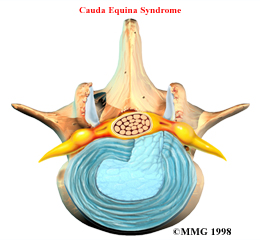
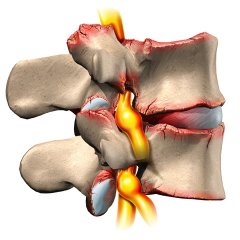
A herniated disc is the most common cause of severe back pain. The pain can be excruitiating and every movement can make it worse. What has happened is the soft, gelatinous central portion of two of the discs, in the lumbar (from the bottom of the thoracic spine to the top of the pelvis) area of my back, have swollen and been forced through a weakened part of the tough outer membrane of my discs and are protruding through the outer casing into the area outside of my vertebrae, but are not pressing against a nerve root enough to be treated. |
|
|
|
| Who gets herniated discs? |
|
|
|
|
| The majority of disc injuries occur in the lumbar region of the lower back. As you become older, disc bulging and protrusion is very common and in most cases does not cause any back pain. Herniated discs are most common in med under 50. |
|
|
| Some great sites for information on herniated discs are: |
|
|
| Hearniated Discs |
|
 |
|
| Degenerative Disc Disease |
|
| What is Degenerative Disc Disease? |
|
| Degenerative disc disease is a change in the condition of the discs, such as low-grade inflammation and irritation, as a natural result of aging contributing to a gradual loss of flexibility as we grow older. Disc degeneration is far more serious in some people than it is in others. |
|
|
| For more information on degenerative disc disease see the following site: |
|
| Patient's Guide to Degenerative Disc Disease |
|
|
Spondylolisthesis |
|
 |
|
|
|
|
I also may have or may get a condition called spondylolisthesis. |
|
|
|
What is Spondylolisthesis? |
|
|
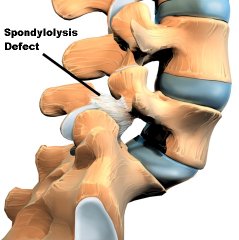
| This is a condition where one vertebra has slipped forward on the vertebra below it. This normally occurs in the lumbar vetebra. This most often affects the level between the fifth lumbar vertebra and the first sacral vertebra. This may occur as the result of a congenital defect in the fifth lumbar vertebra. This can lead to having to have the back fused. |
|
|
|
| A good site for information on spondylolisthesis is: |
|
| A Patient's Guide to Understanding Spondylolysis & Spondylolisthesis |
|
| A Patient's Guide to Spondylolysis/Spondylolisthesis |
|
 |
|
Spinal Stenosis |
|
|
| What is Spinal Stenosis? |
|
|
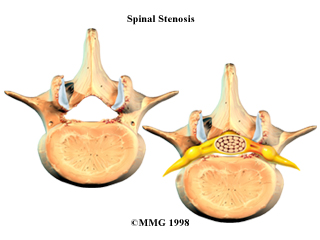
Spinal stenosis is a term used to describe a narrowing of the spinal canal. It is more common in people over the age of 60. It can occur in younger people who have abnormally small spinal canals as a type of birth defect. The problem usually causes back pain and leg pain that comes and goes with activities such as walking.
Spinal stenosis usually occurs in older people after years of wear and tear, or degeneration of the spine. This causes all of the nerves within the spinal canal to become inflamed, and fail to work properly. One problem that occurs when the tube is too small is that the nerves cannot get enough blood supply to work propery. One of the symptoms this may cause is numbness which can invovle both of the legs. The numbness may become worse with activities, such as walking. |
|
|
|
|
| A good site for information on Spinal Stenosis is: |
|
| Spinal Stenosis |
|
|
| A Patient's Guide to Lumbar Spinal Stenosis |
|
| My experience with all of these back conditions |
|
The doctors won't do surgery on my back right now because of my age and weight. I just have to watch what I do and do stretching exercises to try to help with the pain.
Back problems run in my family, where my dad has had over 15 back surgeries, including a fusion, and my mom has had over 5 surgeries. My dad's brother has done some reasearch and found that the Cherokee indians have a higher risk of having back problems. My dad's grandmother was Cherokee. |
|
|
| A good site for information on low back pain is: |
|
| A Patient's Guide to Low Back Pain |
|
|
|
Page 3 |
|