 |
 |
| Chemistry of steam engines |
| People behind the steam engine: The first steam engine was invented in 1698 by Thomas Savery, the engine was based on Denis Papins pressure cooker, Thomas invented this machine so he could pump water out of coal mines quikly. The machine consisted of a closed vessel filled with water, then steam under pressure was introduced, this forced the water upward and out of the mine shaft, a cold sprinkler was used to condense the steam , this created a vacuum to suck out the remaining water in the shaft. Later a english blacksmith named Thomas Newcomen in the year 1712 invented the atmosheric stem engine, a improvement over Savery's idea. Newcome's engine pumped steam into a cylinder , the steam was condensed by cold water which created on the inside of the cylinder, and created a vacuum which moved the cylinder downward. This invention was used to also pump water out of mine shafts, but this engine was improved from Savery's engine because the the intensity of the pressure was not limited by the pressure of the steam. This invention was one of the most important one's of the 1700's. In 1769, James Watt made many improvements to the steam engine most notable was the separate condenser connected to a cylinder by a valve. This improvement made the condenser cool as the cylinder was hot , soon this design was dominent. |
| How steam engines work: Steam engines are a devise that converts potential energy that exist as pressure in steam to mechanical force, a early example of this devise were trains. Steam engines are basically a 2 step set up. The first step is the boiler. |
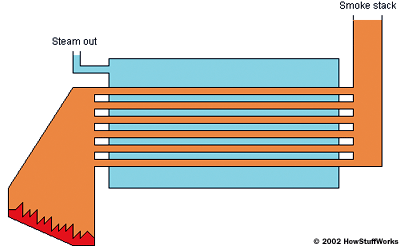
| As you can see this is a fire tube boiler most commonly used in the 1800's. this set up consisted of a tank of water and pipes. How the boiler works is that hot gases from the burning coal run through the pipes , which are submerged ina tank of water, the heat creates the steam from the water and out through the steam pipe. |
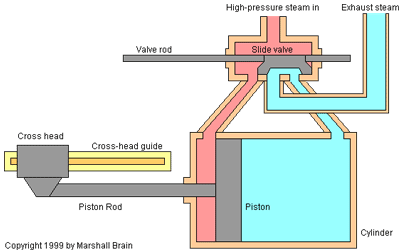
| The second step of the process is the engine, as the steam comes through the pipe and into the chamber above the piston and dependind on the slide valve , the slide valve is incharge of either letting the steam on either side of the piston, the valve is connected to the valve rod which is connected to the cross head. the piston is connected to the wheels of the train, so when the piston is under pressure it will pull the piston rod which moves the wheel forward as the wheel moves forward it pulls the crosshead back which also pulls the valve rod and slide valve so when the wheels are on the opposite side and the piston moves forward the slide valve open the exhaust pipe and the piston pushes out the steam exhaust , by that time the steam pressure is built back up so when the wheel is back in the right position the crosshead move back and that moves the slide valve back so it lets in the pressure and pushes the piston which pushes the wheels around and the cycle continues over and over again. This is why you here the chooo-chooo because the steam exhaust is being released. |
| Effiecientcies and inefficientcies of steam engines in trains: The greatest efficiencies of the steam engine train was that it was very clean, so not much pollution was let into the air, also they were extremely powerful for moving many different things. The greatest inefficiencies of the steam engine in trains were that the amount of heat created by the coal burning to the steam created were a bad ratio, more heat was lost than the amount of steam the heat created so it took alot of coal to burn to create steam. Also the extreme pressure created in the engine was very dangerous if anything went wrong a explosion will occur and will be deadly. |
| Facts about steam engines: Without the use of these engines nuclear energy could not be harnessed for useful work, because a nuclear reactor does not directly generate either mechanical or electrical power, the reactor does nothing except get hot, the steam engine converts that heat into useful energy. |