 |
|
|
|
|
|
|
|
|
|
|
|
|
|
|
|
|
|
|
|
|
|
|
|
|
|
Stingless Bees |
|
|
|
Before hybridized African/ European bees escaped from a test site near Sao Paulo in Brazil nearly fifty years ago, the only native or naturalized social bees were, to my understanding, a large family of stingless bees or, that is to say, without the ability to use the underdeveloped egg-laying device that all worker bees (immature females) are born with as a barbed defencive tool. These bees still exist all over South and Central America, do produce honey, and are captured by beekeepers and placed in beehives, albeit very different beehives than those used for traditional European beekeeping. Where we live, these bees are still very much available for capture and placement in hives, but only at the lower, more tropical altitudes. We are only now beginning to work with stingless bees, although many beekeepers in other parts of Bolivia, including an MCCer in the Department of Chuquisaca, are in full honey production.There is a lotof information on stingless bees on the internet, Look up Bee World's March 2004 article at www.ibra.org.uk |
|
|
|
 |
|
 |
|
|
|
|
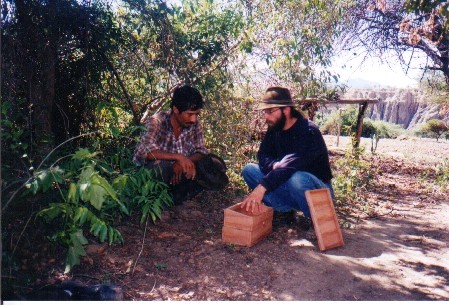
After a conversation with a beekeeper who has several hives of stingless bees, we were able to build several models using his specifications and give them out as test models in a couple communities. The whole concept requires a bit of explanation but stingless bees, though still aggressive and willing to bite, are much easier to work with than africanized bees. |
|
|
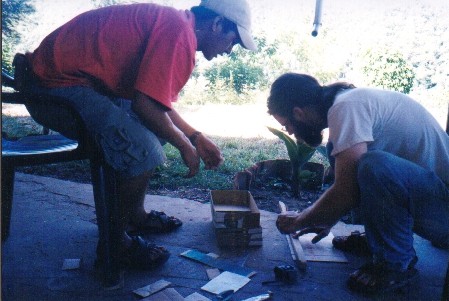
Here I am with a fellow MCCer as we build a cardboard model of a heehive for stingless bees. My coworker now has at least five different hives of one type of stingless bee: la se�orita melipona trigona (tetragonisca) angustula. |
|
|
|
|
|
 |
|
|
|
|
|
|
 |
|
|
|
|
|
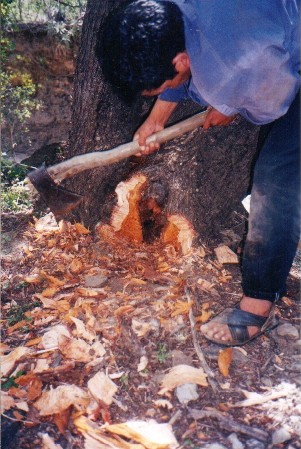
This picture shows how harmless stingless bees tend to be (some are more aggressive), because there is no way we would work maskless, groping around bare-handed in the dark of this treetrunk without smoke if they weren't. |
|
|
|
|
|
Here a local farmer has found a hive of se�oritas, we have used an ax to get into the hive, and now we are taking turns removing as much of the honey pots and the nest as possible, taking care to look for the queen, who is quite visible in se�oritas, being much, much larger than the tiny se�orita workers. |
|
|
|
 |
|
|
|
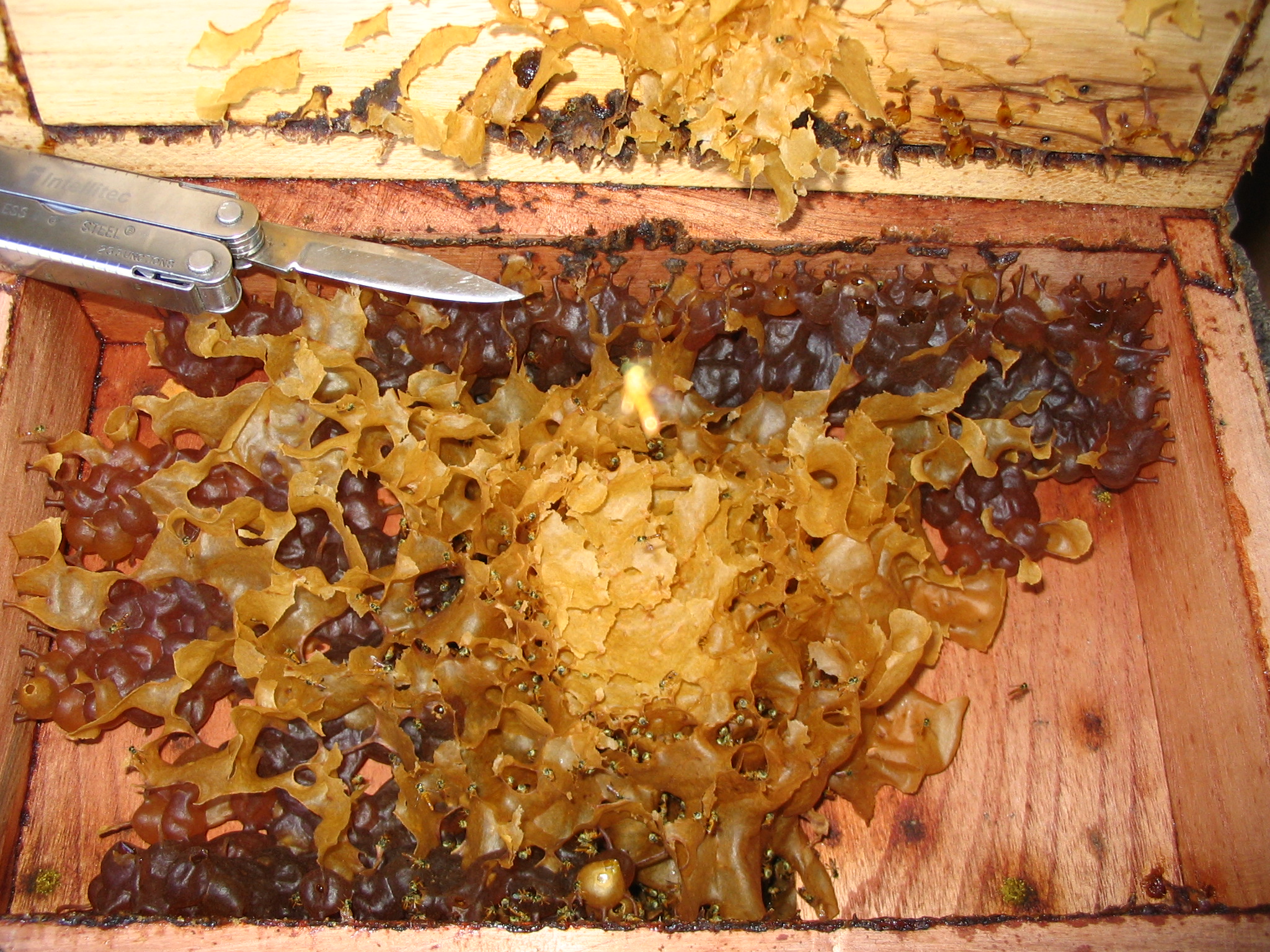
Here is picture, taking by one of my coworkers in another part of Boliva, of the honey pots and brood nest of the se�orita bee, the most popular of stingless bees in our area for honey harvest, Its wax, brood and honey comb are very different from that of the more well-known European and African honey bees. Se�orita honey is also more valuable, considered medicinal by many people, and thus sells for a higher price in the market. Unfortanely, the se�orita is unable to produce large quantities of honey quickly. |
|