Scraper-Planes of the Coastal Plain of Virginia
Introduction
Scraper-Planes are a common but difficult to identify tool found on many prehistoric sites in the coastal plain of Virginia. This paper presents data taken from 128 specimens, I have collected over the last two years. The Scraper-Planes studied were recovered from Southeast Virginia, extending east to the western edge of the Dismal Swamp.
What I call a Scraper-Plane is called by different names across the world. In Florida they have been reported as "unifacial humpbacked planes" or "turtleback scrapers" (Purdy 1981: 35), in Europe "rabots" (Debenath and Dibble 1994:115) , in Australia "horsehoof cores" (Hawkins 1998). Scraper-Planes have been cited as coming from Paleo-Indian sites in Virginia (Peck 1996) as with the rest of North America. Scraper-planes seem to be abundant on the West Coast of North America and South into Central America. It is suggested here that the scraper-planes were used throughout prehistory but during the Archaic became much more difficult to identify due to the poorer grade lithics used as compared to Paleo-Indian times. I also have tried to distinguish some of the differences in manufacture and use to try to make it easier for others to identify and report such tools.
Description and Definition
Scrapers: Scrapers are among the oldest recognizable tool forms, extending back into the Oldowan industries of more than two million years ago (Debenath and Dibble 1994:70). The description of a scraper as defined by Bordes (1961:25) is an object made on a flake or blade, with continuous retouch that is flat or abrupt on one or more margins. The cutting edge can be straight, convex, or concave with no deliberate notching or denticulation.
Scraper-Planes: Bordes classifies the scraper-plane in a separate category "Miscellaneous". The name Bordes uses for scraper-plane is "Rabot". Debenath and Dibble (1994:115) define Rabots as "extremely large endscrapers, made on a variety of thick blanks or even blocs or cores. The retouch is either abrupt or semi-abrupt. These are very rare in European Lower and Middle Paleolithic contexts".
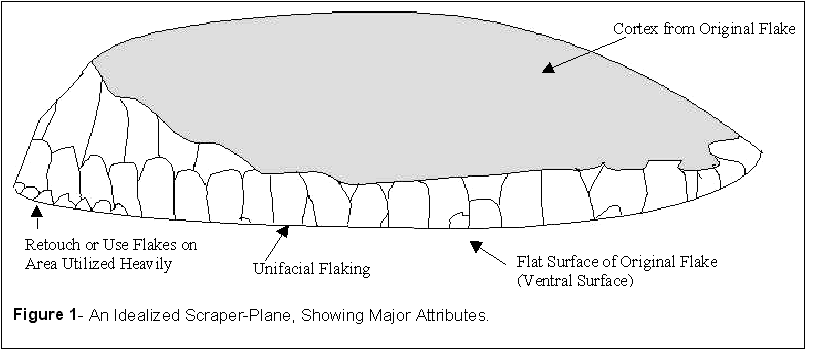
The Scraper-Planes identified in this study closely matches the definition for Rabots. The characteristics used to define an object as a Scraper-Plane in this study was any size of rock with a flat surface that had regular, unifacial flaking (See Figure 2) on some portion of that flat surface (See Figure 1) and had use-wear indicating scraping in a plane like fashion.
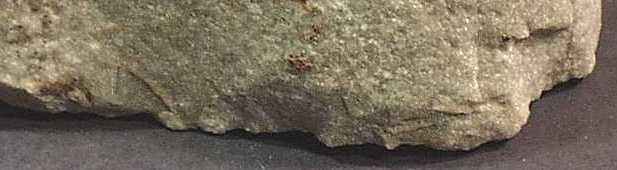
Figure 2- A utilized Scraper-Plane edge showing unifacial retouch.
One warning to be careful of is that there are some prepared and random cores that will sometimes appear as a scraper-plane and in fact some cores converted to use as a scraper-plane. Some of the characteristics that demonstrate use as a Scraper-Plane are worn ventral surfaces, poor quality raw material (not used for projectile points or other tools) and regular resharpening flakes or retouch on areas that were most likely not being prepared as the platform for the next flake. The latter being at times being subjective. Also there may be many examples of Scraper-Planes in literature identified as other types of implements. One example of these implements could be choppers, which may have had a dual usage to pre-historic humans as a chopper and a Scraper-Plane.
Methods and Measurements
Weight: The weight was measured in ounce increments on a common scale.
Circumference: Circumference was measured using a tape measure in centimeters.
Thickness: The thickness was determined by using a caliper and was measured in millimeters at its thickest section.
Edge Angles: A protractor was used to measure the minimum and maximum edge angles on utilized or retouched areas. While this method is not precise, it indicates a general range.
Ventral Surface (Fig. 1) Smoothing: Smoothing was graded into slight, moderate, and extreme. It was accessed by touch. Slight would be small areas of slight smoothness to almost none. Moderate was small areas of pronounced smoothing, usually on raised areas. Extreme was when there was pronounced smoothness over a large area to smoothness over the entire ventral surface. (Note: since some wear patterns exhibit small areas of wear, this measure does not always indicate actual amount of use.)
Edge Form: Every planer had varying forms of shaped working edges that were defined by retouch. All of these forms were recorded for each scraper-plane. The three edge forms were concave, straight, and convex.