.gif)
  |
Orcas, or
killer whales, are the largest of the dolphins and one of the world's
most powerful predators. They feast on marine mammals such as seals, sea
lions, and even whales, employing teeth that can be four inches (ten
centimeters) long. They are known to grab seals right off the ice. They
also eat fish, squid, and seabirds. Though they often frequent cold, coastal waters, orcas can be found from the polar regions to the Equator. Killer whales hunt in deadly pods, family groups of up to 40 individuals. There appear to be both resident and transient pod populations of killer whales. These different groups may prey on different animals and use different techniques to catch them. Resident pods tend to prefer fish, while transient pods target marine mammals. All pods use effective, cooperative hunting techniques that some liken to the behavior of wolf packs |
||
  |
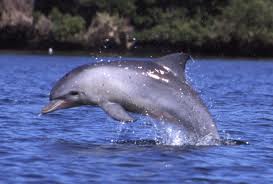
Bottlenose dolphins are well known as the intelligent and charismatic stars of many aquarium shows. Their curved mouths give the appearance of a friendly, permanent smile, and they can be trained to perform complex tricks. In the wild, these sleek swimmers can reach speeds of over 18 miles (30 kilometers) an hour. They surface often to breathe, doing so two or three times a minute. Bottlenose dolphins travel in social groups and communicate with each other by a complex system of squeaks and whistles. Schools have been known to come to the aid of an injured dolphin and help it to the surface. Bottlenose dolphins track their prey through the expert use of echolocation. They can make up to 1,000 clicking noises per second. These sounds travel underwater until they encounter objects, then bounce back to their dolphin senders, revealing the location, size, and shape of their target. |
||
 |
 |
||