 |
|
|
|
|
|
|
|
|
|
|
|
|
|
|
|
|
|
|
|
|
|
|
|
|
|
|
|
|
|
|
|
|
|
|
|
|
|
|
|
|
|
|
|
|
|
|
|
|
| North American Black Bear |
|
|
|
 |
|
|
|
Sizes: |
|
|
|
Height: |
|
All Fours: 3-4 Ft Standing: 4-7 Ft |
|
|
|
|
|
|
Lenght: |
|
4-6 Ft |
|
|
|
Avg Male: 425lbs Avg Female: 200lbs |
|
|
Weight: |
|
|
|
|
|
|
Maturity: |
|
About 3 Years |
|
|
Breeding |
|
|
|
|
|
|
|
Late June, Early July |
|
|
Mating: |
|
|
|
|
|
|
Gestation: |
|
About 7 months |
|
|
|
Number of Young: |
|
1 to 5 cubs |
|
|
|
Lifestyles: |
|
Habit: |
|
|
|
|
Solitary, come together to mate |
|
|
|
|
|
Diet: |
|
|
|
Fruits, nuts, vegetable, bread and meat |
|
|
|
|
|
Lifespan: |
|
|
|
Can live up to 25 Years |
|
|
|
|
|
In the wild, black bears live primarily in eastern forests, swamps, and western forests and wooded mountains. You rarely spot them higher than 7,000 feet. Their range is extensive: Most of Canada, south on the West Coast through northern California, in Rocky Mountain states to Mexico, north MN, WI, and MI in New England, NY and PA through the Appalachians; in the Southeast, most of Florida and southern Louisiana. |
|
|
|
The black bear is omnivorous which means it eats vegetables, fruit, breads and meat. During autumn, they eat more than usual to gain body fat to sustain them through their winter "hibernation". Bears do not hibernate, but rather fall into a deep sleep from which they can awaken quickly. When food is abundant, they will eat up to 45 lbs. a day and put on 5 lbs. per day in preparation for winter. During "hibernation", the bear may only eat once a week, or if it is very cold he will not eat for a month. While "hibernating", the black bear does not urinate or defecate. Bear Country participates with researchers at the University of Illinois in a project to study how the bear recycles toxins during "hibernation" with the hope of helping people with kidney disease and osteoporosis. |
|
|
|
Breeding season is in late June to early July. The fertilized egg matures to the blastocyst stage and goes dormant Blastocyst will not implant in the uterus until late November. In early December, embryo development proceeds normally. Birth occurs in late January. Gestation is approximately 7 months. The delay in gestation is approximately 5 months and true gestation is approximately 8 weeks. A black bear usually has between 1 to 5 cubs. |
|
|
|
The cubs are born during the "hibernation period" in late January. When they are born, they weigh about nine ounces and are the size of a stick of butter. From then on, they grow very quickly. By May they can be 12 to 20 pounds. The cubs weight will increase to about 75 pounds by the end of the summer. An adult male can weigh as much as 650 pounds, but usually is about 450 to 500 pounds at full weight. The female will reach a maximum weight of almost 400 pounds. |
|
|
|
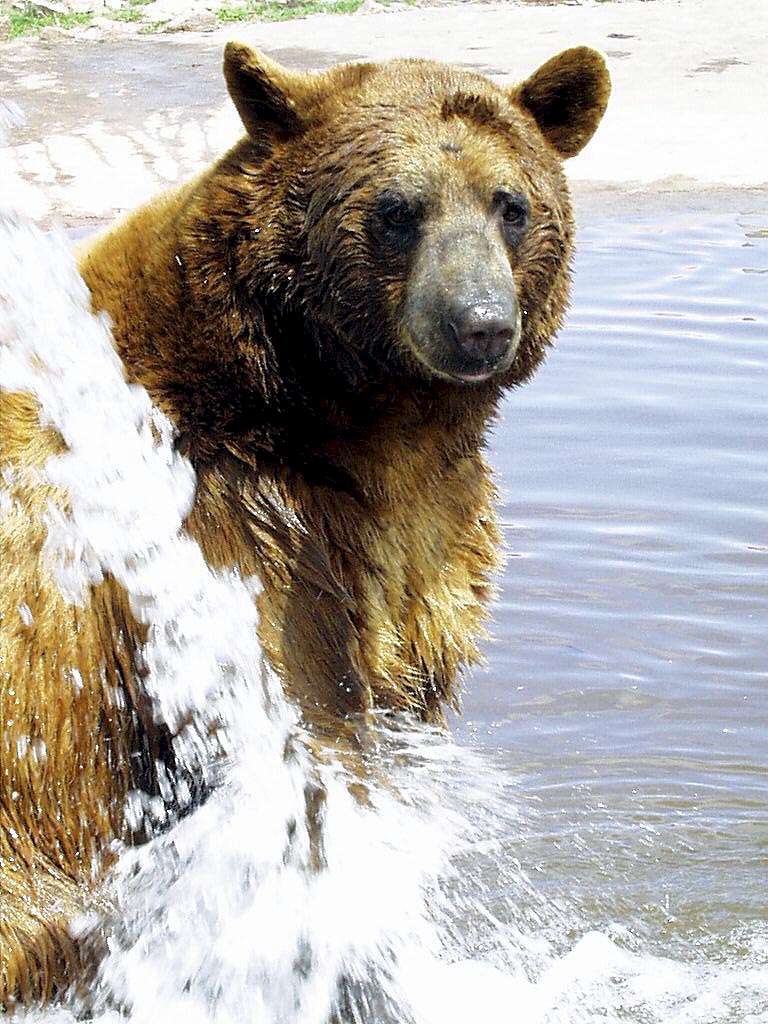
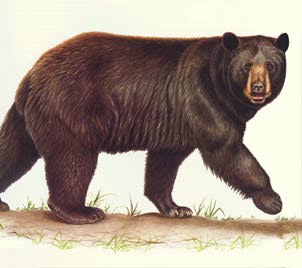
The black bear's name is deceptive. It is a species name and does not refer to their color. They can range from pure black to cinnamon to blonde. Black bears in the East are nearly black, while those in the West are black to cinnamon with a white blaze on their chest. The black bears in Alaska can have a blue or white color phase to blend with their snowy surroundings. |
|
|
|
Black bears are similar to hogs and are even named the same--males are boars and females are sows, but babies are called cubs. They can live to be about 25 years old. |
|
|
|
 |
|
 |
|
|
|
|
 |
|
|
|
|
|
|
|
|
 |
|