
 T
The Balochis of Balochistan are ethnically related to the Pathans and it is difficult to observe any significant difference in their features. Like the Pathans, the Balochis are fiercely independent, and they have proved just as resistant to change and bureaucratic control. Unlike the Pathans, however, they arc semi-nomadic, and some clans have drifted into Sindh and taken up life as peasants. The Balochis who retain a nomadic way of life are driven by the need to find fresh grass for their herds of sheep and goats and to avoid the punishing extremes of temperature. If lucky, a Balochi family will have its own horse. Donkeys and camels are kept for their usefulness in transporting goods.
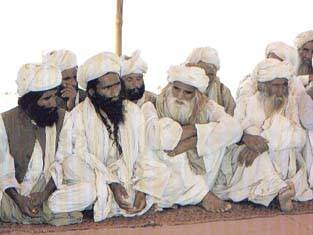
The Balochis resemble the Pathans, but they are more likely to wear their hair and beards long. They have an aversion to egg-shaped skulls, and mothers will bandage and stroke their babies' heads in an attempt to mold a more rounded appearance. Distinctive features of Balochi dress include a preference for white, suited to the arid and hot climate, and very large turbans, known as pag , which use up to 6 feet of cloth. Their baggy trousers, which require an even more generous length of cloth, use twice as much material as their turbans, and are worn under long robes.
In recent years the Balochis have been adversely affected by economic developments that might have been expected to benefit them. Natural gas fields have been discovered, along with coal, sulphur, and significant sources of various valuable minerals. The result has been a sudden surge immigration from other regions of the country, and the native Balochis have not reaped any great advantage. Quite the contrary, for road-building and immigration have only served to disrupt their traditional way life. A further bone of contention was the development of grazing lands the east of Balochistan into cultivated fields fed by newly built irrigation canals. This too attracted new settlers, and in 1970 there was a violent arising among some Balochi tribes. This was eventually suppressed by the army, only to be followed by the Soviet invasion of Afghanistan, which suited in thousands of new refugees. The Balochis are now in danger becoming a minority in their own land.