It is the extensive Islamic influence that makes the Pakistani art so distinctive and interesting. Islamic theologies have always prohibited artists from engaging in pictorial art because realistic paintings and statues might be seen as divine in their own right and divert attention from worship of Allah. Although this has not always been followed it does explain why the emphasis in pakistani art is a non-pictorial form.
Traditional Islamic art has been compared to modern forms of abstract art. Despite their divergent origins the two approaches have in common an emphasis on abstract patterns and geometric shapes. The most distinctive Islamic art form is the arabesque, an ornamental style in which linear flowers, foliage, fruits, animals and designs are represented in intricate patterns.
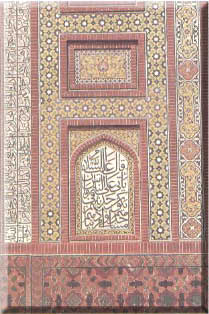
The focus on geometric patterns and designs has produced what is probably the most complex and sophisticated development of this art form. InPakistan the art is a public display in the colored tiles that decorate minarets of mosque and the incredibly elaborate designs that weave their way around exterior and interior of mosques.
 |
|
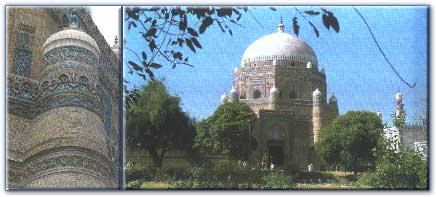
SHAH RUKN_E_ALAM TOMB: Eye catching
patterns in relief
|
 |
|
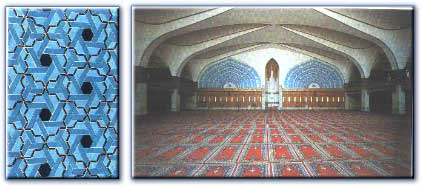
DATA GUNJ BAKSH MOSQUE: Balance between eastern artistry and modern pattern. |
 |
|
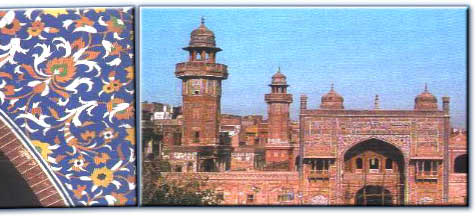
WAZIR KHAN MOSQUE : Colourful
floral designs in glazed-tile-mosaic
|
|
Islam endorses the use of the arabic script, the language of Quran, and this has allowed the art of beautiful writing to develop as an art fotm in itself. Short extracts from the Quran are written on large scrolls and hung in mosque interiors. In Pakistan calligraphy can also be found on non-religious objects like vases and plates. |
 |
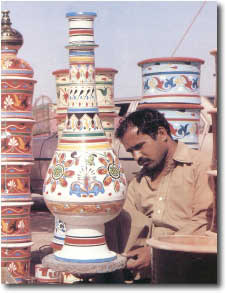 |
Pottery is the oldest art in Pakistan, going back to the time of Indus valley civilization, as excavations at Moen-jo-Daro have revealed. Many of the techniques in use today were perfected more than 1000 years ago in Syria and Iraq and brought to Pakistan by muslim artists. Chief among thosetechniques are the engraving or painting of intricate lattice designs on the slip-the earthy coating of the object and the covering of the object with transparent glazes of different colours. Another technique involves the blue designs on white ceramic glaze. |
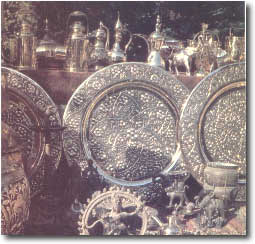
Metal work like other arts in Pakistan, bridges the division between objects for everyday use and objects d'art. Platters and trays are designed to be used in the home are often beautifully engraved with floral designs and intricate scrolls tapped out with light blows from a small hammer.
Different regions are famous for their expertise in highly specialized branches of metal work. Certain towns in Punjab are renowned for their damascene work on metal ornaments inlaid with gold or silver.
Jewellery is held in high regard and pieces are treasured and kept for generations. They are worn with pride by women and often represent the entire wealth of a family.
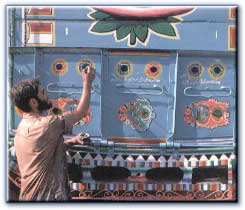
Popular art is on display , not in art galleries but on the sides, backs and fronts of the myriad vehicles found on the streets of Pakistan . The fascination with abstract forms and creative play of colours and shapes is readily apparent here as well.
The painting that sometimes adorn every available inch of space on trucks or bus are only realistic in sense that the subject matter can easily be recognized like a mountain, landscapr or a lush valley.