
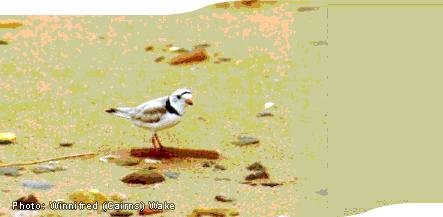
Piping plovers are small white birds with light brown wings, an orange beak and legs, and a black band around the neck. They are found along the shore in sandy areas. Its name comes from the sounds the bird makes. Piping plovers feed on worms and other small animals found along the beach.
The Piping plover is an endangered bird in the Maritimes and throughout the world. This means there are very few left and that they need our help to survive. Each spring about 400 of these birds come to the Maritimes to lay eggs. A pair of birds (a male and a female) will spend the summer building a nest and protecting their eggs until they hatch. Once the eggs hatch the parents will care for the young birds until they can survive on their own. In the autumn, all of the piping plovers leave our coast and fly south to warmer areas to spend the winter.
Why are Piping plovers endangered?
There are only a small number of these wonderful birds left because their nests are frequently damaged before the eggs hatch, or while the new chicks are young, and sadly they often do not survive. Dogs running loose on beaches, people walking, the use of ATV�s and larger birds such as seagulls, all can harm the plovers.
What can you do?
- Learn more about the Piping plover and teach your family and friends
- Keep pets on a leash when at the beach
- Do not leave trash at the beach � it attracts gulls which can hurt the plovers.
- Be careful to read signs about nesting plovers, and watch where you walk at the beach!
Check out:
www.atl.ec.gc.ca/wildlife/plover/brochure/index.html