
Fire
EME, SETI, Radio Astronomy
yellow = vertical, green = horizontal, both = circular.
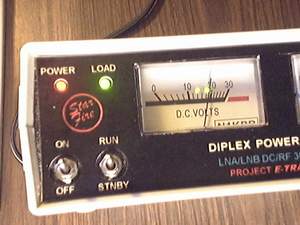
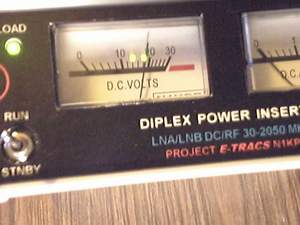
I've named the little box "Star Fire" for obvious reasons ... clever, huh?
|
|
|
|
|
|
|
|
|
|
|
|
|
|
|
|
|
|
|
|
|
|
| Star Fire |
|||||||||||||||||||||
| Inside the shack for EME, SETI, Radio Astronomy |
|||||||||||||||||||||
|
|||||||||||||||||||||
|
|||||||||||||||||||||
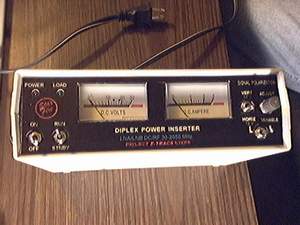
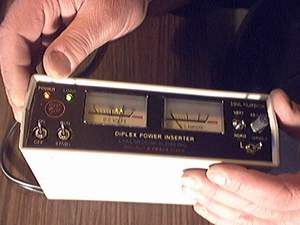
| Note the yellow and green LEDs imbedded in the volt meter to indicate wave polarity: yellow = vertical, green = horizontal, both = circular. |
|||||||||||||||||||||
|
|||||||||||||||||||||
|
|||||||||||||||||||||
| Closeup of Star Fire. The "Load" switch allows the LNA to be shut down without disturbing the level settings for signal comparison and preselector calibration purposes. | |||||||||||||||||||||
|
|||||||||||||||||||||
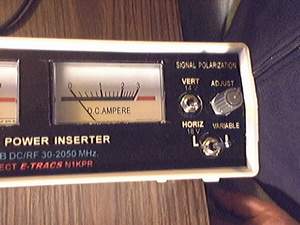
| Here is my homebrew power inserter. It is essentially a variable power supply capable of about 1 amp at 22 (max) volts. In this case, I've built in fixed voltages of 14 and 18 which will also operate a polarity servo within the feedhorn...more on that later. Although the colors aren't correctly depicted by my digital camera, you can still see the yellow and green LEDs that I built into the volt meter. When vertical or horizontal polarization are selected, the volt meter needle will indicate the proper voltage and the corresponding LED will light. When in the variable mode, for circular polarization, both LEDs light and the gain of the preamp may be adjusted accordingly. I've named the little box "Star Fire" for obvious reasons ... clever, huh? |
|||||||||||||||||||||
| Theory of Operation: In order to get readable signals to the receiver, the dish/feedhorn combination needs the services of an LNA (low noise amplifier). This preamp provides amplification directly from the probe (antenna) inside the feedhorn and makes up for line loss on the coax that feeds the receiver in the shack. It is important to have the highest level of signal, from the dish, inserted into the feed line, at the antenna end of the system. Obviously, signals from space are weak and high signal-to-noise ratios are not very easy to come by. But the preamp needs power to operate. Commonly, as in commercial MATV/CATV systems, that power is sent "down" the coax cable. It is DC power that has been "diplexed' on to the signal line with a circuit designed to NOT allow the DC power and RF signal to affect each other or otherwise cause improper loading or unwanted resonances. This particular circuit will not load the RF signal at frequencies above 30 MHz. It can be used for any VHF, UHF, or microwave application. | |||||||||||||||||||||
| Home | |||||||||||||||||||||
| Back | |||||||||||||||||||||
| Starfire's companion: SUNFIRE | |||||||||||||||||||||