


Consider this, as a slight modification of your view of humanity:
A friend recently committed suicide. He was almost 50-years-old. He had two children, was recently divorced and had lost custody, and his parents were still living. He had hundreds of friends, dozens of close friends. He was reasonably well off, physically healthy, good looking, and his business had just collapsed; through no fault of his own. He was a musician, a salesman, a father, and a friend. He had just returned from a visit with an anthropologist friend, studying a very primitive African tribe, where he claimed he could have "lived the rest of my life." He shot himself only a few weeks after returning from living in a mud hut for a month. At his funeral, a lot of his friends and relatives said the usual "how could he have done this to me?" His kids asked us to remember him as a friend and not as a suicide. His minister told us that he wasn't doing anything "to us," but that he had, obviously, lived a long time--not for himself--but only because we needed him. I don't often quote ministers. Personally, I put them both in a category along with faith healers, used car salesmen, politicians, psychiatrists, and loan sharks. But this minister had, clearly, thought about my friend's life and a lot of other lives. He talked of how a person who commits suicide overrides almost every natural impulse an animal possesses. He said that looking into the barrel of a loaded gun is so far beyond swallowing a few pills, with the anticipation of a little belly ache and a lot of sympathy, that the two actions are in no way equal.




This is most of the shit i have gotton on the subject.
If your anything like me you probably will find this interesting.
This may not be the right choice for YOU!
Time: Instantanious if you are lucky
Available: Difficult in UK, easier in USA (due to gun laws)
Certainty: Fairly certain
Notes:
12-gauge shotgun with 3 inch Magnum shells with #2 to #000 buckshot. See "Bullet" for other points. This is the recommended way to die by firearm. Apparently the shells suggested here are "extreme overkill", but thats the point really... problem here is that its amazingly messy who is going to pick the festering lumps of gore out of the carpet? Another problem is that it is possible to miss your brain entirely, and just blow off your face instead.
Time: Should be instant if it does break. See previous if not
Available: Rope, solid support, 10 foot space below, several above
Certainty: Very certain if the rope/support doesn't break
Notes:
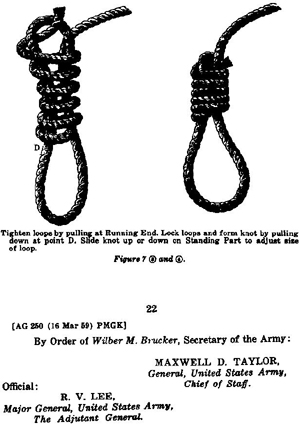
Minimal danger of discovery (depends on location). Painless if you drop far enough (8 foot is optimum). Make sure that the rope is tied securely to something STRONG!! It has to support your weight MULTIPLIED by the deccelleration. Use a hangman's knot (with the knot at the back of your neck). It doesn't always work this well though, you might get a bust jaw / lacerations etc and then asphyxiate.
Calle: I got this table of appropriate falling heights from a.s.h. long-time regular MegaZone ([email protected]), who got it from a friend of his named Mark. For more info go to http://ash.xanthia.com/methods.html
Hanging Drop Heights...
The simple answer is NO! Please read the following to see why.
The Bible's Viewpoint Suicides-A Resurrection?
THE tragic news of a suicide does not close a chapter in the lives of relatives and friends; it opens one-a chapter of mixed feelings of pity and anger, sorrow and guilt. And it raises the question: May we entertain any hope for our friend who took his or her life?
Although self-inflicted death is never justified, never righteous, the apostle Paul did hold out a beautiful hope for even some unrighteous ones. As he told a Roman court of law: "I have hope toward God . . . that there is going to be a resurrection of both the righteous and the unrighteous."-Acts 24:15.
Nevertheless, many theologians have long dismissed any suggestion that the resurrection of the unrighteous might offer hope for those who commit suicide. Why?
Theologians Contradict Resurrection Hope
William Tyndale identified part of the problem in the foreword of his 16th-century Bible: "In putting departed souls in heaven, hell, or purgatory you destroy the arguments wherewith Christ and Paul prove the resurrection." Yes, centuries ago, churchmen introduced a non-Biblical concept: immortal souls that leave the body at death and go straight to heaven, purgatory, Limbo, or hell. That concept clashed with the Bible's clear teaching of a future resurrection. As Baptist minister Charles Andrews asked: "If the soul is already blissfully in heaven (or is already justifiably roasting in hell), what need is there for anything further?" He added: "This inner contradiction has remained to plague Christians throughout the centuries."
One result of such errant theology was that "since Augustine's time [354-430 C.E.], the church has condemned suicide as a sin," says Arthur Droge in the Bible Review, December 1989, "a sin beyond redemption, just like apostasy and adultery."
The harsh verdict of being "beyond redemption," or hopelessly consigned to hellfire, carried the judgment-at-death argument to its shaky extreme. Admits the National Catholic Reporter: "Two of the church's greatest doctors railed against suicide-Augustine branding it 'detestable and damnable wickedness' and Aquinas indicating it was a mortal [unforgivable] sin against God and the community-but not all churchmen have agreed."
Happily, we can avoid such "inner contradiction" by accepting two compatible Bible truths. First, "the soul that is sinning-it itself will die." (Ezekiel 18:4) Second, the real hope for dead souls (people) is to live again through "a resurrection of both the righteous and the unrighteous." (Acts 24:15) What, then, may we reasonably expect for people who commit suicide?
An Unrighteous One to Be Resurrected
Jesus told a criminal sentenced to death: "You will be with me in Paradise." The man was unrighteous-a lawbreaker rather than a distraught suicide victim-guilty by his own frank admission. (Luke 23:39-43) He had no hope of going to heaven to rule with Jesus. So the Paradise in which this thief could hope to come back to life would be the beautiful earth under the rule of Jehovah God's Kingdom.-Matthew 6:9, 10; Revelation 21:1-4.
For what purpose will God awaken this criminal? So that He mercilessly can hold his past sins against him? Hardly, for Romans 6:7, 23 says: "He who has died has been acquitted from his sin," and "the wages sin pays is death." Although his past sins will not be accounted to him, he will still need the ransom to lift him to perfection.
Therefore, theologian Albert Barnes was wrong and misleading when he asserted: "Those who have done evil shall be raised up to be condemned, or damned. This shall be the object in raising them up; this the sole design." How beneath a God of justice and love! Rather, a resurrection to life on a paradise earth will furnish this former criminal (and other unrighteous ones) a golden opportunity to be judged by what they do after their resurrection.-1 John 4:8-10.
A Merciful Opportunity
Stunned friends of a suicide victim may thus take comfort in knowing that "Jehovah has shown mercy to those fearing him. For he himself well knows the formation of us, remembering that we are dust." (Psalm 103:10-14) Only God can fully understand the role of mental sickness, extreme stress, even genetic defects, in a "suicidal crisis," which, the National Observer noted, "is not a lifetime characteristic [but] often a matter only of minutes or of hours."-See Ecclesiastes 7:7.
Granted, one who takes his own life deprives himself of the opportunity to repent of his self-murder. But who can say whether one driven to suicide might have had a change of heart had his fatal attempt failed? Some notorious murderers have, in fact, changed and earned God's forgiveness during their lifetime.-2 Kings 21:16; 2 Chronicles 33:12, 13.
Thus, Jehovah, having paid "a ransom in exchange for many," is within his right to extend mercy, even to some self-murderers, by resurrecting them and giving them the precious opportunity to "repent and turn to God by doing works that befit repentance."-Matthew 20:28; Acts 26:20.
The Responsible, Scriptural View of Life
Life is a gift from God, not something to be abused or to end at one's own hand. (James 1:17) Hence, the Scriptures encourage us to see ourselves, not as immortal souls, but as valuable creations of the God who loves us, who treasures our being alive, and who looks forward with joy to the time of the resurrection.-Job 14:14, 15.
Love strengthens our recognition that suicide-though evading one's own burdens-only heaps more problems on loved ones left behind. As far as the one who rashly took his own life is concerned, we humans cannot judge as to whether he will get a resurrection or not. How reprehensible was he? God alone searches 'all hearts and every inclination of the thoughts.' (1 Chronicles 28:9) But we may be confident that 'the Judge of all the earth is going to do what is loving, just, and right!'-Genesis 18:25.
[Footnotes]
This article is intended for the survivors of suicide victims. For a fuller discussion of the subject of suicide, see The Watchtower, August 1, 1983, pages 3-11 and Awake!, August 8, 1981, pages 5-12. [Picture Credit Line on page 22] Kollektie Rijksmuseum Kröller-Müller, Otterlo PS. the name "Jehovah" is the name the Bible tells us to call God. God has a name and it is Jehovah. (psalm 83:18)
Heres a good letter written by Tom W Day
Socially acceptable suicide methods--cigarettes, alcohol, over-eating, over-working, etc.--are so passive that they aren't even recognized in suicide statistics. Seriously planning to end one's life is an act of such overwhelming and unnatural will that it should amaze us that the suicide could possibly occur. Instead of asking how our loved one could have done this to us, we should wonder at how much pain he had to be in to have overcome those natural obstacles to ending life. We should wonder at how that person withstood that pain and misery so well that we didn't know it even existed. Or if we did, we should wonder that it wasn't more obvious.
When a person who we have loved and respected takes his own life, the pompous and self-interested attitude of the "mental health professionals" is not a comfort. While they pretend that their potions and examinations and theories and parlor tricks can "cure" depression, their track record speaks, poorly, for itself. In another decade or two, psychology may raise itself to the 1800's alchemist's scientific standards, but that will still be a too weak force against the complexity of the human mind. When men, like my friend, take their troubles to a common psychologist, they find analysis and "therapy" so simple-minded that it seems nothing more than an insult to their intelligence. Rather than being a comfort, the experience is additional evidence that they won't find hope anywhere. Rather than receiving good advice from a "paid friend who listens," he will be put on a time clock more rigid than the most menial burger-flipping job. The time spent in the psychologist's couch won't be any more rewarding than burning McHorsemeat, either. After spending a small fortune in this pointless exercise, he will be left with the life he dreaded and the same decision with which he began.
Most importantly, we should understand that this person tolerated all that pain for us. He had children, parents, lovers, friends who he knew would be hurt by his self-inflicted death and he suffered life as long as he could stand it. We should understand that this person had no personal reason to live; that he lived as long as he did for the benifit of others. Living, solely for the comfort and needs of others, has a boundry. A maximum useful limit. You can do it for a long while, if you are strong, but you can't do it forever. To live a long, happy life a person needs a reason to do so. A personal reason. A person needs to have a joy of life that comes from what he receives from that life, not what he provides to others. No, that is not selfish. When someone thanks us for an act of kindness, we often say "It was my pleasure." It was, for most of us. We do our acts of kindness for the good feeling it gives us. We all have an account balance of the value of our lives. We stack up the good things in our lives against the bad things. For many, the good completely overwhelms the bad. Those people would no more consider their lives a waste than they would consider a small credit card debt evidence of financial bankruptcy. But some of us don't feel the rewards as strongly as we feel the punishments. We don't see life's beauty as clearly as we see the disorder. The comfort we receive doesn't cancel the pain. Suicide is the only relief from that kind of life.
If you want to help someone thats in need or determine if they are suicidal. You may want to read this.
Not all people with depression will have all these symptoms or have them to the same degree. If a person has four or more of these symptoms, if nothing can make them go away, and if they last more than two weeks, a doctor or psychiatrist should be consulted.
* Persistent sad or "empty" mood.
* Feeling hopeless, helpless, worthless, pessimistic and or guilty .
* Substance abuse.
* Fatigue or loss of interest in ordinary activities, including sex.
* Disturbances in eating and sleeping patterns.
* Irritability, increased crying, anxiety and panic attacks.
* Difficulty concentrating, remembering or making decisions.
* Thoughts of suicide; suicide plans or attempts.
* Persistent physical symptoms or pains that do not respond to treatment.
* Talking about suicide.
* Statements about hopelessness, helplessness, or worthlessness.
* Preoccupation with death.
* Suddenly happier, calmer.
* Loss of interest in things one cares about.
* Visiting or calling people one cares about.
* Making arrangements; setting one's affairs in order.
* Giving things away.
A suicidal person urgently needs to see a doctor or psychiatrist. ( hmmm i am not to sure about this one!)
The following are common misconceptions about Suicide from the NAMI ADVOCATE
1."People who talk about suicide won't really do it."
NOT TRUE Almost everyone who committs or attempts suicide has given some clue or warning. Do not ignore suicide threats. Statements like "you'll be sorry when I'm dead," "I can't see any way out," -- no matter how casually or jokingly said may indicate serious suicidal feelings.
2."Anyone who tries to kill him/herself must be crazy."
NOT TRUE Most suicidal people are not psychotic or insane. They must be upset, grief-stricken, depressed or dispairing, but extreme distress and emotional pain are not necessarily signs of mental illness.
3."If a person is determined to kill him/herself, nothing is going to stop him/her."
NOT TRUE Even the most severely depressed person has mixed feelings about death, wavering until the very last momemt between wanting to live and wanting to die. Most suicidal people do not want death; they want the pain to stop. The impluse to end it all, however overpowering, does not last forever.
4."People who committ suicide are people who were unwilling to seek help."
NOT TRUE Studies of suicide victims have shown that more then half had sought medical help within six month before their deaths.
5."Talking about suicide may give someone the idea."
NOT TRUE You don't give a suicidal person morbid ideas by talking about suicide. The opposite is true --bringing up the subject of suicide and discussing it openly is one of the most helpful things you can do.
Check the following boxes if you notice a friend or friends with any of these symptoms persisting longer than two weeks.
* Do they express feelings of: Sadness or "emptiness"?
* Hopelessness, pessismism or guilt?
* Helplessness or worthlessness?
* Do they seem: Unable to make decisions?
* Unable to concentrate or remember?
* To have lost interest or pleasure in ordinary activities - like sports or band or talking on the phone?
* To have more problems with school and family?
* Do they complain of: Loss of energy and drive - seem "slowed" down?
* Trouble falling asleep, staying asleep, or getting up?
* Appetite problems - losing or gaining weight?
* Headaches, stomach aches or backaches?
* Pain in arms or legs?
* Has their behavior changed suddenly so that: They are restless or more irritable?
* They want to be alone most of the time?
* They've started cutting classes or dropped hobbies and activities?
* You think they may be drinking heavily or taking drugs?
* Have they talked about: Death?
* Suicide - or have they attempted suicide?
Always remember - 80 to 90 percent of people with depression can be helped! They can feel good again!
( What bunch of SHIT!!!! I have done everthing possible to help with my depression..... Nothing works! the drugs just give you a false smile.....its fake... Deep inside i know i am the same. I still want to die... Why don't i take some of these fuckers with me that are so high and mighty! Fuck it I'm dead......)
for more info go to www.save.org