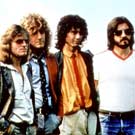
Led Zeppelin
The definitive dizz-buster heavy metal rock combo, spawning a host of imitators,
Led Zeppelin emerged out of the dissolution of the legendary British R&B outfit
The Yardbirds. When that group folded in July of 1968, guitarist Jimmy Page was left
with the group's name and a string of unfulfilled dates. Thus Led Zeppelin came into
being, initially as The New Yardbirds to complete contractual obligations in
Scandinavian countries.
Before joining the Yardbirds, Jimmy Page
(born James Patrick Page January 9, 1944 in
Heston, Middlesex) already boasted impressive credentials as a top young session man.
A former art student in Croydon, he had learned guitar by imitating note-for-note
James Burton's solos on Ricky Nelson records and Scotty Moore's similarly influential
guitar breaks on early Elvis Presley product.
John Paul Jones (born John Baldwin January 3, 1946 in Sidcup, Kent) worked a similar session
route after a spell as a bassist with ex-Shadows duo Jet Harris and Tony Meehan. He often
crossed paths with Page, as with the sessions for Donovan's "Hurdy Gurdy Man", and talked
loosely about forming their own group after their first jam together.
By comparison, Robert Plant and John Bonham were little-known gigging musicians.
Plant (born Robert Anthony Plant August 20, 1948 in Bromwich, Staffordshire)
along with "Bonzo" Bonham (born John Henry Bonham May 31, 1949 in Redditch, Worcestershire),
whose first band Terry and the Spiders in 1964 had been followed by spells with Steve Brett
And The Mavericks and The Way Of Life--all anonymous Birmingham area outfits.
Thus constituted, The New Yardbirds completed their aforementioned Scandanavian tour
committments. Back in London to launch a new career with fresh identity, they first toyed
with the names The Whoopee Cushion and The Mad Dogs before settling on Led Zeppelin.
The apochryphal story is that the name came from Who drummer Keith Moon, via some
humorous remark of his about them going down like a "lead balloon" (an English expression
for flopping out). The misspelling of "Led" was intentional--to avoid mispronunciation.
Largely motivated by apathy of British promoters and fans (Page used to be quite bitter on
the subject in early U.K. interviews), Zeppelin made an early declaration of intent to concentrate
their energies towards the U.S.--a precedent-setting decision--where their first album in late
1968 was to establish them as a replacement for Cream and a rival to the Jeff Beck Group.
Zeppelin first toured the U.S. as support to the likes of Vanilla Fudge. From the opening
few bars, this was absolutely dynamite heavy metal rock. The band might have been
shamelessly eclectic--lifting riffs, lyrics, and often what appeared like whole songs from
uncredited blues sources--but what they plundered they filtered my means of a remarkable
expertise to reappear as something totally new. Their understanding of heavy rock textures
certainly had no precedent, dizz-busting macho instrumentation played off against delicate
passages with precision timing, these qualities being best evidenced on the cuts
"Dazed and Confused" and "How Many More Years?". In the U.K. the album drew rave notices,
but reviews in the U.S. were mixed--Stateside, Zeppelin have always had an uneasy
relationship with the rock press. However, nothing was going to stand in the way of such a
block-buster debut, and the album was a U.S. gold by early 1969, "Good Times Bad Times" being
pulled off for their first singles success there.
Led Zeppelin II was a logical extension of its predecessor, but better, and was to produce the
definitive heavy metal anthem in the explosive "Whole Lotta Love", which smashed aside all
opposition in its climb up the U.S. singles list in 1969. This was essentially a revamp of
Willie Dixon's "You Need Love", and raises one inhibiting factor which must always occur
in any appreciation of Zeppelin's undoubted talents.
Led Zeppelin III appeared in 1970 with a similar hard-rock foundation (including the
extraordinary "Immigrant Song") but also reflected a subtle shift of direction with the
introduction of more semi-acoustic, folk-oriented material--a characteristic refined on
Led Zeppelin IV (the runes album). This 1971 collection blended hippie mysticism and
mythological preoccupations with power-drive rock far more successfully than its
predecessor, the best example being found in the epic length "Stairway To Heaven"--
regarded by many as Zeppelin's finest moment.
America just wilted in its path, and the 1973 American tour smashed box office records,
many long held by The Beatles, across the country. By the end of 1973 Peter Grant was
telling the London Financial Times that Zeppelin were racking up world-wide earnings
from tours and concerts of 30 million dollars in that year alone.
The album for 1973 was "Houses Of The Holy", perhaps the band's most diverse
collection of originals, featuring powerhouse rock, reggae, pseudo soul and
mystical folksy ballads. Marginally disappointing for aficionados, but an automatic
platinum-seller nevertheless. Then in 1974, having slackened further from their
recording pace, the group virtually disappeared from sight: "1974", Jimmy Page was to
tell an English journalist later, "didn't really happen, did it?".
Zeppelin themselves are no strangers to violence, though, revelling in a reputation on a par
with that of The Who for reducing hotel rooms to fragments. In their time, they have also
upheld the groupie traditions in no uncertain terms. Robert Plant was once described by one
U.S. publication as a "self-satisfied carnal gourmet".
Page too, is no stranger to the more
decadent excesses of the genre, though perhaps paradoxically there are few more
gentlemanly characters in rock.
There would be no new releases in 1974 but they did establish their own record label, Swan Song. In '75, the double album Physical Graffiti came out.on their new label. Once again it was an immediate success. But a planned tour had to be canceled when Plant and his wife were involved in a serious car crash. It took a full year for Plant to recuperate. Unfortunately, more bad things were on the horizon for Plant and the band. In the spring of '76 their new album Presence debuted at number one in both America and England even though it didn't get good reviews. Later that year their film The Song Remains The Same also received poor reviews. In the spring of 1977 they returned to tour America, but only two months into the tour tragedy hit when Plant's six-year-old son died of an infection and the rest of the tour was canceled.
Their eighth studio album, In Through The Out Door, wasn't released till September of 1979. What would go down as their final tour started in May of '80 in Europe. That September as they were preparing for their upcoming American tour at Page's home, Bonham was found dead in bed following an all-day drinking binge. More than likely rock's best drummer, Led Zep knew they could not go on without him and disbanded a month later. After the breakup the remaining member went on to solo careers. In 1985, they reunited to play Live Aid. Then in '88 the got together one more time to play at Atlantic's 25th Anniversary Concert. Page and Plant would get together as a duo in '95 and completed a successful international tour.
Along with The Who, Zeppelin represented the perfect extant employment of three instruments
and a voice. On their night, there is no more exhilarating experience in rock than Plant
and Page pushing their considerable talents towards the dizzying outer limits of the genre
they more or less created.
|