
This horrifed the people subjected to Nimrod. They thought their leader was a god who would live forever. Now, he was dead, as they clearly were shown. Their whole empire and religion was in Chaos. Cush, his father, was already shamed for his actions at the tower; the people even blamed him for their own dispersion. He could not, once again, unite the people under the old Babylonian system alone. This would be accomplished by one more up-and-coming character of Babylon: a woman.
Semiramis was a woman little known by her proper name, but exalted to one of the most famous women on the planet. She was Cush's wife at the time of the tower. After Cush's shame, the subtle Semiramis did not want to go down with him, so she had another idea. Her son was Nimrod, and she kept her position of power by doing the unthinkable. Yes, she married her own son!
"And I will put enmity between thee and the woman, and between thy seed
and her seed; it shall bruise thy head, and thou shalt bruise his heel."
Genesis 3:15
That quote was well known to the people of Noah's day. Semiramis thought: "what if I could convince the world my son was the one who had his 'heel bruised'? What if he could be the promised one, who saved the world from the serpent's curse?" With this ingenious idea, Semiramis portrayed the slaughter of Nimrod as a good thing. Indeed, Nimrod's death was a blessing, not a judgment; he was now
In order to survive, the old religion of Babylon now had to change. Now, this corruption of what God had prophecised robbed millions of what would correctly be known as the sacrifice of Jesus. The people now, in their minds, had their savior already. The promised one was already here: the martyred Nimrod, died to "save" mankind from the world's curse of the serpent.
Semiramis was pregnant, the father unknown. This was a wonderful opportunity for her to further corrupt what would happen almost two thousand years later. Her unborn child, in her mind, would be called none other than Nimrod... reborn. According to her, what was in her womb was, in fact, Nimrod reincarnated. Semiramis "slept with no man," and her child was fathered by the spirit of Nimrod himself. She was looked upon as the great mother, the mother who participated, as a virgin would, in the miraculous birth of a god. Sound familiar? Yes, this was the greatest twist in the history of the world: the twist of Jesus Christ.
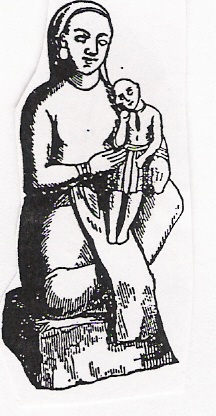
Now, the image of the "mother and child" would become an icon, worshipped by those formerly under Nimrod, as well as those to come. Semiramis, naturally, was also diefied because of her position as "the mother." Nimrod became the basis for the "Horned God" in ancient paganism, Semiramis the "Goddess." All the cards were now in place. Semiramis, once again, managed to stop the attempt of Shem, and his God, to ultimately destroy their religion. She, with her own interpretation, began to explain away any of doubt and speculation that once existed in the minds of the Babylonian believers. The religion, and authority, of Babylon was again under the control of those at the top.
The next step of this transformation is in Babylon Today. There is also so much more in my book, which sheds light on this whole transformation process, and how it spread out. It exposes Babylon for what it was, had branched out into, and is today.