 |
|
|
|
|
|
|
|
|
|
|
|
|
|
|
|
|
|
|
|
|
|
|
Images of various reusable launch vehicles |
|
|
|
After an extensive and extremely costly space program based on rockets, NASA was looking for a more cost effecive method of sending people and machines into orbit. The solution came in the form of the current space shuttle. Instead of being a rocket that blasts off into orbit in stages to avoid having to carry used parts withit, the space shuttle deploys only its booster rockets and its fuel tanks. The fuel tanks are located and later reused while the tank for the most part burns up in earth's atmosphere. Yet, with a 500-800 million dollars cost per launch, the space shuttle is definitely not the least expensive mode of travel. To offer an even less expensive gateway into space, NASA, lockeed martin and a couple of smaller initiatives have been developing single stage reusable launch vehicles, some of which are documented here. |
|
|
|
 |
|
|
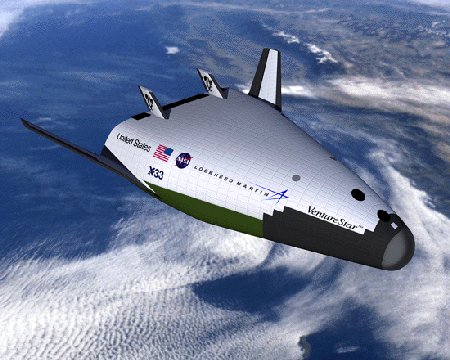
X-33 Venture Star |
|
|
|
|
|
The x-33 or venture star was under development until early 2001. It sought to have many advantages over the space shuttle. It should cut costs of cargo per kg by 10%, and require only a minimal time between launches of a week. Yet, a too large weight, and too weak engines meant the end of the project. |
|
|
|
|
|
|
 |
|
|
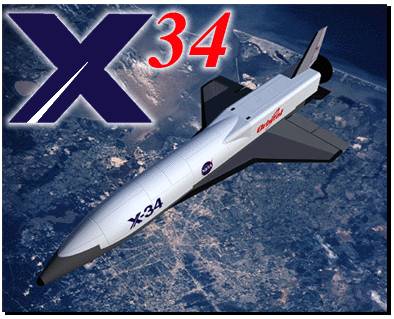
X-34 |
|
|
|
|
|
|
The X-Prize |
|
|
|
In the past prizes for aviation accomplishments have been the impetus for aerospace developments and accomplishments, such as Lindbergh's crossing of the Atlantic Ocean. In today's world, we have arrived at a new era of aerospace, yet still the idea of a competition exists, and it is called the X-Prize. X refers to a series of destinguished experimental airplanes that NASA and Lookheed Martin developed preceeding the Space Shuttle. The X-Prize is a contest to send a spacecraft with a pilot and room enough for three additional passangers to space and return. Then in fourteen days it must repeat the trip while also demonstrating its reusability by only allowing 10% of the non-propellant weight of the space craft to be replaced between launches. |
|
|
|
 |
|