|
|
|
|
|
|
|
|
|
|
|
|
|
|
|
|
|
|
|
|
|
More Photos |
|
|
|
 |
|
|
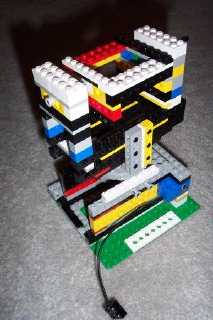
May 17, 2003: This weekend I worked on the construction of a drag and lift balance from instructions provided by a site from Tufts University. The balance works by allowing the gimbal mechanism on top to move freely in two degrees of motion. This motion is recorded by a light sensor. The entire gimbal can be rotated with the use of a moving base below powered by a LEGO mirco motor. The entire system is operated by a LEGO interface and ingenious control software developed by Tufts. |
|
|
|
|
|
|
 |
|
|
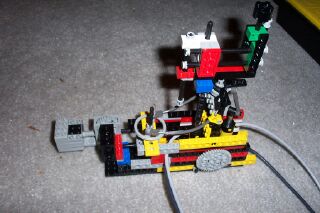
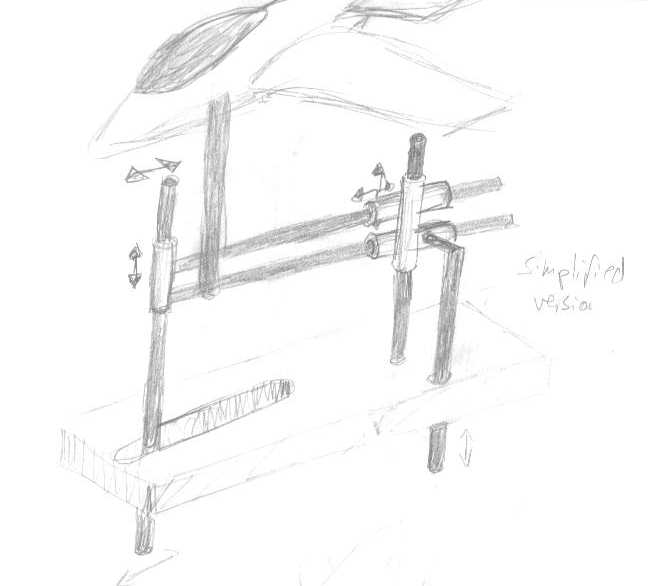
May 20, 2003: Wow, I actually had time to out of my regularly busy IB work schedule to spend some time on my lift and drag balance. Because I was dissatisfied by the simple an seemingly promitive gimbal system used by the Tuft's balance, I built my own after drawings I had done previously. My design uses a gimbal from a helicopter LEGO once made. I used this to get 3-axis of motion. Then I attached another structure on top of it that allows the black lego brick on top to move both up/down, and forwards/backwards. The sketch below the picture shows how the structure on top of the helicopter gimbal functions. Although I have made my own design, I definitely still planto use their great softare for data collection and calibration made my Tufts, because it is amazing. |
|
|
|
|
|
|
 |
|
|
|
|
|
May 21, 2003: Today I e-mailed Pat Conner, the person mainly responsible for the construction of a Baals windtunnel the Savannah Section of the AIAA (American Institute of Aeronautics and Astronautics) now owns. He agreed to send me the schematics of the balance they used for their windtunnel. I hope to be able to construct the same mechanism out of LEGO and possibly later rebuild it out of the materials they used. |
|
|
|
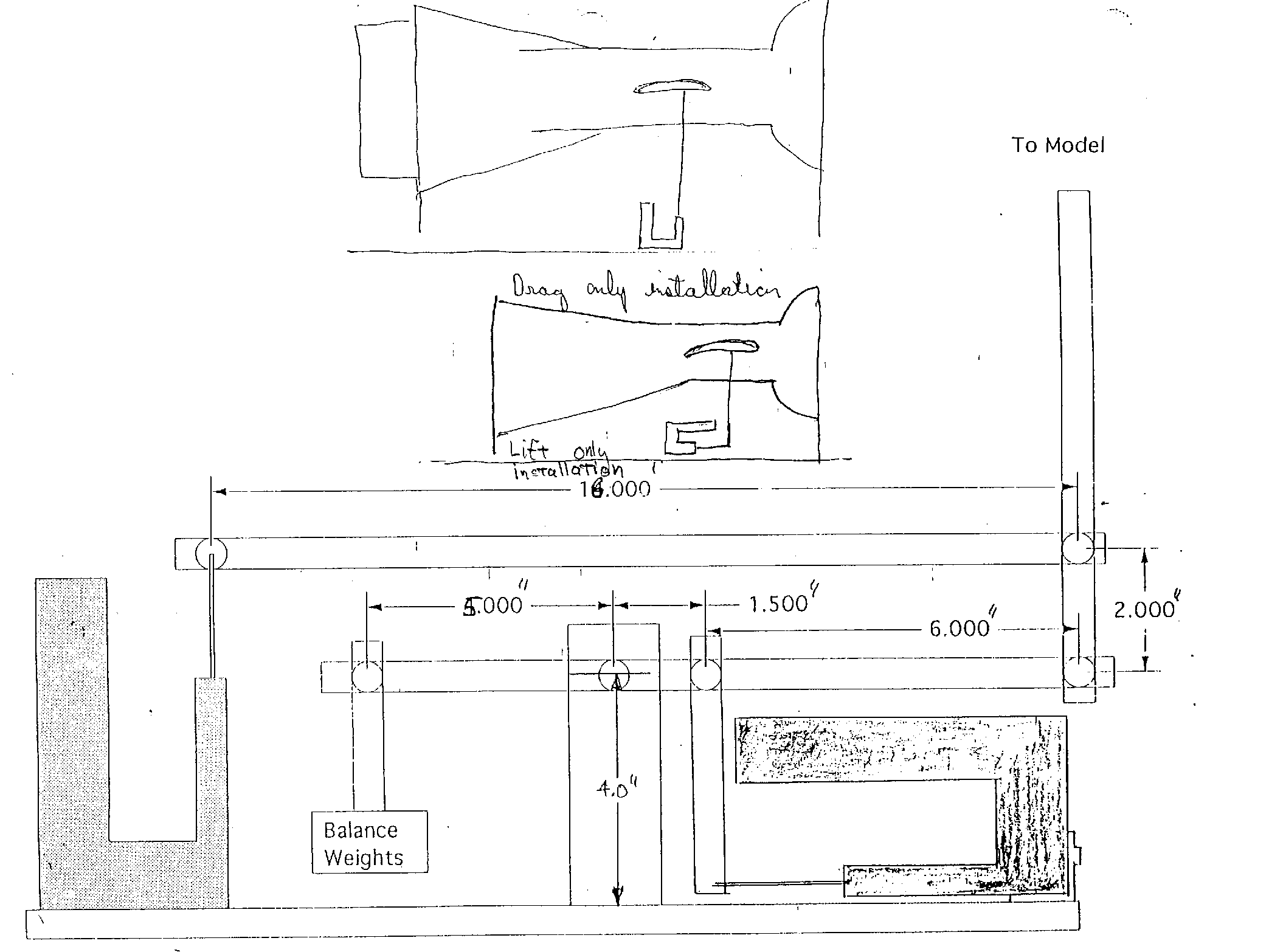
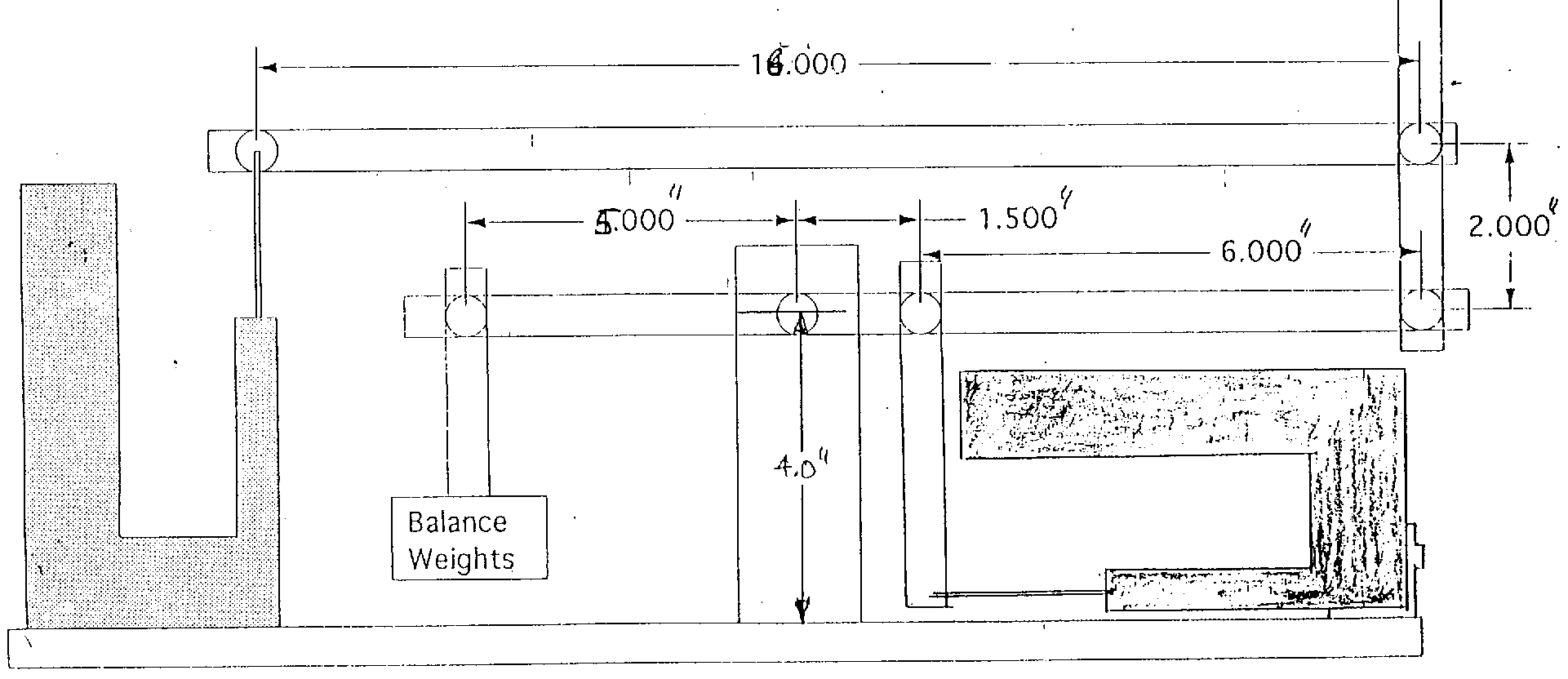
May 30, 2003: Today I recieved an envelope in the mail containing additional information and schematics on the windtunnel including the force balance that the Savannah section of the AIAA owns. I now plan to use this far simpler balance design instead of the one designed by tufts and the one I designed. I will either use lego sensors and the Tufts softare to collect the data, or two Pasco force meters for the Pasco Datastudio software. The only problem with the later idea is the need for an additional Pasco force meter. (I hope I can convince the science department to purchase another one). Note: for a clearer picture of the diagram, click on it. |
|
|
 |
|
|
|
 |
|