|
BUICK MOTOR DIVISION - A BRIEF
HISTORY FLINT, Michigan -- Buick Motor Division, which claims one of the most dramatic and important chapters in the history of the American automobile, celebrated its 90th anniversary in 1993.
The division's history has been exciting from the beginning. Buick recovered from near-bankruptcy in 1904 to become the No. 1 producer of automobiles in 1908 --surpassing the combined production of Ford and Cadillac, its closest competitors. Buick was the financial pillar on which General Motors --today the world's largest automaker -- was created. Buick was where a number of major contributors to U.S. auto history first headed an auto-building company -- such as Billy Durant, GM's founder; Charles W. Nash, a founder of what later became American Motors; Walter P. Chrysler, founder of Chrysler Corp. and Harlow H. Curtice, a GM president and chief executive in the postwar era. Louis Chevrolet, co-founder with Durant of the Chevrolet automobile, had earlier achieved fame as a Buick race team driver.
From the beginning, "motor" has been a key word in Buick's name. That original patented overhead valve single cylinder was unbelievably powerful for its time. A prominent auto writer tested a two cylinder opposed automotive version of the design and reported the engine delivered 22 to 29 horsepower. The writer later had to set up a special test to prove that performance to his doubting editors and colleagues! And today's 3.8-liter 3800 V6, widely described as world class in smoothness, performance and reliability, is an outgrowth of the Buick V-6 used in the 1962 Buick Special -- the first V-6 ever offered in a mass-produced U.S. car. Today, Buick offers V-6 engines in most of its models, including a supercharged 3800 in its flagship Park Avenue Ultra.
Yet in 1903, the Buick Motor Co., then headquartered in Detroit, was one of the least promising of the hundreds of tiny automobile companies across the country. Its founder had produced only two cars in three years of trying. David Buick though an inventor of merit, generally was considered a dreamer. The company was in debt, its engineer had just left, and the firm's financial backer wanted to bail out. David Buick, born in Scotland Sept. 17, 1854, and brought to the United States at age 2, had been a successful plumbing inventor and manufacturer in Detroit when he turned his attention to gasoline engines in the late 1890s. He started a succession of companies: Buick-Auto-Vim and Power Co. (1899), Buick Manufacturing Co. (1902) and Buick Motor Co. (Incorporated May 19, 1903), all in Detroit.
Buick and his engineers argued often. Marr later said he worked for David Buick three times, and each time the company had a different name. But between Buick, Marr and another engineer, Eugene Richard, the sensational valve-in-head engine was developed. It was powerful, reliable, and developed more horsepower with its displacement than other engines of like size then on the market. Eventually the entire industry would make use of the principle. But in 1903, David Buick had neither the manpower nor money to fully develop it. That year, Buick's financial backer, Benjamin Briscoe, Jr., sold his interest in Buick to a group of wagon makers in Flint, Mich., 60 miles north of Detroit. Eighteen years later, Briscoe observed that Buick's success story was "so fraught with romance that it made the Arabian Nights tales look commonplace." On September 11, 1903, James H. Whiting, manager of the Flint Wagon Works, announced that wagon works directors had brought the Buick company and planned to move it -- bag, baggage and David Buick -- from Detroit to Flint. A one-story brick factory on W. Kearsley Street in Flint was in operation, building engines, by December. On January 22, 1904, Buick Motor Co. Of Detroit was dissolved and on January 30, 1904, Buick Motor Co. Of Flint was incorporated. Flint, an old lumbering center, was already known as "The Vehicle City" -- but not for automobiles. It had become a center of horse-drawn carriage production for several decades. In the summer of 1904, the company built the first Flint Buick. Walter Marr, back again as chief engineer, and Thomas Buick, David Buick's son, took it on a test run to Detroit and back July 9-12. The test was so successful that Whiting's group ordered production to start. Buick began production with the Model B that summer and built 37 cars by the end of 1904. When the company ran into financial problems that fall, Whiting turned to one of Flint's other carriage builders for help. The man was William C. "Billy" Durant, Flint's carriage "king." Grandson of a Michigan governor, Durant had gotten into the vehicle business almost on whim. One evening in 1886, he saw an attractive horse-drawn road cart on the streets of Flint. The next night, he took the train to Coldwater, Mich., where the cart was manufactured, and bought the rights to build it. That year he started the Flint Road Cart Co. By 1900, the firm, renamed the Durant-Dort Carriage Co., was the largest producer of horse-drawn vehicles in the country. Durant didn't particularly like automobiles -- he was no different from most carriage men in that opinion. But he was a strong supporter of Flint, and he knew a "self-seller" when he saw one. The Buick, he observed, drew plenty of attention because it could climb hills and run through mud like no other car he had ever seen. If automobiles could be this good, he thought, then maybe it was time to switch from the horse-and-buggy business to automobiles. Once Durant made the decision, Buick's success was assured. No one could raise money, sell products and plan big organizations like Billy Durant. He went to the 1905 New York Auto Show and took orders for 1,000 Buicks before the company had built 40.
He created a racing team -- with stars such as Louis Chevrolet and Wild Bob Burmann -- that won 500 trophies from 1908 to 1910.
In 1908, with production totaling a little more than 8000, Buick led the country in production. Durant had made the transition from the biggest seller of buggies to biggest seller of automobiles. And, on Buick's success, Durant created a holding company that year. He called it General Motors. Durant first engaged in merger talks with other producers in the low-price field, including Henry Ford and Ransom Olds, who then headed REO. Then, when those talks failed, Durant created GM as a holding company Sept. 16, 1908, and quickly pulled first Buick, then Oldsmobile, into the organization. Then he added Cadillac and Oakland (forerunner of Pontiac) and dozens of parts supplier businesses -- including AC Spark Plug, which he helped create with Albert Champion (whose initials formed the division's name). Durant became financially overextended as he pulled more than 30 companies under the GM umbrella in 1908-10. He lost control of GM to a financial group in 1910. He and Louis Chevrolet developed the Chevrolet company the following year, and Durant used Chevrolet to regain control of GM in 1915-16. Ironically he succeeded, as GM president, Charles W. Nash -- whom Durant had hired into his carriage business and later helped make president of Buick. Nash had brought Walter Chrysler to Buick as works manager. Durant retained Chrysler and made him Buick president, though Chrysler later resigned in a dispute with Durant. In 1920, Durant resigned as GM president in a short depression during which he was again overextended in the stock market. According to Alfred P. Sloan, Jr., who in 1923 became GM president, Buick's strong reputation and financial position was a major factor in pulling the corporation through the period. Buick's star climbed steadily during the roaring twenties, with production reaching more than 260,000 units in 1926. The car's reliability was world famous. In 1923, the famous writer-traveler Lowell Thomas used a Buick in the first automotive expedition into Afghanistan. Two years later, Buicks won trophies in a series of Leningrad-to-Moscow endurance and reliability runs -- beating more than 40 cars from throughout the world. Also in 1925, a Buick was taken around the world without a driver -- to show the reliability of Buick's and GM Export's service operations worldwide. The car, driven by dealer representatives in various countries, went to England, the Netherlands, Belgium, France, Egypt, by trans-desert convoy to Damascus, Baghdad and Basra, through India and Ceylon, across Australia, and then from San Francisco to New York. A Buick magazine of the '20s routinely reported such events as a hill-climb victory in Africa, winning a tug-of-war with an elephant, a trek through New Zealand, and the Sultan of Johore with his Buick in the Far East. In addition to U.S. production, Buicks were built in Canada (a result of an early agreement with the McLaughlin Carriage Co. Family). And, in those decades before World War II, Buick components were shipped to such countries as Spain, Belgium, England, Australia -- even Java -- where assembly was completed. In 1929, Buick opened a sales office in Shanghai, China. Being a maker of premium automobiles, Buick was harder hit by the great depression than most of its competitors. In 1933, production plummeted to a little more than 40,000 units. By late that year, Harlow H. Curtice, the 39-year-old president of AC Spark Plug, was tapped by GM to bring Buick back to its former greatness.
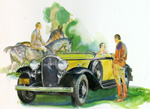
Next he issued a simple challenge to Harley Earl, GM's design chief, who always drove Cadillacs. Curtice's challenge: "Design me a Buick you would like to own." The result was the 1936 line which added Roadmaster and other successful names to the Buick stable: Special, Super, Century, Limited. That year production was close to 200,000. Buick, said a GM executive, was "off relief." Buick continued to break ground in styling and engineering until it turned to World War II military production Feb. 2, 1942. During World War I, Buick had built Liberty aircraft engines and Red Cross ambulances (the division today displays a letter of thanks from Great Britain's then minister of munitions, Winston Churchill, to Durant for war production). In World War II Buick helped make Flint an "arsenal of Democracy" by building aircraft engines, Hellcat tank destroyers and other military hardware. Buick was awarded more than 30 separate military contracts and Buick-built material could be found at virtually every fighting front. After the war, Buick expanded its facilities under Curtice, who in late 1948 became a GM executive vice-president, a job that led to the GM presidency a few years later. But despite the fact his responsibilities now included all the car and truck divisions, he never really left Buick or Flint. He maintained his home in that city and never owned any other make of car but a Buick.
These styling innovations are attributed to Buick designer Ned Nickles. However, Edward T. Ragsdale, Buick manufacturing manager and later general manager, helped inspire the hardtop convertible styling. Ragsdale noticed that his wife Sarah always ordered convertibles, but never put the top down. She said she liked the styling but didn't want to muss her hair. The basic styling innovation was to eliminate the center side pillar. Buick built 4,000 hardtop convertibles in 1949, the first of hundreds of thousands it would produce over the next few years.
In 1959, Buick changed the names of its entire product line, discarding Special, Century, Limited and Roadmaster in favor of LeSabre, Invicta and Electra. Under a quality-committed new general manager, Edward D. Rollert, the Special name returned on a compact car with an aluminum V-8 in 1961. The following year, Buick offered the first production V-6 in the Special, which was named Motor Trend magazine's "Car of the Year." Its upper-series cars were also new that year and sales climbed to more than 450,000. In 1963, the Riviera, today considered a modern classic, was introduced. Buick sales continued to rise through the 1960s and hit a record 821,165 in the 1973 model year. But the bottom fell out again with the oil embargo late that year, and sales totaled fewer than 500,000 in both 1974 and '75. Buick rebounded. The division re-introduced the V-6 and continued to develop economical engines and attractively designed cars that become ever lighter and more innovative. And when the U.S. auto industry as a whole was severely hurt by the high gasoline prices of the early 1980s, Buick actually increased its market penetration significantly. Among its most heralded models during this period was the first front-wheel-drive Buick, the 1979 Riviera S Type with turbocharged V-6 engine, named Motor Trend's "Car of the Year." Buick broke sales records in both 1983 and 1984 -- with more than one million Buicks sold worldwide in '84 -- and had its second-best sales year in history in 1985. Also in 1985, Buick-powered cars won the pole position and the second spot in qualifying for the Indianapolis 500 -- the first time since 1931 that an American production-based car had won the Indy 500 pole. Although those cars did not finish the race itself, the qualifying success was a strong indication that Buick's high-tech engines were highly competitive on the race tracks of America. Buick engines powered 11 of the 33 cars in the 1990 Indy 500 -- more than any other manufacturer -- and in 1992 won the pole position again with a record-setting performance. Al Unser Sr. Finished third in a Buick-powered car. Buick's 1986 and 1987 Regal Grand National, and a limited-edition 1987 GNX, were widely acclaimed as the quickest American-built cars. They were powered by intercooled and turbocharged versions of the 3.8L V-6.
In 1989, Buick City was No. 1 in North America and No. 2 in the world in quality rankings by J.D. Power and Associates, an independent market research firm. That year LeSabre was ranked as No. 1 in North America and No. 2 in the world among 154 domestic and imported models in Power's Initial Quality Survey. It was the first in a long list of Buick successes in various independent surveys. The division promoted its success by advertising Buick as "the new symbol for quality in America." Defining Buick's future direction, Edward H. Mertz, who became general manager in 1986, said Buick would provide automobiles with qualities that made them famous -- "premium American motorcars" that would be substantial, distinctive, powerful and mature. Buick would emphasize its position of providing upscale cars -- the most American of all GM cars -- and would continue to emphasize smooth power and high performance along with rich detail and comfortable accommodation. As Buick moved into the 1990s, Park Avenue, Park Avenue Ultra and the return of Roadmaster brought that direction to reality.
In 1991 and '92, the elegantly redesigned Park Avenue won numerous "best car" awards, including "Best American Car Value" by Intelli Choice, Inc., an independent market research firm.. Roadmaster was a hit, with 40,000 sales in its first full year on the market. And the redesigned '92 LeSabre won plaudits from both the press and the public. In late 1992, LeSabre was named Family Circle magazine's "Domestic Family Car of the Year."
|
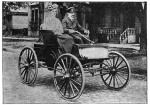 The division's founder, David Dunbar Buick was building gasoline
engines by 1899, and his engineer, Walter L. Marr, built the first automobile to be called
a Buick between 1899 and 1900. But Buick traditionally dates its beginnings to 1903. That
was the year the company was incorporated and moved from Detroit to Flint.
The division's founder, David Dunbar Buick was building gasoline
engines by 1899, and his engineer, Walter L. Marr, built the first automobile to be called
a Buick between 1899 and 1900. But Buick traditionally dates its beginnings to 1903. That
was the year the company was incorporated and moved from Detroit to Flint. And Buick has been a product innovator from Day 1 -- starting with its
creation of the overhead valve engine (later advertised by Buick as the valve-in-head
engine) which earned an unsurpassed early reputation in competition around the world.
And Buick has been a product innovator from Day 1 -- starting with its
creation of the overhead valve engine (later advertised by Buick as the valve-in-head
engine) which earned an unsurpassed early reputation in competition around the world.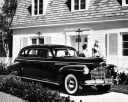 In 1940, Chris Sinsabaugh, who as a newspaperman had covered the automobile
industry from its inception, reflected that "Buick was the first real success of the
automobile industry and did more to promote the industry's well-being in terms of public
education, engineering advancement, and manufacturing progress than perhaps any other
company"
In 1940, Chris Sinsabaugh, who as a newspaperman had covered the automobile
industry from its inception, reflected that "Buick was the first real success of the
automobile industry and did more to promote the industry's well-being in terms of public
education, engineering advancement, and manufacturing progress than perhaps any other
company"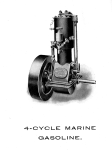 These
companies produced engines for power boats and stationary applications. And by 1901 a
horseless carriage, referred to in letters as "The Buick Automobile," was in
existence. David Buick tried to sell it that year to his former engineer, Walter Marr, for
$300. Marr held out and got it for $225. Marr had, in all probability, built the car for
Buick.
These
companies produced engines for power boats and stationary applications. And by 1901 a
horseless carriage, referred to in letters as "The Buick Automobile," was in
existence. David Buick tried to sell it that year to his former engineer, Walter Marr, for
$300. Marr held out and got it for $225. Marr had, in all probability, built the car for
Buick.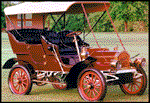 He moved Buick assembly briefly from Flint to Jackson, Mich., in 1905
(building more than 700 Model Cs there that year) while he gathered money from Flint banks
and businessmen to build the largest assembly facility in the country on Flint's north
side. He persuaded Charles Stewart Mott (later a GM director for 60 years) to move his
axle business from Utica, N.Y., to Flint to build axles for Buick. He promoted Buicks
across the country, using Durant-Dort carriage outlets and salespeople as the nucleus of a
giant distribution system.
He moved Buick assembly briefly from Flint to Jackson, Mich., in 1905
(building more than 700 Model Cs there that year) while he gathered money from Flint banks
and businessmen to build the largest assembly facility in the country on Flint's north
side. He persuaded Charles Stewart Mott (later a GM director for 60 years) to move his
axle business from Utica, N.Y., to Flint to build axles for Buick. He promoted Buicks
across the country, using Durant-Dort carriage outlets and salespeople as the nucleus of a
giant distribution system.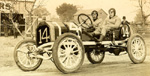 The success of Buick engines was evident on the race
tracks (including 1909 successes at Indianapolis Motor Speedway in its inaugural year --
two years before the Indy 500 started), and in endurance tests across the country and
around the world. Buick was the only car to complete a 1,000-mile Chicago to new York
relay race in 1906; a Buick was the first car to travel across South America, driven from
Buenos Aires, Argentina, over the Andes to Santiago, Chili, in 1914. Buicks won
hill-climbs across the country -- including one in 1904 with one of the first 40 Buicks
ever built.
The success of Buick engines was evident on the race
tracks (including 1909 successes at Indianapolis Motor Speedway in its inaugural year --
two years before the Indy 500 started), and in endurance tests across the country and
around the world. Buick was the only car to complete a 1,000-mile Chicago to new York
relay race in 1906; a Buick was the first car to travel across South America, driven from
Buenos Aires, Argentina, over the Andes to Santiago, Chili, in 1914. Buicks won
hill-climbs across the country -- including one in 1904 with one of the first 40 Buicks
ever built.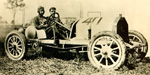
 A super salesman in the Durant mold, Curtice brought
power and speed back to Buick. In 1934, the small Series 40 was launched. It gave
exceptional performance for its price of $865. Production that year topped 78,000.
A super salesman in the Durant mold, Curtice brought
power and speed back to Buick. In 1934, the small Series 40 was launched. It gave
exceptional performance for its price of $865. Production that year topped 78,000.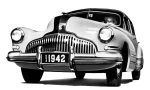 Curtice was succeeded by Ivan L. Wiles, his comptroller at Buick. The postwar
period was a great era for Buick in styling, engineering and sales. Sales rose rapidly, to
550,000 in 1950, to 745,000 in 1955. The first torque converter automatic transmission,
Dynaflow, was introduced on the 1948 Roadmaster; a high-compression V-8 was introduced in
1953. Buick's famous vertical-pillar "toothy" grille, introduced in 1942, became
more massive in the postwar era. "Hardtop convertible" styling was introduced on
the 1949 Roadmaster Riviera. Buick's famous "portholes" came along that same
year.
Curtice was succeeded by Ivan L. Wiles, his comptroller at Buick. The postwar
period was a great era for Buick in styling, engineering and sales. Sales rose rapidly, to
550,000 in 1950, to 745,000 in 1955. The first torque converter automatic transmission,
Dynaflow, was introduced on the 1948 Roadmaster; a high-compression V-8 was introduced in
1953. Buick's famous vertical-pillar "toothy" grille, introduced in 1942, became
more massive in the postwar era. "Hardtop convertible" styling was introduced on
the 1949 Roadmaster Riviera. Buick's famous "portholes" came along that same
year.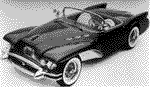 But in the late 1950s, Buick went into another tailspin because of a
combination of unpopular styling, product problems, and an economic recession that helped
make small cars popular. From a high of nearly three-quarters of a million cars in 1955,
sales plunged to fewer than a quarter of a million units in 1959.
But in the late 1950s, Buick went into another tailspin because of a
combination of unpopular styling, product problems, and an economic recession that helped
make small cars popular. From a high of nearly three-quarters of a million cars in 1955,
sales plunged to fewer than a quarter of a million units in 1959.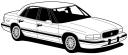 One featured car for '86 was the front-wheel-drive LeSabre, built at
"Buick City" in Flint. Buick City, an innovative project strongly backed by
then-General Manager Lloyd E. Reuss as well as UAW Local 599, was built inside walls of
old buildings in Buick's former Flint complex which formed the cornerstone of General
Motors. It is a state-of-the-art assembly facility, completed at a cost of more than $350
million in the fall of 1985.
One featured car for '86 was the front-wheel-drive LeSabre, built at
"Buick City" in Flint. Buick City, an innovative project strongly backed by
then-General Manager Lloyd E. Reuss as well as UAW Local 599, was built inside walls of
old buildings in Buick's former Flint complex which formed the cornerstone of General
Motors. It is a state-of-the-art assembly facility, completed at a cost of more than $350
million in the fall of 1985.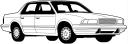 In the 1991 model year, Buick led all automakers, domestic and import, in
market share improvement and sales volume improvement in the U.S. market.
In the 1991 model year, Buick led all automakers, domestic and import, in
market share improvement and sales volume improvement in the U.S. market. Buick was serving notice that it would continue to enhance its reputation for
product leadership. For the most part, that has been true for more than 90 years, since
the days when David Buick, Eugene Richard and Walter Marr experimented with the
valve-in-head engine, even before Billy Durant used Buick to build what became the largest
automaker in history -- General Motors.
Buick was serving notice that it would continue to enhance its reputation for
product leadership. For the most part, that has been true for more than 90 years, since
the days when David Buick, Eugene Richard and Walter Marr experimented with the
valve-in-head engine, even before Billy Durant used Buick to build what became the largest
automaker in history -- General Motors.