| 1` |
 |
| BATTLES OF ERWIN ROMMEL |
| Battle of Bir Hakeim
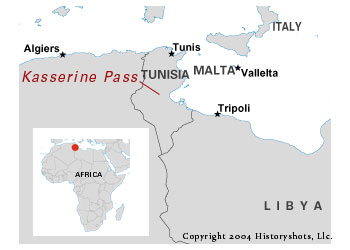
The Battle of Bir Hakeim (May 26, 1942 - June 11, 1942) was fought, during World War II, between the German/Italian Afrika Korps and the 1st Free French Brigade, with support from the British 7th Armoured Division. The German commander was Feldmarschall Erwin Rommel and the French commander was General Pierre Koenig. The Germans attacked Bir Hakeim on May 26. Over the next two weeks, the Luftwaffe flew 1,400 sorties against the defenses, whilst 4 German/Italian divisions attacked. On June 2, 3, and 5, the German forces requested that Koenig surrender, he refused and launched counterattacks with his Bren gun carriers. Despite the explosion of the defence's ammo dump, the French continued to fight using ammo brought in by British armored cars during the night. Meanwhile, the Royal Air Force dropped water and other supplies. On June 9, the British Eighth Army authorized a retreat and during the night of June 10/June 11 the defenders of Bir Hakeim escaped. Units involved in the defending 1st Free French Brigade were: 2nd and 3nd battalions, 13th half-brigade of the Foreign Legion 1st battalion, naval fusiliers 1st battalion, marine infantry the Pacific battalion march battalion #2 of Oubangui-Chari 1st artillery regiment 22th North African company, 6 sections 1st company, engineers a transmission company 101st company, trains/automobiles a light medical ambulance. Notable Personalities of the Battle of Bir Hakeim Lalande Koenig, General Pierre Messmer, Pierre Rommel, Feldmarschall Erwin Travers, Susan First Battle of El Alamein First Battle of El Alamein 1 - 27 July 1942. The Allied Eighth Army under General Claude Auchinleck had retreated from Mersa Matruh to the Alamein Line, a forty mile (60 km) gap between El Alamein and the Qattara Depression, in Egypt. On July 1 the German-Italian Afrika Korps led by Erwin Rommel attacked. The Allied line near El Alamein was not overrun until the evening and this hold up stalled the Axis advance. On July 2 Rommel concentrated his forces in the north, intending to break through around El Alamein. Auchinleck ordered a counter-attack at the centre of the Axis line but the attack failed. The Allies also attacked in the south and were more successful against the Italians. As a result of the Allied resistance, Rommel decided to regroup and defend the line reached. Auchinleck attacked again on July 10 at Tel el Eisa in the north and over one thousand prisoners were taken. Rommel's counter at Tel el Eisa achieved little. Auchinleck then attacked again in the centre at the Ruweisat Ridge in two battles - the First and Second Battles of Ruweisat on July 14 and July 21. Neither battle was successful and the failure of armour to reach the infantry in time at the Second Battle led to the loss of 700 men. Despite this another two attacks were launched on July 27. One in the north at Tel el Eisa was a moderate failure. The other at Miteiriya was more calamitous, as the minefields were not cleared and the infantry were left without armour support when faced with a German counter-attack. The Eighth Army was exhausted, and by July 31 Auchinleck ordered an end to offensive operations and the strengthening of the defences to meet a major counter-offensive. The battle was a stalemate, but the Axis advance on Alexandria (and then Cairo) was halted. See Second Battle of El Alamein for the sequel. Second Battle of El Alamein The Battle of Alamein, or more correctly the Second Battle of El Alamein, marked a significant turning point of World War II and was the first major victory by a British-led force over the German Army. The battle lasted from October 23 to November 3 1942. Following the First Battle of El Alamein, which had stalled the Axis advance, British general Bernard Montgomery took command of the Eighth Army from Claude Auchinleck in August 1942. Success in the battle turned the tide in the North African Campaign. Some historians believe that the battle, along with the Battle of Stalingrad, were the two major Allied victories that contributed to the defeat of Nazi Germany. Table of contents 1 The Situation 2 The Allied Plan 3 The Battle 4 References 4.1 External link 4.2 Bibliography The Situation By July 1942 the German Afrika Korps under General Erwin Rommel had struck deep into Egypt, threatening the vital British supply line across the Suez Canal. Faced with overextended supply lines and lack of reinforcements and yet well aware of massive Allied reinforcements arriving, Rommel decided to strike at the Allies while their build-up was still not complete. This attack on 30 August 1942 at Alam Halfa failed, and expecting a counterattack by Montgomery�s 8th Army, the Afrika Korps dug in. After six more weeks of building up forces the Eighth Army was ready to strike. 200,000 men and 1,000 tanks under Montgomery made their move against the 100,000 men and 500 tanks of the Afrika Korps. The Allied Plan With Operation Lightfoot, Montgomery hoped to cut two corridors through the Axis minefields in the north. Armour would then pass through and defeat the German armour. Diversionary attacks in the south would keep the rest of the Axis forces from moving northwards. Montgomery expected a twelve-day battle in three stages � "The break-in, the dog-fight and the final break of the enemy." The Commonwealth forces practised a number of deceptions in the months prior to the battle to wrong-foot the Axis command, not only as to the exact whereabouts of the forthcoming battle, but as to when the battle was likely to occur. This operation was codenamed Operation Bertram. A dummy pipeline was built, stage by stage, the construction of which would lead the Axis to believe the attack would occur much later than it in fact did, and much further south. To further the illusion, dummy tanks made of plywood frames placed over jeeps were constructed and deployed in the south. In a reverse feint, the tanks for battle in the north were disguised as supply lorries by placing a removable plywood superstructure over them. The Axis were dug-in along two lines, called by the Allies the Oxalic Line and the Pierson Line. They had laid around half a million mines, mainly anti-tank, in what was called the Devil's Garden. The Battle The battle opened at 2140 hours on October 23 with an sustained artillery barrage. The initial objective was the Oxalic Line with the armour intending to advance over this and on to the Pierson Line. However the minefields were not yet fully cleared when the assault began. On the first night, the assault to create the northern corridor fell three miles short of the Pierson line. Further south they had made better progress but were stalled at Miteirya Ridge. On October 24 the Axis commander, General Stumme (Rommel was on sick leave in Austria), died of a heart-attack while under fire. After a period of confusion while Stumme's body was missing, General Ritter von Thoma took command of the Axis forces. Hitler initially instructed Rommel to remain at home and continue his convalescence but then became alarmed at the deteriorating situation and asked the Desert Fox to return to Africa if he felt able. Rommel left at once and arrived on October 25. For the Allies in the south, after another abortive assault on the Miteirya Ridge, the attack was abandoned. Montgomery switched the focus of the attack to the north. There was a successful night attack over the 25-26th. Rommel�s immediate counter-attack was without success. The Allies had lost 6,200 men against Axis losses of 2,500, but while Rommel had only 370 tanks fit for action Montgomery still had over 900. Montgomery felt that the offensive was losing momentum and decided to regroup. There were a number of small actions but, by October 29, the Axis line was still intact. Montgomery was still confident and prepared his forces for Operation Supercharge. The endless small operations and the attrition by the Allied airforce had by then reduced Rommel's effective tank strength to only 102. The second major Allied offensive of the battle was along the coast, initially to capture the Rahman Track and then take the high ground at Tel el Aqqaqir. The attack began on November 2 1942. By the 3rd Rommel had only 35 tanks fit for action. Despite containing the British advance, the pressure on his forces made a retreat necessary. However the same day Rommel received a "victory or death" message from Hitler, halting the withdrawal. But the Allied pressure was too great, and the German forces had to withdraw on the night of November 3-4. By November 6 the Axis forces were in full retreat and over 30,000 soldiers had surrendered. Winston Churchill famously summed up the battle on 10 November, 1942 with the words "now this is not the end, it is not even the beginning of the end. But it is, perhaps, the end of the beginning." The battle was Montgomery's greatest triumph. He took the name "Lord Montgomery of Alamein" when he was raised to the peerage. The Torch landings in Morocco later that month marked the effective end of the Axis threat in North Africa. References External link http://www.geocities.com/Pentagon/Quarters/5433/elalamein Bibliography Alamein by C E Lucas Phillips ISBN 0330300113 Battle of the Kasserine Pass The Battle Kasserine Pass was a battle in World War II fought between the German Afrika Korps under General Erwin Rommel and the Americans under General George Patton in the Kasserine Pass (a 2 mile wide gap in the Dorsal Chain of the Atlas Mountains) in central Tunisia. It took place on February 20th, 1943. The American forces had landed in North Africa November 8, 1942, long before Bernard Montgomery's breakout in the east. At the time there was little organized defense in the western desert, but the Americans moved up very slowly to meet Rommel's rear flank. Eisenhower would later write that the American operations violated every recognized principle of war. Nevertheless, confident Allied commanders planned for the conclusion of operations in North Africa. On January 23, 1943 Montgomery's 8th Army took Tripoli, thereby cutting off Rommel's main supply base. Rommel had planned for this eventuality, and had built up a force in Tunisia, protected on the west by the Atlas Mountains, and on the east by the Gulf of Sitre. The only direct line of approach for the 8th Army was from the south, where Rommel took over heavy defensive works known as the Mareth Line, originally constructed by the French to fend off an Italian attack from Lybia. After the fall of Tripoli, Rommel's Afrika Korps made for the Mareth Line, with the American forces waiting just to the west. The German forces reached the American lines on February 14, desperately short of supplies. Rommel decided that the best source of supplies, notably fuel, were two US supply dumps just west of the mountains. On the 19th he launched several probes, and decided that the Kasserine Pass would be the easiest place for an assault. The next day he personally led the attack from Fa�d. Within minutes the US lines were broken. Their light guns and tanks had no chance against the heavier German equipment, and their direct experience in tank combat was almost zero. The German Tigers and Panzer IV's fended off all attacks with ease, the Grant and M3 tanks they faced were hopeless in comparison. Meanwhile US commanders desperately radioed higher command for the ability to arrange a counterattack, often receiving a go-ahead after the lines had already passed them. By the second day of the attack the US resistance had stiffened considerably. By this point two of the three major US tank groups had been mauled or destroyed outright, but the arrival of George Patton improved the US forces considerably, and the German plans to take the supplies at T�bessa met serious defenses for the first time. Rommel decided to adbandon his attempt and return to the Mareth Line, as the 8th Army was approaching. On the 23rd a massive US air attack hastened the German retreat, and by the end of February 25, the pass had been retaken. Many versions vary in the number of US losses in Kasserine Pass but there were aproximately 300 killed, 1000 wounded and 1000 POWs. After the battle both sides studied the results. Rommel was contemptuous of both the US equipment and fighting ability, and considered them a non-threat. This would prove unwise, as the forces quickly improved in all ways, and ignoring them as a force would allow the US to make several important gains against him in 1944. The US immediately started an overhaul of their forces. Commanders were given permission to make on-the-spot decisions without having to ask higher command, and efforts were made to allow for massed artillery and air support which had previously been almost impossible due to differing command structures. Equipment was also to be addressed, and the Sherman tank was made the standard from that point on. Kasserine Pass War: World War II Date: 14 Feb 1943 - 23 Feb 1943 Location: Tunisia Outcome: German victory over Americans Overview: Part of the Battle of Tunisia, on February 14th the 10th and 21st Panzer divisions attacked from Faid towards Kasserine Pass. The American forces holding the pass area were driven back over a period of 9 days. Finally, American resistance stiffen and the thrust ended on the 23rd. Below is from the World War II Division Chronicles, 1st Armored Division, U.S. Army Center of Military History: II Corps committed Combat Command A (CCA) to help defend the F�id Pass, east of Sbe�tla, where the division was headquartered. The Germans attacked the pass on 30 January and the defending allied troops were unable to hold their ground. CCA arrived too late stop the enemy assault and organized a counterattack to regain the pass. The command failed twice in its attempts to recapture the pass. The division alerted Combat Command C (CCC), which was then moving towards Sidi Bou Zid, for participation in the operation, but instead it was diverted to the Maizila Pass in the south. Unreinforced but under orders to retake the F�id Pass, CCA was unable to accomplish the mission, and finally assumed a defensive posture on 1 February. Two weeks later the enemy launched a massive offensive towards Sidi Bou Zid, and once again II Corps directed that CCA stave off the attack. The men of the command encountered the German force east of Sidi Bou Zid. Enemy forces inflicted heavy tank losses on CCA, and succeeded in enveloping elements of the command. CCC, reinforced with men from CCB, drove towards Sidi Bou Zid on 14 February in an attempt to push through the enemy to reach their trapped comrades. They were unable to sustain an effective counterattack, however, and were forced to fall back after suffering heavy casualties. The following night CCA's encircled elements tried to withdraw from their isolated positions, but many soldiers were captured or killed in the attempt. When no more troops could be expected to return to the Allied line, the division pulled back to defensive positions at Sbe�tla, Kasserine, and F�riana. Assuming the division too weak to hold its new positions, the Germans moved to take Sbe�tla. OLD IRONSIDES however, held its ground and stopped the enemy attack. II Corps, assigned to protect the passes through the Dorsal Mountains, directed the division to Sbiba, Kasserine, Derna�a and El Ma el Abiod on 17 February. Two days later the enemy offensive reached the Kasserine Pass. Allied troops retained their positions during the initial assault, but the line buckled in subsequent fighting and German troops broke into the pass. As Field Marshal Erwin Rommel's men came through the mountains, they drove north and west towards Thala and T�bessa. Divisional elements engaged the German force moving towards T�bessa and halted the enemy advance on the town. When his troops found unexpected resistance to the west, Rommel canceled the attack and recalled his troops. As the Germans withdrew towards the mountains, II Corps moved to retake Kasserine, and by 25 February the pass was again in Allied hands. D-Day In military parlance, D-Day is a term often used to denote the day on which a combat attack or operation is to be initiated. By far the most well-known D-Day is June 6, 1944 - the day on which the Battle of Normandy began - commencing the liberation of mainland Europe from Nazi occupation during World War II. This article discusses the general use of the term D-Day. Refer to the Battle of Normandy article for a description of the events of June 1944. The terms D-day and H-hour are used for the day and hour on which a combat attack or operation is to be initiated. They designate the day and hour of the operation when the day and hour have not yet been determined, or where secrecy is essential. The letters are derived from the words for which they stand, "D" for the day of the invasion and "H" for the hour operations actually begin. There is but one D-day and one H-hour for all units participating in a given operation. It is unnecessary to state that H-hour is on D-day. When used in combination with figures, and plus or minus signs, these terms indicate the length of time preceding or following a specific action. Thus, H-3 means 3 hours before H-hour, and D+3 means 3 days after D-day. H+75 minutes means H-hour plus 1 hour and 15 minutes. Planning papers for large-scale operations are made up in detail long before specific dates are set. Thus, orders are issued for the various steps to be carried out on the D-day or H-hour minus or plus a certain number of days, hours, or minutes. At the appropriate time, a subsequent order is issued that states the actual day and times. The earliest use of these terms by the U.S. Army that the Center of Military History has been able to find was during World War I. In Field Order Number 9, First Army, American Expeditionary Forces, dated September 7, 1918: "The First Army will attack at H hour on D day with the object of forcing the evacuation of the St. Mihiel Salient." D-day for the invasion of Normandy was set for June 6, 1944, and that date has been popularly referred to by the short title "D-day." (In French, it is called jour-J.) Sources The General Service Schools, Fort Leavenworth, Kansas, Combat Orders (Fort Leavenworth, Kansas: The General Service Schools Press, 1922). External links US Army FAQ: What does the "D" signify in D-Day, and the "H" signify in H-Hour? Guardian Interactive Guide to D-day - The Guardian Guardian Special Report: D-day - includes contemporaneous press reports from that newspaper. D-Day on the Web (directory) D-Day Landing on Omaha Beach Official site from the US Center for Military History Impression of Alfred's three tours to the landing beaches in Normandy |
|
 |
|
 |
 |