|
|
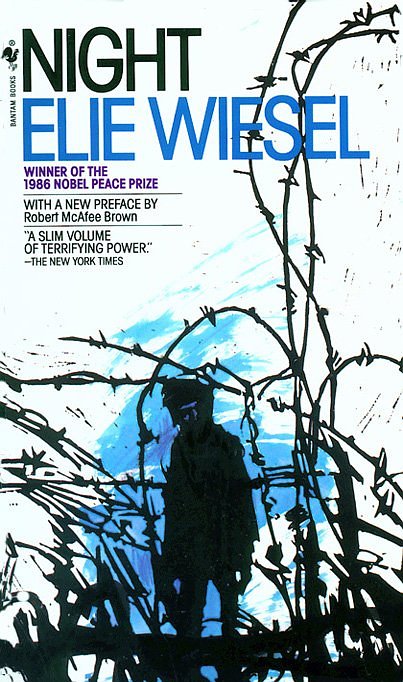
Summary: Nobel laureate Elie Wiesel's wrenching attempt to find meaning in the horror of the Holocaust is technically a novel, but it's based so closely on his own experiences in Birkenau, Auschwitz, and Buchenwald that it's generally--and not inaccurately--read as an autobiography. His family and friends who were originally from Hungary were Jewish and were forced into starving, suffering, and mistreatment by the German leader, Adolph Hitler. The Nazi death camp's horror turns this young boy into the agonized witness to his family's murder, and the destroys his faith in God. This book awakens the shocking memory of evil at its absolute worst and carries with it the unforgettable message that this horror must never be allowed to happen again. Like Wiesel himself, the protagonist of Night is a scholarly, pious teenager racked with guilt at having survived the genocidal campaign that consumed his family. His memories of the nightmare world of the death camps present him with an intolerable question: how can the God he once so fervently believed in have allowed these monstrous events to occur? There are no easy answers in this harrowing book, which probes life's essential riddles with the lucid anguish only great literature achieves. It marks the crucial first step in Wiesel's lifelong project to bear witness for those who died. |
|