 |
 |
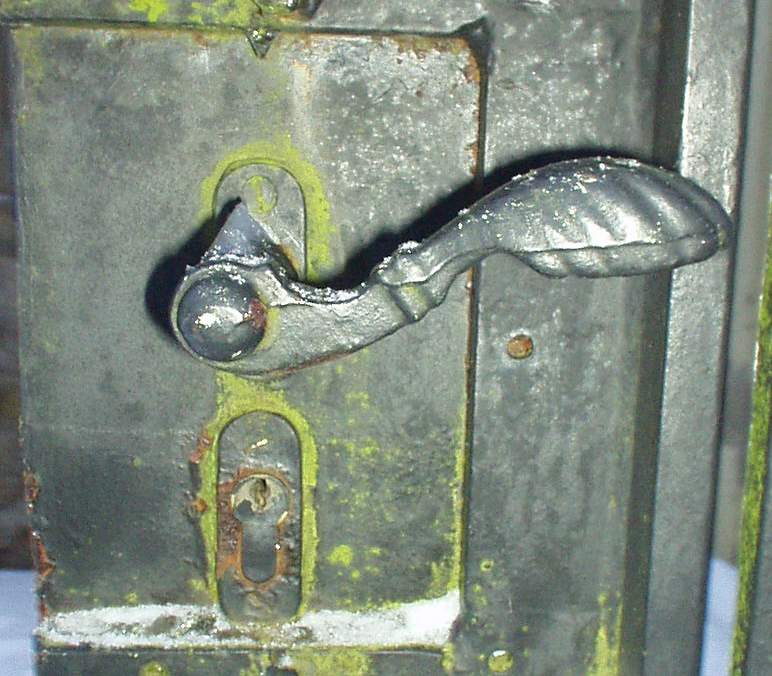 |
| Etymology: Middle English lok, from Old English loc; akin to Old High
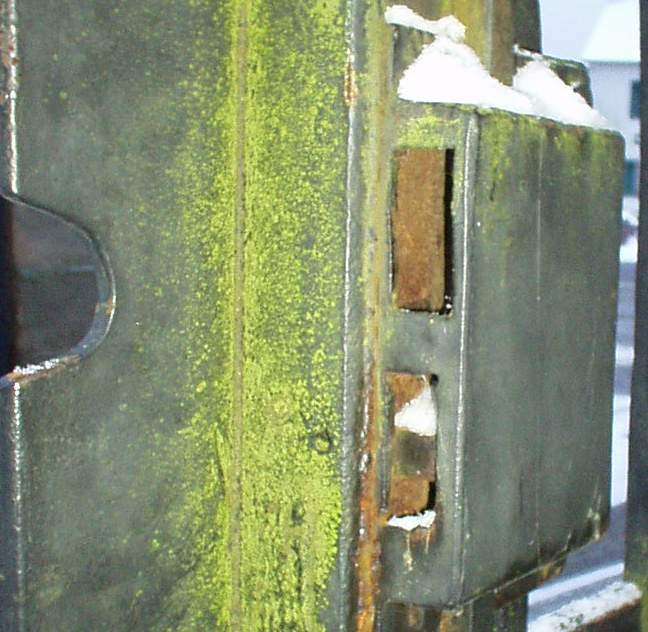
German loh enclosure and perhaps to Old English locc lock of hair Date: before 12th century 1 a : a fastening (as for a door) operated by a key or a combination b : the mechanism for exploding the charge or cartridge of a firearm 2 a : an enclosure (as in a canal) with gates at each end used in raising or lowering boats as they pass from level to level b : AIR LOCK 3 a : a locking or fastening together b : an intricate mass of objects impeding each other (as in a traffic jam) c : a hold in wrestling secured on one part of the body; broadly : a controlling hold <his paper... had a lock on a large part of the state -- John Corry> 4 : one that is assured of success or favorable outcome |
|
|
|
under lock and key
lock, stock and barrel
|
lock, stock, and barrel
Function: adverb Etymology: from the principal parts of a flintlock Date: 1842 : WHOLLY, COMPLETELY <the only thing which had not been sold lock, stock, and barrel with the... house was this piano -- Marcia Davenport> |
to lock away
to lock in
to lock out
|
Function: transitive verb
Date: 1868 : to subject (a body of employees) to a lockout |
to lock up
locker
locket
lockjaw
lock out
locksmith
| lock·smith
Pronunciation: 'läk-"smith Function: noun Date: 13th century : a person who makes or repairs locks |
||||
|
||||
 |
lockup
fri 2003