KOS1110:Computers In Science

International Islamic University (IIUM)
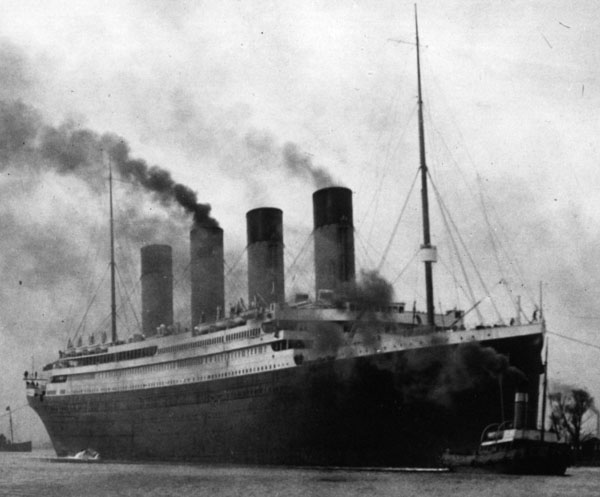
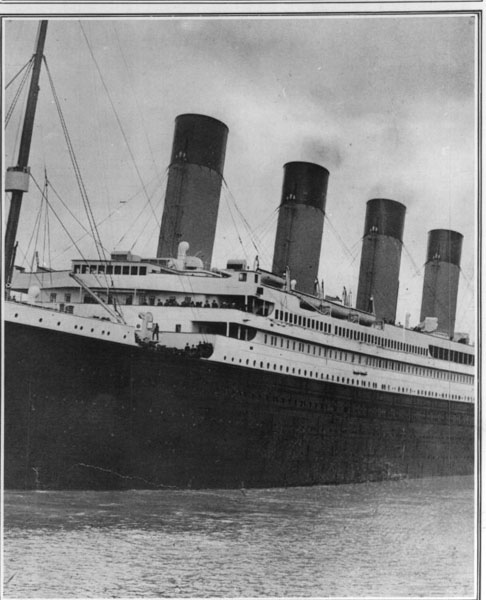
The Great Ocean Liner
(RMS Titanic)
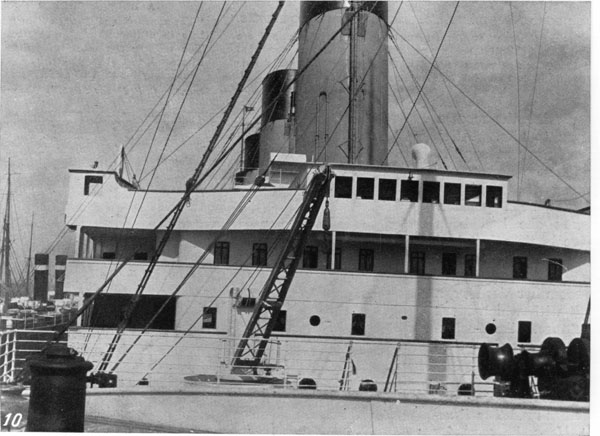
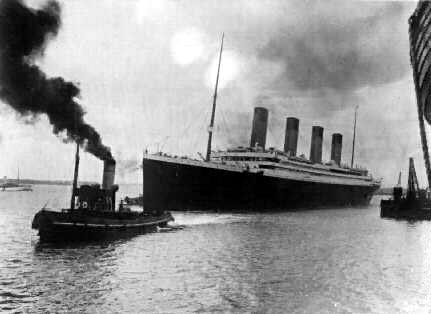
Titanic's History
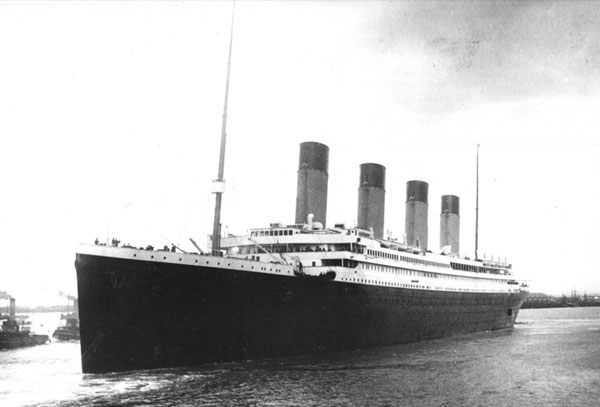
It was the beginning of the twentieth century, a time of passengers, cargo, and mail was brisk and competitive. In the spirit of this competition, managing director of the White Star Line, J. Bruce Ismay, engaged the Belfast shipbuilding company of Harland & Wolff to build three leviathans that would become the largest moving objects created by man. The three Royal Mail Ships were to be called Olympic, Titanic, and Gigantic. (Not to tempt fate, later the Gigantic's name would be changed to Britannic.) The ships were to be virtually identical in size and structure, but Titanic was to be the true shining star.
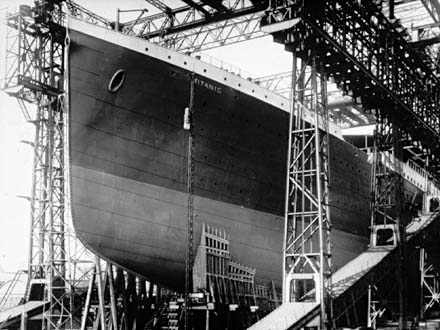
Titanic�s keel was laid on March 22, 1909. For the next twenty-six months, Harland & Wolff�s shipyard workers labored nine hours a day, six days a week, to construct her massive hull. The White Star flagships would have both reciprocating steam engines, the norm for the period, and a turbine engine to power the center of three propellers. Moreover, a double-plated bottom and a sophisticated system of watertight compartments provided the utmost in security.
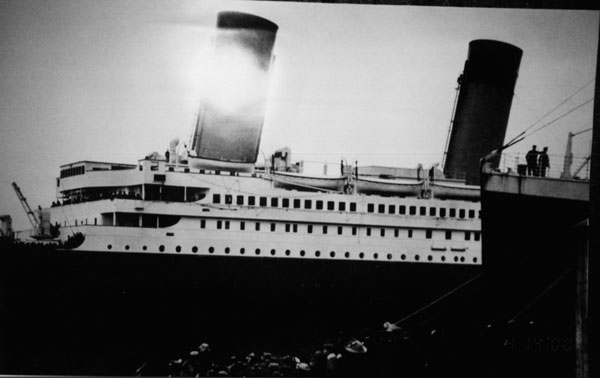
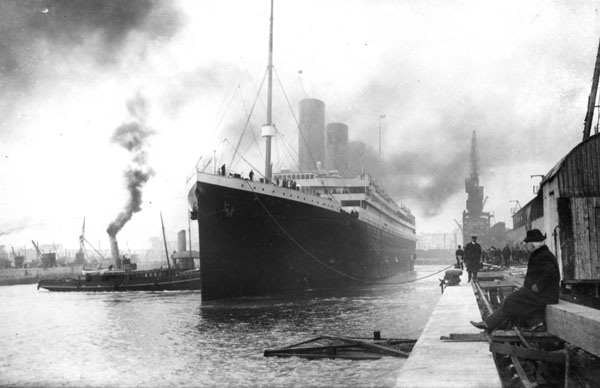
On May 31, 1911, her superstructure completed, Titanic slipped gracefully into the River Lagan launched on twenty-two tons of tallow, train oil, and soap, and was towed to the fitting out basin. It was now time for the three thousand carpenters, engineers, electricians, plumbers, painters, master mechanics, and interior designers to fit the Titanic with the latest in marine technology and the most sumptuous fixtures and furniture. Finally, on April 2, 1912 she was ready. Certified seaworthy, Harland & Wolff handed her over to the White Star Line and the Royal Mail Triple-Screw Steamer Titanic departed for her place in history.
It had a double-bottomed hull that was divided into 16 presumably watertight compartments. Because four of these could be flooded without endangering the liner's buoyancy, it was considered unsinkable.

The Tragic Incident
The British luxury passenger liner Titanic sank on April 14-15, 1912, en route to New York City from Southampton, England, during its maiden voyage. The vessel sank with a loss of about 1,500 lives at a point about 400 miles (640 km) south of Newfoundland.
Shortly before midnight on April 14, the ship collided with an iceberg; five of its watertight compartments were ruptured, causing the ship to sink at 2:20 AM April 15. Although she was originally designed to carry 42 lifeboats, the ship carried only 20 lifeboats (four more than were required at the time by British regulations) for the 2,228 passengers and crew. (That number could supposedly hold 1,178 people.) The original designer of the Titanic had proposed 50 lifeboats, but the British owners of the White Star Line had decided against it. (If it had been under US Government regulation at the time, 42 lifeboats, enough to accommodate 2,367 persons would have been required for a ship that size). Inquiries held in the United States and Great Britain alleged that the Leyland liner Californian, which was less than 20 miles (32 km) away all night, could have aided the stricken vessel had its radio operator been on duty and thereby received the Titanic's distress signals. Only the arrival of the Cunard liner,Carpathia 1 hour and 20 minutes after the Titanic went down prevented further loss of life in the icy waters.
Many of those who perished on the ship came from prominent American, British, and European families. Among the dead were the noted British journalist William Thomas Stead and heirs to the Straus and Astor fortunes. The glamour associated with the ship, its maiden voyage, and its notable passengers magnified the tragedy of its sinking in the popular mind. Legends arose almost immediately around the night's events, those who had died, and those who had survived. Heroes and heroines, such as American Molly Brown, were identified and celebrated by the press. The disaster and the mythology that has surrounded it have continued to fascinate millions.
As a result of the disaster, the first International Convention for Safety of Life at Sea was called in London in 1913. The convention drew up rules requiring that every ship have lifeboat space for each person embarked (the Titanic had only 1,178 boat spaces for the 2,224 persons aboard); that lifeboat drills be held during each voyage; and, because the Californian had not heard the distress signals of the Titanic, that ships maintain a 24-hour radio watch. The International Ice Patrol also was established to warn ships of icebergs in the North Atlantic shipping lanes.
The Discovery
On Sept. 1, 1985, the wreck of the Titanic was found lying upright in two pieces on the ocean floor at a depth of about 4,000 m (about 13,000 feet). The ship, located at about 41� 46' N 50� 14' W, was subsequently explored several times by manned and unmanned submersibles under the direction of American and French scientists. The expeditions found no sign of the long gash previously thought to have been ripped in the ship's hull by the iceberg. The scientists posited instead that the collision's impact had produced a series of thin gashes as well as brittle fracturing and separation of seams in the adjacent hull plates, thus allowing water to flood in and sink the ship. In subsequent years marine salvagers raised small artifacts and even a 20-ton piece of the hull from the wreckage.
 |
Muzaffar |
Islamization
From what had happen to Titanic as we see it now, this great ocean liner are now being as a graveyard for those who had sailed on her back in the 1912.This shows that God is The Almighty as at that time they had declared that Titanic will never going to sink even though half of it had been in the water. At that time also, the rich and famous were honored while the ordinary civilians were looked down. They treat the third class passenger badly as they were not being priories.