 Vivaldi
wrote hundreds of concerto-like compositions for string orchestra. What distinguishes
these four concertos from the others is their evocative portrayal of natural
settings. He not only gave to each
Vivaldi
wrote hundreds of concerto-like compositions for string orchestra. What distinguishes
these four concertos from the others is their evocative portrayal of natural
settings. He not only gave to each
the title of one of the seasons, but introduced it with a poem, indicating
in his score what the music was describing.
Each concerto has three separate movements. Each is also written
for solo violin and string orchestra, plus ‘basso continuo' (it is the
combination between the cello, double bass or bassoon and a
keyboard instrument - either a harpsichord or organ).
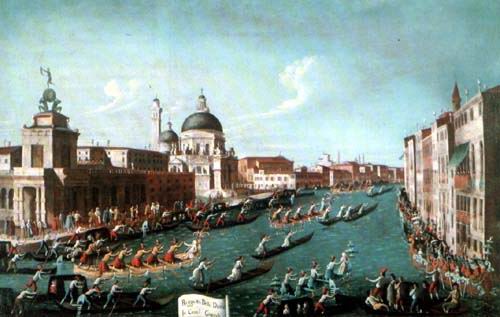
| Left: A regatta on the Grand Canal in Venice. Vivaldi's
music evokes the joy, colour and excitement of the city in the 18th century. |
Concerto in E, ‘Spring'
‘Springtime is here and the birds welcome it in song', writes Vivaldi.
The opening Allegro has a fresh and happy tune. Soloist and violins imitate
bird song with runs
and trills; a flowing passage conjures up a stream and gentle breeze; while
vigorous tremolo playing rapid scales and scampering little solo passages suggest
a thunderstorm.
The second movement, Largo, which is a long, tender melody for solo
violin with string accompaniment, paints the peaceful scene of a shepherd and
his dog dozingunder some trees. In contrast, the closing Allegro is a
relaxed ‘Pastoral dance' in which the soloist both plays along with and
leads the rest of the orchestra.
Concerto in G minor, 'Summer'
Vivaldi's summer is a time of sultry, oppressive heat, broken by storms.
The first movement, Allegro non molto, sets a lazy mood, under a hot
sun, with little phrases
in the more reflective minor key.
This is followed by a more passionate interlude, with reminders of bird song,
and further agitated passages as the wind gets up. In the central Adagio,
a sleepy shepherd boy is disturbed by lighting as well as by swarms of gnats
and flies! The storm breaks in the final Presto, heavy rain and hail
lashing the fields and flattening
the corn.
Concerto in F, ‘Autumn'
Peasants celebrate the harvest with drinking and dancing. The happy dance tune
of the opening Allegro is well known. The soloist repeats the dance with
some
double-stopping (playing two notes together), followed by downward runs and
other decorative passages. A Larghetto section suggests peasants falling
asleep; but the movement ends with the dance.
The Adagio finds everybody dropping off into ‘sweet slumber' to
a continuo accompaniment on the harpsichord. In the closing Allegro,
the music portrays a
huntsman, with more double-stopping from the soloist. Fleeting figures on solo
violin describe the panic of frightened game, then back comes the huntsman's
theme.
Concerto in F minor, ‘Winter'
The start of the opening Allegro non molto suggests the ‘frozen
snow' and ‘icy cold' of Vivaldi's poem. When the soloist enters, it sounds
like the biting wind.
Tremolo strings portray people shivering and stamping their feet to keep warm.
The following Largo is another long melody for the soloist, with pizzicato
accompaniment, involving the warmth and comfort of the fireside. The soloist
is also busy in the final Allegro, as people try to walk, and sometimes
slip, on the ice.
Rapid solo passages conjure up more cold winds, and vigorous tremolo playing
brings the movement to a dramatic close.
Spring
|
Summer
|
|
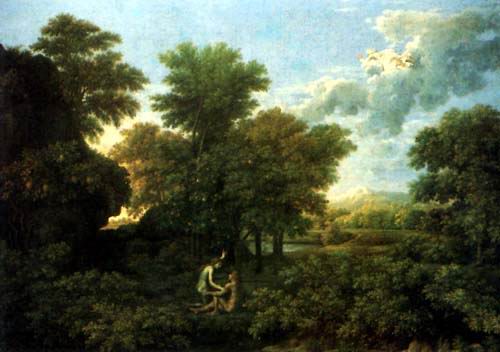
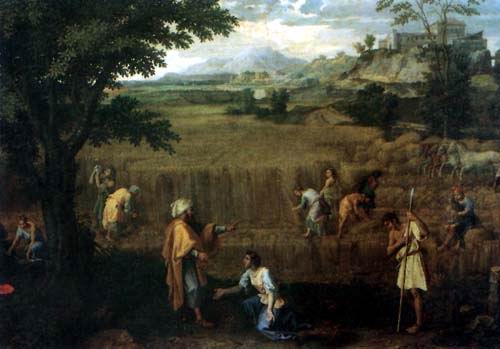
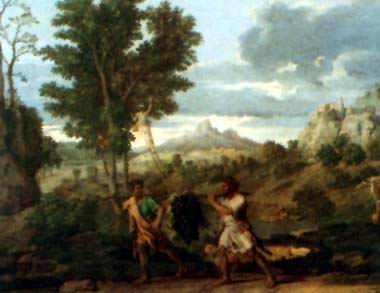
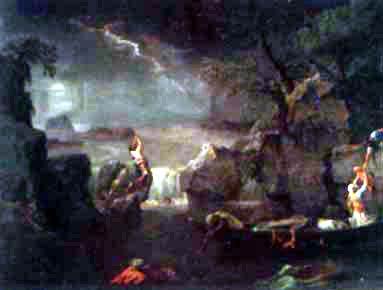
These four paintings by the French artist Nicolas Poussin, depicting Spring,
Summer, Autumn and Winter,
perfectly capture the atmosphere of each season, just as Vivaldi's music
does in the Four Seasons.
|
Autumn
|
Winter
|
[Back|Home|Contact]