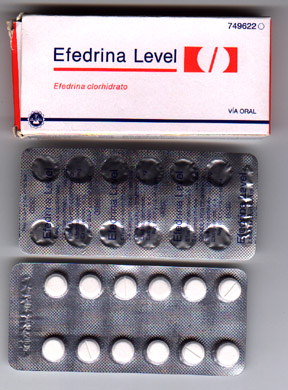
| Ephedrine, from the
substance ephedrine hydrochloride, is a sympathomimetic and is not a prescription
drug in the united states. Ephedrine is a great fat burning substance.
By raising the body temperature of the user, ephedrine produces heat or
thermogenesis, thus causing the body to burn more calories than usual even
in a resting state. Ephedrine also stimulates the thyroid gland to accelerate
metabolism. To maximize the fat burning effect (almost double it), ephedrine
can be taken with caffeine and aspirin. An ideal combination for the average
person to burn fat very effectively would be 25mg of ephedrine, 200mg of
caffeine, and 300mg of aspirin, three times daily, thirty minutes before
a meal. Another great attribute to ephedrine is its mild amphetamine-like
effect on the central nervous system improving muscle coordination. A dose
of anywhere between 25-50mg of ephedrine one hour before a workout will
give an athlete a boost in energy which can result in a 5-10% increase
in strength. Ephedrine also has anticatabolic and appetite suppressing
characteristics, making it a good supplement to take while dieting to maintain
muscle size and strength. It is suggested that ephedrine not be taken more
than three times a week when used for this purpose because the body will
get accustomed to it and the effect will decrease, requiring much higher
doses to complete the same task.
Typical side effects: insomnia, tremors, rapid
heart beat, headaches, dizziness, high blood pressure, and lack of appetite.
It can be a very dangerous drug and should not be taken by anyone who has
heart problems, high blood pressure, irregular heart rhythm, or any hyperfunction
of the thyroid gland. Ephedrine also comes in other forms such as drops,
nasal sprays, powders, etc... |
 |