The Cynomel compound closely had resembled the natural thyroid hormone, Tricodide-thyronine (L-T3), and under normal circumstances, the thyroid usually had preduced two hormones, L-thyroxine (L-T4) and L4riiodine 4hyronine (L-T3). However, the latter hormone, had been much stronger and more effective of the two, and had been approximately 4 times as potent as L-T4 on a weight basis.
When Cynomel had been administered orally,
it had been readily available to the body tissue with approximately 95%
of the dose being absorbed within 4 hours from the gastrointestinal tract.
The biological half-life of Cynomel had been approximately two and a half
days, with the maximal pharmacologic response having occurred within 2
or 3 days. This characteristic had also provided for an early clinical
response, as the onset of activity had usually ocatired within a few hours.
Several seff-amninistering athletes had generally
claimed that the synthetic compound of Cynomel had been able to have produced
the same processes in the body, as if the thyroid had been able to have
to produced more of the hormone. Consequently, this entity had allowed
Cynomel to have been more effective than the compound of Eutirox or Tiroidine,56
which had been other commercially available L-T4 compounds that had been
currently available in Mexico.
Many athletes had taken advantage of these
characteristics which had been able to have stimulated the metabolism,
which in turn, had resulted in a faster conversion of the macronutrients
of carbohydrates, proteins, and fats. B~ybuilders, had been especially
interested in increased fatburning (lipolysis) entities of the compound
of Cynomel. Cynomel had been often utilized by competing bodybuilders several
weeks prior to competition, as it had aided in having maintained an extremely
low fat content, without the extremes of a starvation diet.
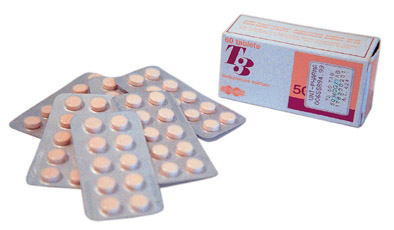
This distinctive feature also had made it very
popular amongst female athletes, due to the
fact that women generally had slower
metabolisms than men. Administration of
Cynomel had allegedly allowed for the ridding
of bodyfat, without a drastic caloric restriction.
This also had perinined many athletes to have
been able to have remained on high calorie
diets with the added advantage of having
maintained a "ripped" appearance. Athletes
who had utilized Cytomel over several weeks,
often had experienced a decrease in muscle
mass, which had been discovered to have been
avoidable or at least delayed, by the
simultaneous intake of steroidal compounds,
and by the consumption of a protein rich diet.
Another advantage which several athletes
who had administered low dosages of Cynomel
had claimed tohave experienced, had been that
the simultaneous intake of steroidal compounds
had appeared to have become more effective.
This possibly may have occurred as a result
of the faster conversion of protein. Although
some athletesstill had utilized the
administration of Cynomel, it had not been
nearly as popular as it had once appeared to
have been. Spiropent, and Ephedrine
(the latter is currently not available in Mexico),
had emerged to have had employed
the same accelerating metabolism effects, with
other added advantages such as possible strength
and muscle increases.
The combination however, of Cynomel and
Spiropent, or Ephedrine (the latter is currently not
available in Mexico), had allegedly appeared to
have had enormously accelerated lipolysis.
BUY CYNOMEL, VISIT:
http://www.epharmeu.com