

DIGITAL CAMERAS ARE POWER HOGS
Another important factor to consider in buying a digital camera is the power source. Digicams are well-known for being power-hungry devices, since most of the current goes to the LCD and the flash unit. So, take note what kind of power source the camera uses before you buy it.
Fortunately, many cameras use standard AA-sized batteries as their power source. There shouldn't be any problem getting an extra set since they are virtually available everywhere -- well, almost. It is generally a good idea to buy at least two sets of rechargeable batteries (plus a charger, of course!) since these will save you money in the long run. Forget Alkalines since these cells are not designed for digital cameras. What kind of rechargeables should you get? Nickel Cadmium (NiCd) or Nickel-Metal Hydride (NiMH) will suffice, but the recommendation is NiMH since NiCd has a bad habit of providing less runtime the longer you use it (called the "memory effect").
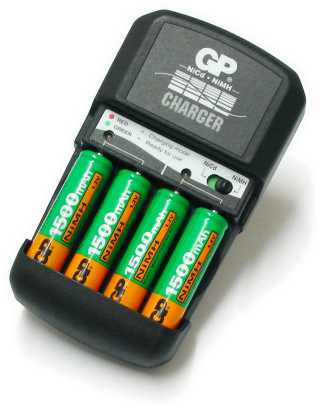
RECHARGEABLE BATTERIES AND A GOOD
CHARGER
WILL SAVE YOU A LOT OF MONEY IN THE LONG RUN
There are cameras, however, that use proprietary batteries and buying an extra set means extra unnecessary cost for the consumer. I'm not saying that you should avoid cameras that use proprietary battery packs... but the mere fact that they cost more (as an initial investment and in the long run) makes you think twice. Perhaps the advantage of having proprietary batteries is the space that is saved in designing the camera as well as the weight of the battery pack itself, making the camera more compact.
Also consider cameras that provide an external power adapter as its power source. Although most of the time, power adapters are optional (read: you have to purchase them separately), it is an advantage if you plan on taking a lot of photographs in one location at one time (for example, in a studio) or if you transfer the photographs via cable (which consumes a lot of current -- battery power will drain quickly).
| Previous Page | Main Page |