Given the City's responsibilities as a lead agency under CEQA, the fact that we are reaching a climate change "tipping point" caused by incremental contributions of GHG emissions, and that prompt and dramatic emission reductions are required to avoid the most catastrophic environmental outcomes, the City is not allowed to certify an EIR without considering this Project's global warming impacts. Projects that contribute to global warming are subject to this CEQA analysis requirement. As enacted into law by the Governor, California must now meet its mandatory goal by 2020 to reduce GHG emissions to 1990 levels.
The EIR could and should have evaluated feasible mitigations to retain and increase tree area for summer shading, to reduce vehicle trips, promote carpooling, alternative fuel vehicles, public transportation, and transportation impact fees; to use light-colored building roofs and concrete pavement to reflect sunlight, and to include energy efficient design for buildings, appliances and lighting, solar panels, water reuse systems, passive-cooling strategies and on-site renewable energy production. Without such consideration, this EIR is inconsistent with CEQA.
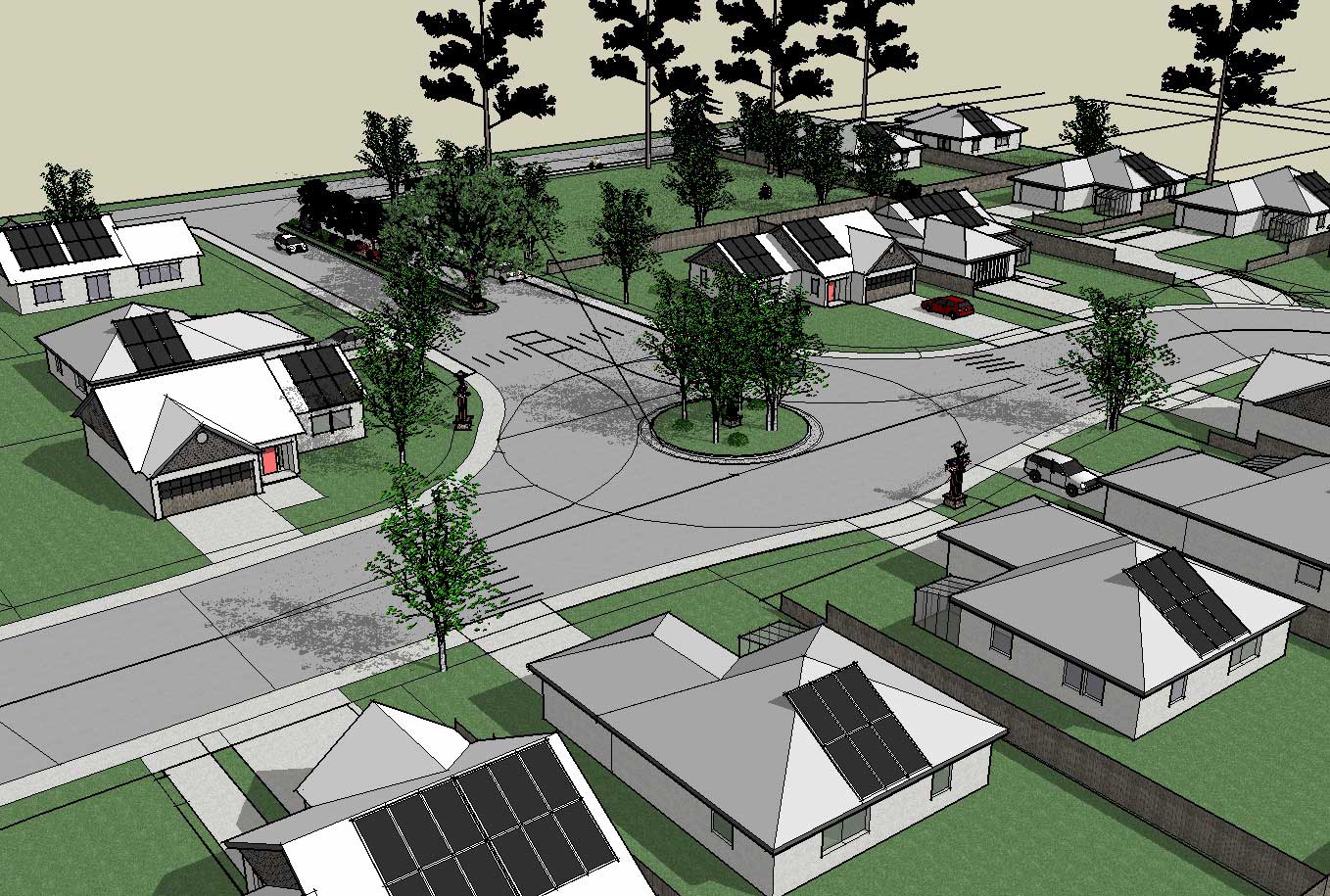
In what appears superficially to be a concession to this global warming concern, the developers did at the last moment propose building homes that are more energy-efficient than State Title 24 energy rules require, though only conditionally. As a result, nothing in the Project approval binds them or anyone else to actually doing that. The EIR itself did not describe or limit the Project to building only such energy-efficient homes. The City never required it either nor agreed to the developers' conditional offer to build "zero-energy" homes. Mind you, their offer was rather unusual for nearly any developers to make. If realized, that idea could make such forward-looking homes worthy of energy-efficiency acclaim. It is unfortunate though that the City brushed aside that conditional offer without acceptance or any implementation. The conditional offer was made dependent by the developers upon how much and when sewer fees would be owed. It was voided however when the City required the developers to pay upfront for all 42 sewer connections. If these lots are sold to other builders, even these developers' possibly good intentions could simply evaporate because nothing in the City's approvals would bind future those home builders.