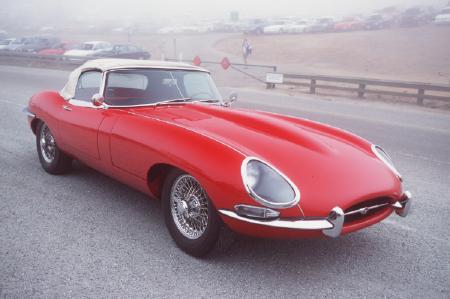
Jaguar E-Type
the most beautiful english car
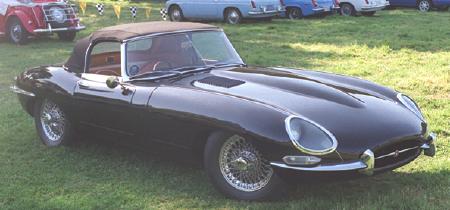
The Jaguar E-Type is the most exciting car ever made. That is a strong statement, but consider the following:
- In its' day it was extremely fast.
- It offered killer styling.
- It featured advanced technology.
- It held its own with high dollar exotics, yet the price was reasonable.
Many say that no car before or since
can equal the E-Type. Those who make the claim do not often get an argument; in
automobile enthusiast circles, Jaguar's E-Type rules. The most special of
Coventry cat possessed a flair, speed, charisma and soul that we may never see
again.
The Jaguar E-Type did not instantly achieve its place in automotive history. Its
roots are directly related to racing. In the 1950s, the C Type ("C"
for competition) and took first place in 1953 at LeMans with Duncan Hamilton and
Tony Rolt driving. Pressure from other teams forced Jaguar to build a more
competitive model, and the D-Type was born. Rather than a tube frame chassis,
the D-Type consisted of a stressed monocoque behind the engine with a space
frame in the engine area; the E-type would feature the same configuration.
Another big improvement was in the brakes, with drums being replaced by discs at
all four corners, another tradition that the E-type would benefit from.
Almost from the start, the D-type
was a phenomenal success . It came in second in the 1954 24 hour Le Mans race,
then won the 1955, 1956 and 1957 events, an incredible feat for any time. In the
1957 race, five of the top six finishers were D-types! Approximately 67 D-types
were built. Bridging the gap between the D-type and the E-type was a production
model called the XK-SS. Conventional doors were added as were headlights and
other street required items.
Development of the car that was to become the E-type actually started as a race
car program. As the protoypes were built and tested, circumstances and the
racing world changed and the project gradually became a road car. A prototype (known
as the E2A) were raced on a limited basis. A major milestone achieved was the
development of an independent rear suspension, which was to become one of the
many high points in the design of the Jaguar E-type.
The Jaguar E-Type was introduced to the world in March 1961 in Geneva,
Switzerland. The reaction was immediate and enthusiastic. The styling was partly
responsible; the sensuous shape still gets rave reviews. The list of mechanical
features was, for 1961, stunning: a double overhead cam engine, fully
independent rear suspension and four wheel disc brakes (inboard at the rear no
less, an exotic touch usually found only on race cars) proved the E-type to be
an advanced automobile. The price ($5,595 (Ł1,830) for the roadster) made the
E-Type an exceptional bargain; the comparitively crude Corvette cost less but
offerings from Aston Martin and Ferrari were considerably more. The future of
the E-Type as an automotive classic was secured.
g a l l e r y
|
|
|
|
|
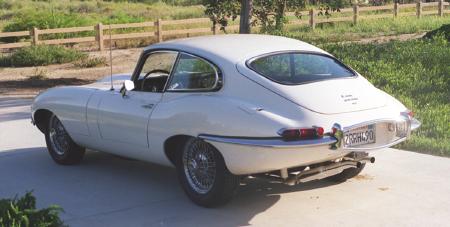
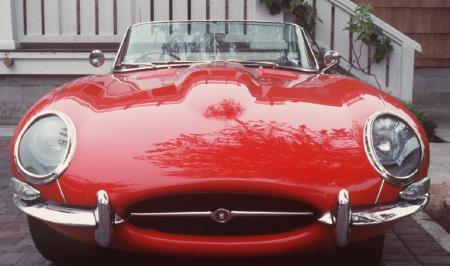
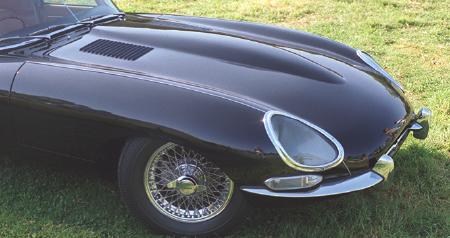
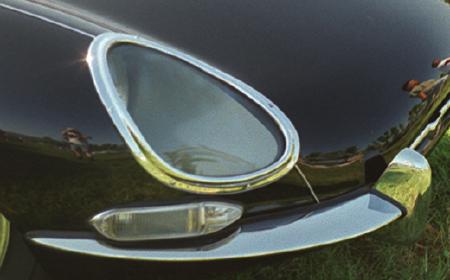
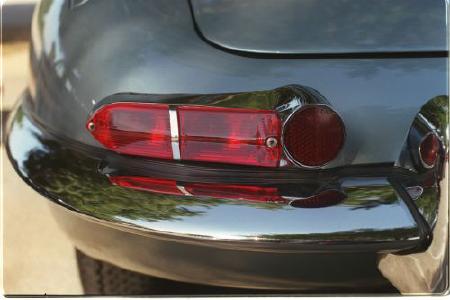
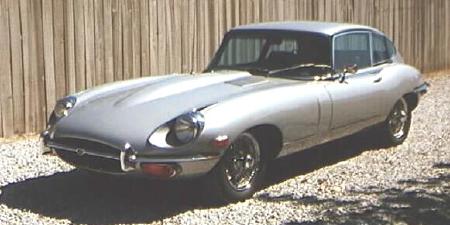
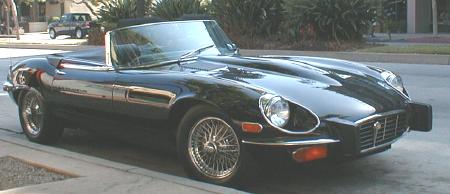
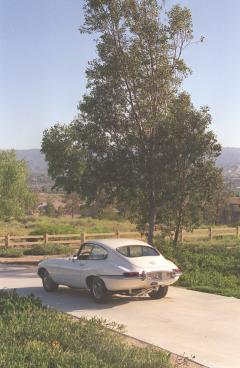
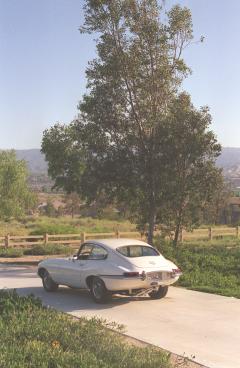
| 1968 E-Type coupe | Jaguar E-Type radiator opening | Jaguar E-Type bonnet | Jaguar E-Type gauges |
|
|
|
|
|
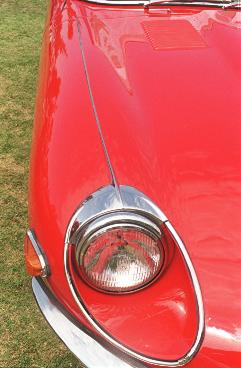
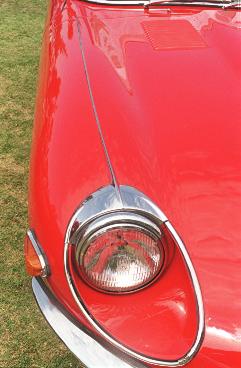
| Jaguar E-Type Series I headlight | Jaguar E-Type Series I tail light | 2 plus 2 coupe | Jaguar E-Type V 12, series III |
 |
|
 |
|
|
|
download special video concerning E-Type
Kvale Lightweight - Slow pan of the Lightweight E-Type driven by Leslie and Morril. Filmed at Sebring, March 1963 (1.3MB)
Night Driving - Footage of night racing at Le Mans. Shot of Hansgen's Lightweight. Filmed June, 1963 (811KB)
Special thanks
I wouldn't have done this page without:
|
|
|