A day in the 50s & 60s . . .

A WebQuest for
Cycle 3 students (gr. 5/6)
Designed by:
A day in the 50s & 60s . . .
A WebQuest for
Cycle 3 students (gr. 5/6)
Designed by:
|
Esleita
Mayers -->
|
[email protected] | ||
|
Nicholas
Young -->
|
[email protected] |
Introduction
In recent years, there have been many changes worldwide in terms of economic and more important, social life including the increasing interaction between various racial, ethnic and cultural groups. For instance, take a look around your classroom and observe the many differences amongst you and your peers. Did you ever wonder and consider the possibility of differences there are between you and your friends ?
Only a mere forty to fifty years ago, back in the
1950s and 1960s, African-Americans, especially those dwelling within the
United States, did not have equal rights as citizens. Indeed, whether
an individual was a man or a woman, black or white, one could feel the
social tension during that period.
Your Task . . .
For this purpose, you are to place yourselves in
the shoes of a character from the harsh 50s & 60s, keeping in mind
that your primary goal is to understand how and what life was like for
your chosen figure. Not only must you form an idea of what it was
like to be that person, but you must also provide an understanding and
description of their social status (role) along with their social interactions.
Be sure to include a brief, page or so, journal explaining some of
the hardships faced and/or conquered. (Note: your final work should be
approximately 2 pages in length)
The Process . . .
• You may choose to work with a partner, however,
remember that you will then have to submit twice the amount of work! 
• Choose one of the characters for your project
from below and click on the numbers to visit informational sites regarding
your character:
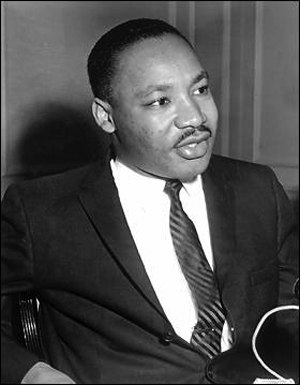
source: The Seattle Times 1 • 2 • 3 • 4 • 5 • 6 |
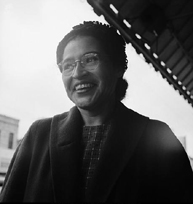
source: TIME Magazine 1 • 2 • 3 • 4 •5 • 6 |
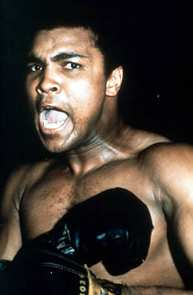
source: TIME Magazine 1• 2 • 3 • 4 • 5 |
• Once you've visited all useful sites and have gathered information, proceed by collecting additional information on the time period, that is, the 1950s & 1960s. (Try using valuable Search Engines on the internet, such as: Google, Yahoo, Excite, InfoSeek...). You will have to perform some research on the era in order to effectively complete the assignment. As you put your thoughts together, ask yourself some of the following questions: i) What was it like to be a minority during the 50s/60s ? ii) What key events occured in that era ? (example: the Civil Rights Movement)
• To have a better understanding of your character's life and times, get some extra details on their background prior to their recognition in society i.e.: What daily problems did they face which led them to become activists ? How and why were they oppressed in society ?
• While you are doing your research on this
character, keep in mind the following points:
-
What are some of their achievements ?
-
What key event(s) led to their recognition ?
• To help you with your final work, you should
submit an outline prior to the due date with the following points:
-The
character's name/background
-The
character's social status/role
-The
character's tribulations
-The
character's achievements/recognitions
-The
events taking place during that era
Evaluation
• You will be evaluated on the following:
-Content
(the character's background, clear and thorough description of the events
during that time period)
-Originality/effort
-Comprehension
(the link between the character and that time period)
• Each count for 10 points, for a total of 30 points.
• If you choose to work with a partner you
will be graded as a group, not individually.
Conclusion
In completing this activity, you may have accomplished
the ability to undertsand how one was treated differently based on their
color of skin, nationality, language, or religion, during a different time
period. Now that you have placed yourself in their shoes, how do
you feel? Can you think of any ethnic group in our society that has
not been or is not treated fairly? To help you with this question
you may want to consider looking at these sites for further information
on the aboriginals:
|
|
|