 |
 |
 |
 |
 |
 |
 |
| Stones and gravel can be set directly on stable soil. Dig out the soil to a depth of about 4 inches, and tamp it firm. |
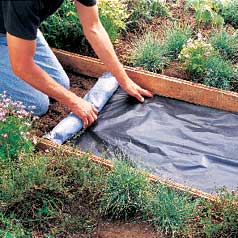
| Install benderboard edging, then put down landscape fabric to prevent weeds. |
| Keep the fabric down by stuffing its edges under the benderboards. You can create grade changes with steps or by simply sloping the path. |
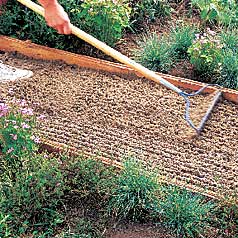
| Pour a 2 inch thick layer of sand over the landscape fabric, raking it smooth. |
| In rainy areas, the sand can wash out from under pavers, making them settle unevenly. To prevent washout, layer the sand over a 2 inch gravel base. |
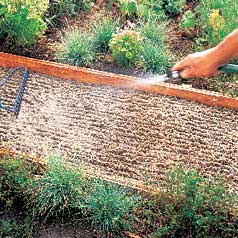
| The sand should be a little damp. If at any point it dries out, moisten it with a fine spray from the hose. |
| Taking care not to damage the landscape fabric, spread the sand with a square shovel and a rake until it is higher than it needs to be. |
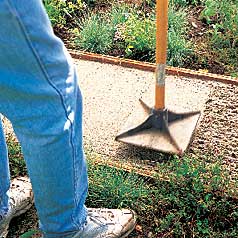
| Using a drum roller or a hand tamper, pass over the moist sand several times to pack it down. If you don't have a tamper, place a board on the sand and tamp it down with your feet. |
| Gently rake the top 1/2 inch of sand to create some wiggle room for your stones. |
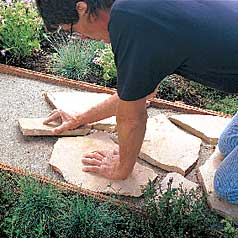
| Set stones in the path with arrangements until you achive joints that are more or less consistent. When you are satifided with the look, wiggle in the stones one at a time until firmly embedded. |
| Use a level placed on a long board to check that the path is level. Add or remove sand as need to achive level. |
| Now sit back and enjoy your flagstone path. |
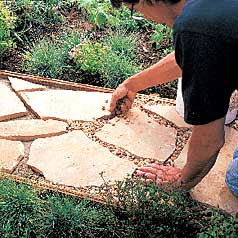
| Fill the cracks between the stones with gravel, pea stones, or decomposed granite. |
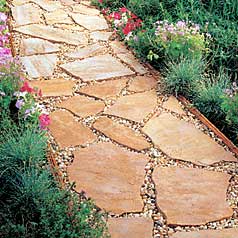 |
| Create this path in just one DAY |
| Paths beckon. They invite you into a garden or through it. They give structure to the garden and direct visitors to view your gardening talents. They slow us down, make us linger a little longer in the Garden Splendar. |
| Step by step instructions for a beautiful flagstone walkway. |
| Article web site |
| Small Garden |