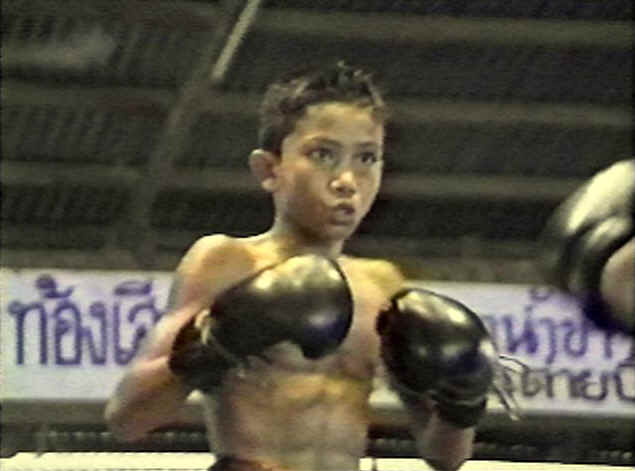
About Boys'
Muay Thai
(click on thumbnail for the full size pic)
To
discuss Muay Thai, it is necessary to explain some Thai Culture as well as the sport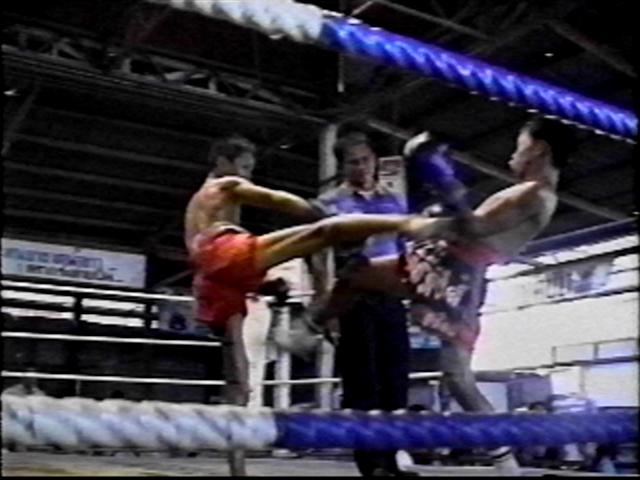 aspect. First of all, from what little I know of it, Muay Thai is very
different from western style boxing, despite some obvious similarities. Muay Thai developed ages ago without the influence of the western
world, so it is not simply boxing with the feet, knees and elbows included.
aspect. First of all, from what little I know of it, Muay Thai is very
different from western style boxing, despite some obvious similarities. Muay Thai developed ages ago without the influence of the western
world, so it is not simply boxing with the feet, knees and elbows included.
While I was working overseas in the Far East, I visited Thailand several times for vacations during the 1990's. As it says on the home page, the following is just my impression of the sport from the viewpoint of a non-Thai speaking witness. In the future, I may add links that will further explain the sport and it's related culture in a more expert manner. For now, see the Introduction to the "Muay Thai" video for a more accurate and informed explanation.
Muay Thai is the official national sport of Thailand and thus encouraged by their revered royalty. You often see kids goofing off trying the moves on each other, in the same way that western kids play around with boxing moves and wrestling. Muay Thai translates to Thai boxing or kick boxing as we know it, but it is my impression that the ultimate form of Muay Thai is only truly practiced in Thailand, in the same sense that true sumo wrestling is only practiced in Japan.
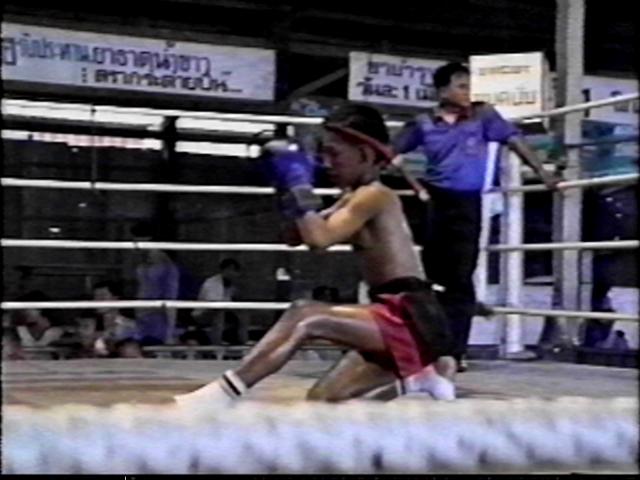
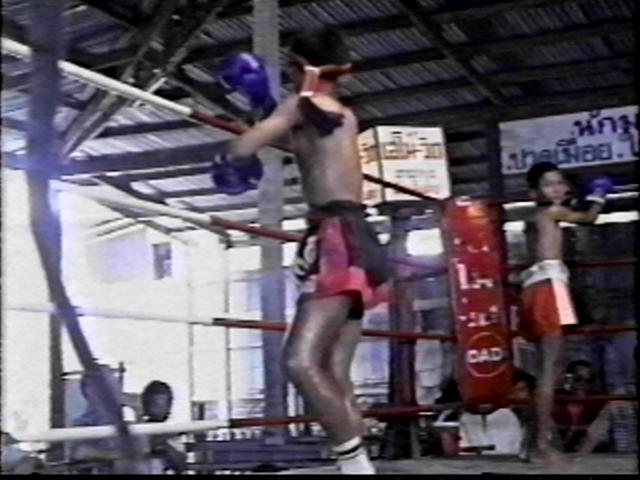
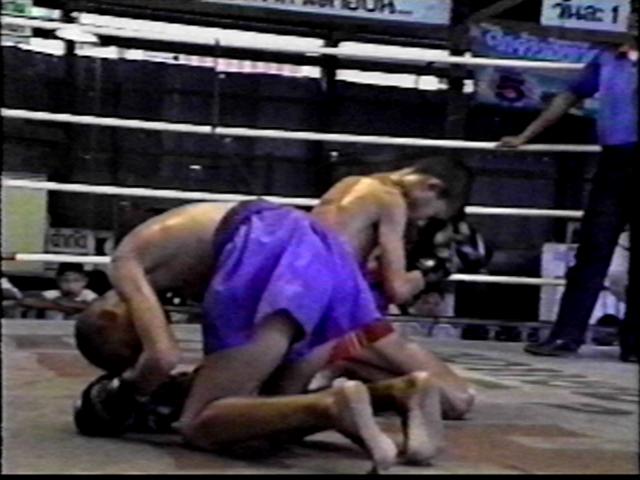
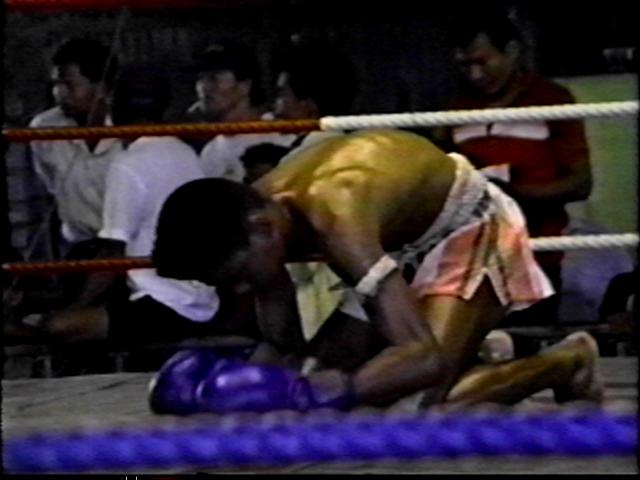
An aspect of the culture involved in the sport is the ritual conducted before the bout. There is a special headband, known as a Mongkon, worn for the ritual and often armbands on the upper arms as well, and the fighters perform what I would describe as a strut type dance after bowing at each of the four corners of the ring and conclude the ritual by kneeling in the center of the ring. My understanding is the bowing/kneeling is a prayer to Buddha and the moves are of the "dance" are a homage to their coaches/trainers, as teachers of any sort are highly respected throughout the Far East. Other cultural aspects are the loud driving music of traditional instruments throughout the rounds, (the latest disco/new wave was the norm between the rounds), to keep the action lively and the cheers of the crowd that sounded something like "e-wayyy" each time a good move was executed. One further difference from western boxing is that although the rounds were two or three (very strenuous) minutes, the breaks between rounds were about five minutes, or enough time for two DJ song selections, although this may have been in order to stretch the time of the "show".
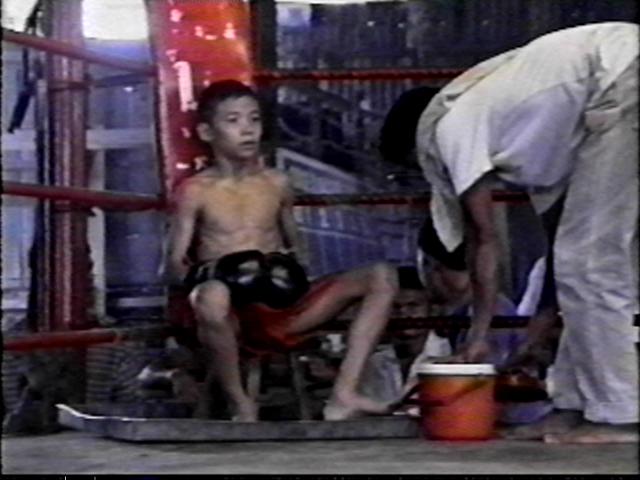
There
are stadiums in the major cities where the top fighters compete, but most towns,
including the tourist type towns that I visited would have a group of open air
bars or a similar type set-up around a ring where there were bouts nightly.
Tourists were somewhat expected, although not pressured to buy a drink at one of
the bars and to give
small tips to the winners if they were approached, while the locals generally just hung around and often
bet
on the outcomes. Usually, the night would start off with a bout between
boys generally aged 12 or older and it is my understanding that they were
usually from some s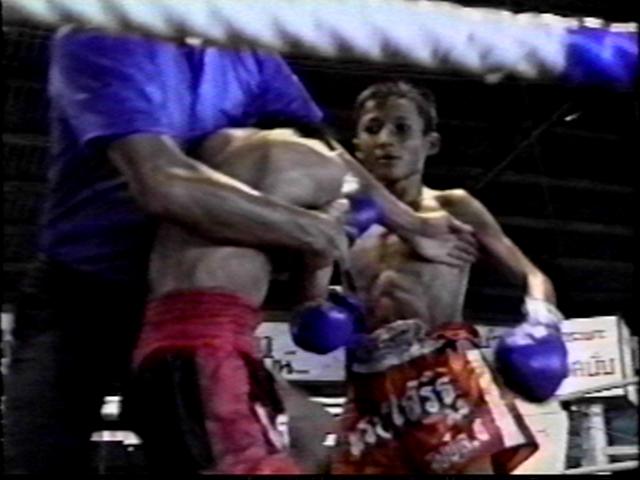 ort
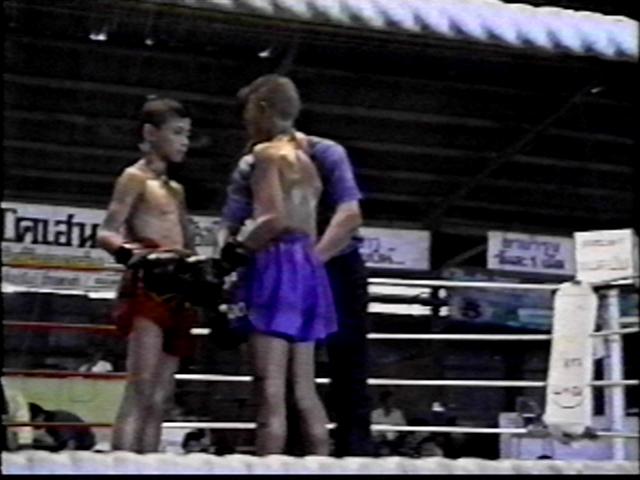
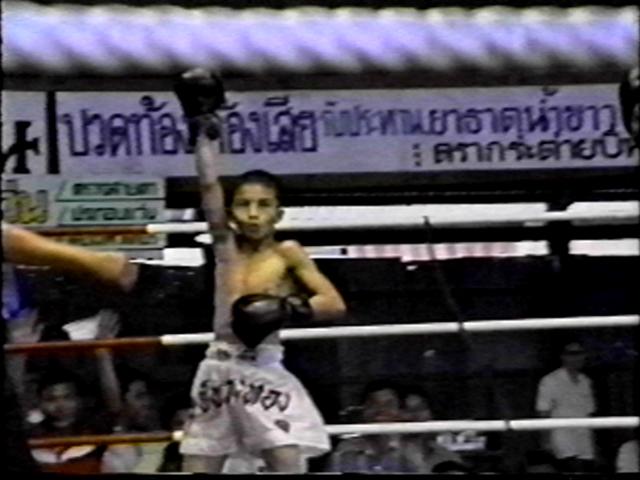
of local youth club, as are the ones in the vid-caps here. In opposition
to what some children's rights activists proclaim, I noticed a decidedly different approach
to the children's bouts as I have always seen the referees quick to stop a bout,
not so much because one contestant is about to get hurt, but because they sense
that one contestant is simply tired or doesn't want to go on and there seemed to
be no shame attached to the loser for it.
ort
of local youth club, as are the ones in the vid-caps here. In opposition
to what some children's rights activists proclaim, I noticed a decidedly different approach
to the children's bouts as I have always seen the referees quick to stop a bout,
not so much because one contestant is about to get hurt, but because they sense
that one contestant is simply tired or doesn't want to go on and there seemed to
be no shame attached to the loser for it.
On the opposite extreme, the adult bouts are vicious and although the fighters wear cups, I seen some take knee shots where they must really hurt. Although not frequent, it's not unusual to see women fighters matched up against each other or against men. I recall on one visit reading in the English language newspaper about a new champion who was an acknowledged transvestite, (something that's very accepted in Thailand), and always wore feminine make-up during his bouts. That's something I can not picture in professional western boxing.
I know
that in the stadiums, the kids are paid for the bouts, and then it's a matter of
kids from poor farming communities trying to make some money, but I believe the
smaller town bouts that I saw were strictly amateur, other than the tips I
mentioned above.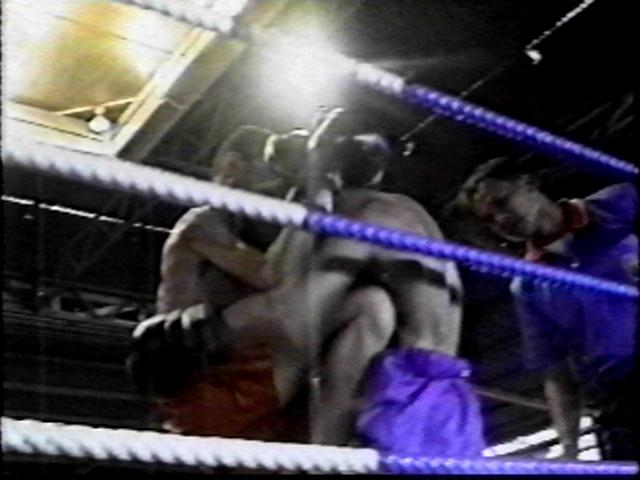
Now, on
to the sport itself. The punches are similar to western style boxing, in
that they are fast short straight shots with weight behind them, although you
will notice in the vid-caps that the stance is n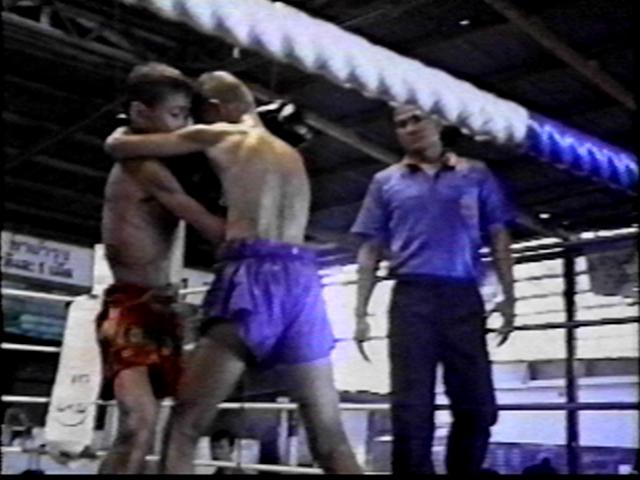 oticeably
different because of the kick factor. The kid bouts were usually more
dominated by the leg moves, whereas the adults tended to mix in more
punching. The leg moves were not so much the dramatic wide swings that you
see in Hollywood movies, but mainly consisted of infighting where they try to jab each other in the ribs with
their
knees. In a sense, the bouts often seemed to resemble (stand up) wr
oticeably
different because of the kick factor. The kid bouts were usually more
dominated by the leg moves, whereas the adults tended to mix in more
punching. The leg moves were not so much the dramatic wide swings that you
see in Hollywood movies, but mainly consisted of infighting where they try to jab each other in the ribs with
their
knees. In a sense, the bouts often seemed to resemble (stand up) wr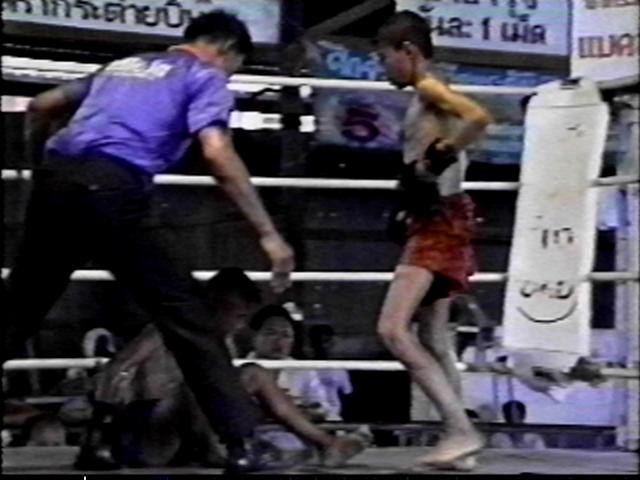 estling
matches much of the time. The ref would usually break them up after ten
or so seconds of grappling, or if they were the ropes, the ref would spring
the ropes back and forth until the kids were forced to move on. So,
although the fighters often ended up on the deck, it would not be termed a knockd
estling
matches much of the time. The ref would usually break them up after ten
or so seconds of grappling, or if they were the ropes, the ref would spring
the ropes back and forth until the kids were forced to move on. So,
although the fighters often ended up on the deck, it would not be termed a knockd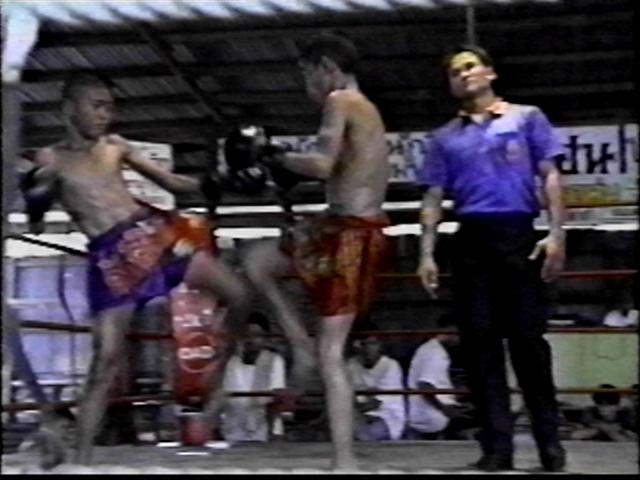 own
unless one was forced down as
such by a punch or kick. Wrestling an opponent to the deck
seemed to result in points given, although the dominant fighter generally would
follow the other down. One well known move is for one of the fighters
to swing their leg around very quickly in order to catch their opponent's legs
and trip
them to the deck. When executed successfully, it always got a big
"e-wayyy!" out of the crowd.
own
unless one was forced down as
such by a punch or kick. Wrestling an opponent to the deck
seemed to result in points given, although the dominant fighter generally would
follow the other down. One well known move is for one of the fighters
to swing their leg around very quickly in order to catch their opponent's legs
and trip
them to the deck. When executed successfully, it always got a big
"e-wayyy!" out of the crowd.
Finally, the winner gets a necklace of flowers around his/her neck in the stadiums and in the tourist town matches I described, the winner could go to shake hands with the tourists and you would give them the equivalent of about half a dollar US, or 1 dollar if you asked to take a picture. There is no demeaning throwing money in the ring. Interestingly, the winners generally only solicited a few tips, although they undoubtedably could have gotten more if they wanted. My impression of the Thai people in general was that they were much more relaxed and casual than those of us in the western world, which perhaps has much to do with the Buddhist concept of karma. The losing fighter after a Muay Thai bout generally expressed less dejection and the winner would rarely "hot dog" to any extremes. Like western boxing, a handshake or such would be exchanged before and after the bout.
For
pics of a few of the bouts I saw and just described, click on the;
My
Pics Gallery