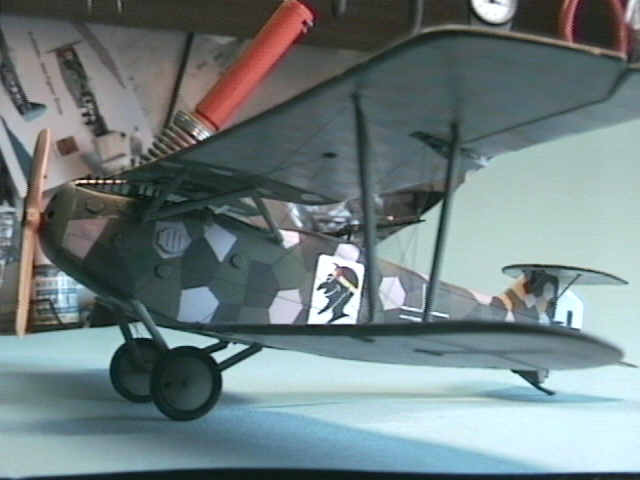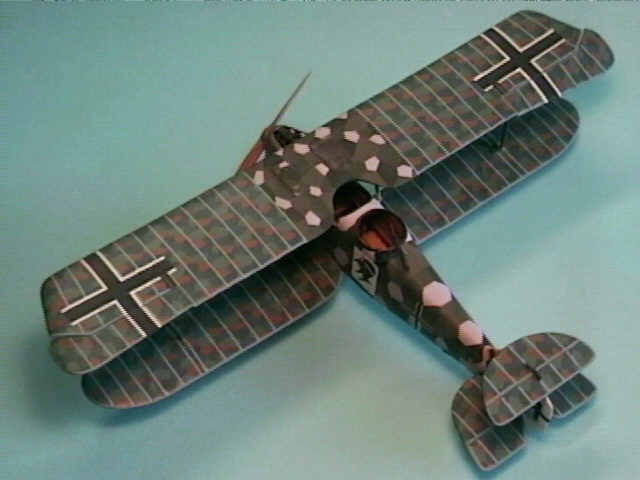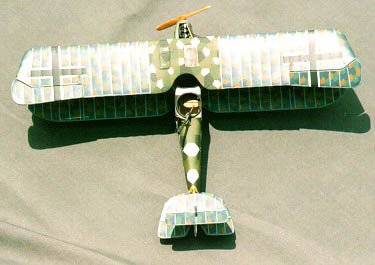
Eduard's 1/48 Hannover Cl.IIIa -- Without a doubt the most difficult model I've EVER built (in 30 years and out of about 10-15 times as many models). The Hannover's overhead profile seems reminiscent of the Albatros, which of course, is a direct design descendant of the ole bag'o'canvas'n'wires Taube. I think the glare here is realistic.
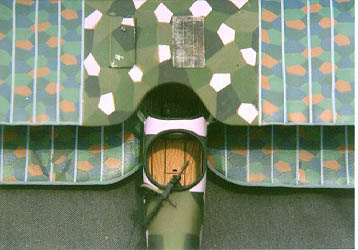
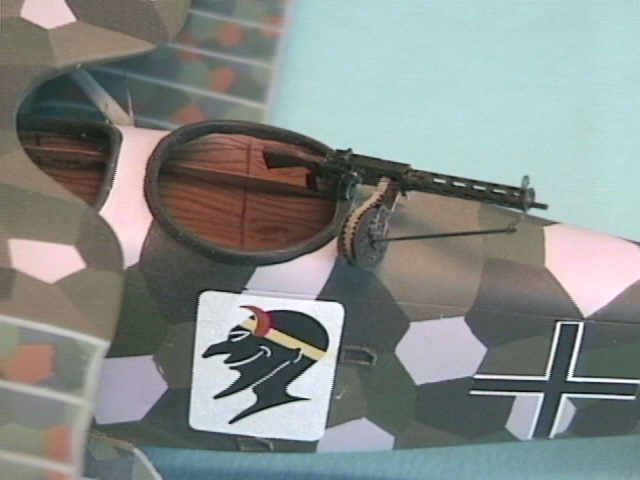
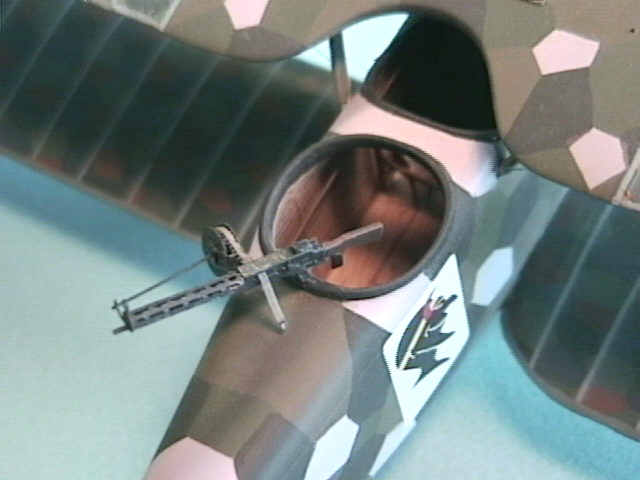
Wing lozenge is Pegasus 4-color decal strip liberally sprayed with flat clear containing a hint of linen brown for a "fabric" kind of feel. Wing root and fuselage lozenge is handpainted (don't ask). "Plywood" fuselage bulkheads and flooring are done in Luftwaffe "Sand gelb" (RLM 79) "grained" with children's colored pencil (red brown). Jeez, giving away hints like this I'll NEVER get my modeling book off the ground! BTW, unfortunately out of focus Parabellum is photoetched brass.
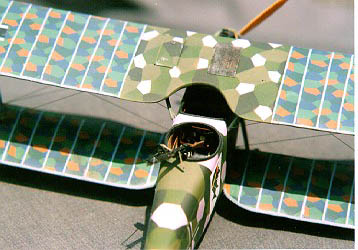
Somewhat better shot of the Parabellum, with oodles and oodles of wing-wiring also visible. This Eduard model, which like most of their stuff can almost be termed a semi-scratchbuild, presented real "modeling on the edge" thrills, i.e., I was always THIS close to flinging the damn thing out the window while I was building it. That I was able to finally pull it off at all was a testament to patience and, I must admit, probably a good amount of sheer luck. While building this kit, the thought that "how many people out there are actually building these things?" kept running through my mind. Does Eduard make a big profit on these kits, or are there also altruistic motives for the benefit of The Hobby involved in their production and distribution? In any case, God bless Eduard for the eclectic selection of great WWI kits they offer. The fantastic brass in the kits more than makes up for the clunky Eastern Bloc injection molding.
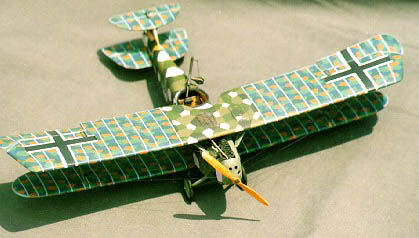
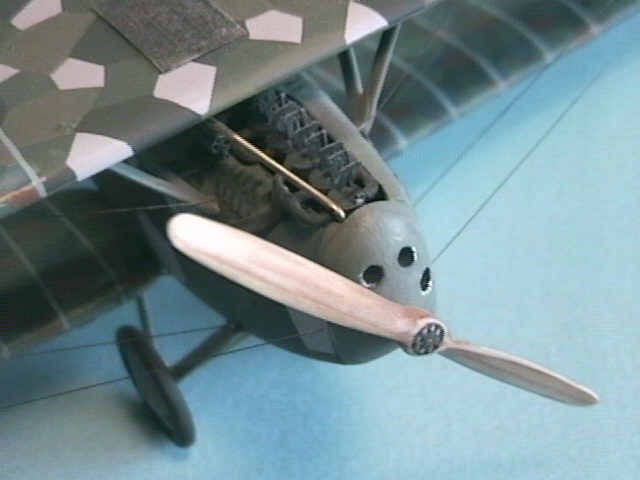
Prop is handcarved teak, varnished with cyanoacrylate, then sanded, buffed and finally polished with Tamiya rubbing compound.
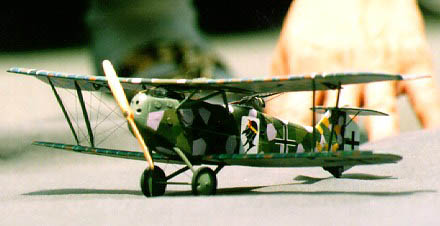
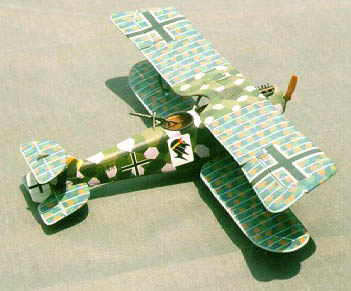
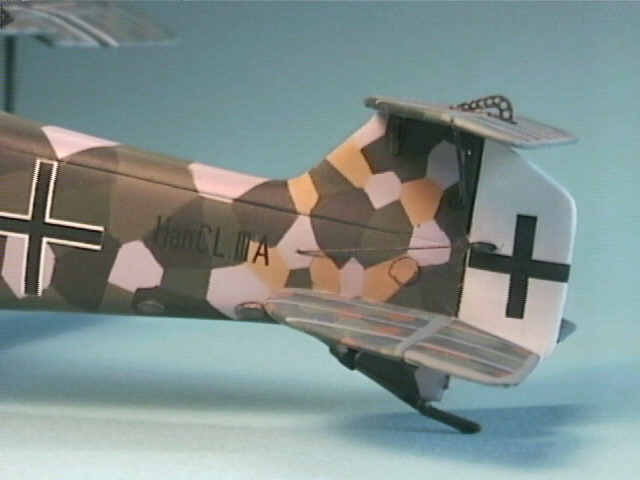
Nice side shot of the Hannover, giving a good sense of the sweep of the wings. Note creepy "Devil Dude" and inclusion of a cluster of yellow hexagons in the tail area of the lozenge pattern. Not sure what the reason for this was, but the intended function of Idflieg lozenge pattern has its origins in Post-Impressionism, Art Nouveau and turn of the century psychological theory (think of Seurat's pointillism combined with Tiffany lampshades and Freudian gestalt theory).The basic idea was that the lozenge pattern on a moving object would cause a confusing "connect the dots" kind of effect and throw off the aim of enemy gunners. Didn't seem to do too much to stop the RAF and the Aviation Militaire, though.
And now, for something completely different, new "hi-tek" shots of the Hannover