You should read 3 books from this list during the summer. One book should be from the Historical Fiction section. For every book that you read, you will recieve an automatic 100 on a quiz. These automatic 100s will replace your 3 lowest quiz grades in the first quarter of 8th grade English.
* = for advanced readers
Fiction

 Briar Rose by Jane Yolen (�Yolen takes the story of Briar Rose (commonly known as Sleeping Beauty) and links it to the Holocaust--a far-from-obvious connection that she makes perfectly convincing. Rebecca Berlin, a young woman who has grown up hearing her grandmother Gemma tell an unusual and frightening version of the Sleeping Beauty legend, realizes when Gemma dies that the fairy tale offers one of the very few clues she has to her grandmother's past. To discover the facts behind Gemma's story, Rebecca travels to Poland, the setting for the book's most engrossing scenes and its most interesting, best-developed characters. By interpolating Gemma's vivid and imaginative story into the larger narrative, Yolen has created an engrossing novel. She handles a difficult subject with finesse in a book that should be required reading for anyone who is tempted to dismiss fantasy as a frivolous genre.�)
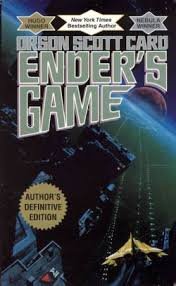 Ender's Game by Orson Scott Card (�Intense is the word for Ender's Game. Aliens have attacked Earth twice and almost destroyed the human species. To make sure humans win the next encounter, the world government has taken to breeding military geniuses -- and then training them in the arts of war... The early training, not surprisingly, takes the form of 'games'... Ender Wiggin is a genius among geniuses; he wins all the games... He is smart enough to know that time is running out. But is he smart enough to save the planet?�)
 Brainboy and the Deathmaster by Tor Seidler (�Twelve-year-old Darryl Kirby lost his entire family in a fire. His subsequent placement in the Masterly Children's Shelter introduces him to Boris and BJ and to StarMaster 3, a video game more intricate than any he's ever encountered. The first couple of chapters are a bit of a snooze for the reader not heavily into PlayStation culture, but Brainboy quickly morphs into an absorbing thriller about a group of brainy orphans recruited by software guru Keith Masterly to further his sinister plans. Darryl uncovers the purpose for Masterly's luxury think tank and his ultimate plan for the orphans' demise. From there, the story flows smoothly between the captive "team's" escape plan and the savvy detective work of the kids on the outside, who are left wondering about the fate of their friends. As rich in texture as the novels of Avi and Gail Carson Levine, Brainboy deftly bridges the gap between the young-adult thriller of a past generation and the high-tech adventures of this one.)
 Just Ella by Margaret Peterson Haddix ("Haddix puts a feminist spin on the Cinderella story, beginning her tongue-in-cheek novel where the traditional story ends. Her straightforward, often gleefully glib narrative breathes fresh life into the tale.")
 Peter and the Starcatchers by Dave Barry & Ridley Pearson ("Soon after Peter, an orphan, sets sail from England on the ship Never Land, he befriends and assists Molly, a young Starcatcher, whose mission is to guard a trunk of magical stardust from a greedy pirate and the native inhabitants.")
Harry Potter and the Half Blood Prince by J.K. Rowling (released July 16, 2005)
 The Secret Blog of Raisin Rodriguez by Judy Goldschmidt
("Lost and lonely when she moves in with her stepfather's family in Philadelphia, Raisin Rodriguez, 13, talks on her blog to her two best friends back in Berkeley, California.")
The Secret Blog of Raisin Rodriguez by Judy Goldschmidt
("Lost and lonely when she moves in with her stepfather's family in Philadelphia, Raisin Rodriguez, 13, talks on her blog to her two best friends back in Berkeley, California.")
Olivia Kidney and the Exit Academy by Ellen Potter (�In a sequel to Ellen Potter's delightful Olivia Kidney , 12-year-old Olivia and her handyman father George report for duty ("a live-in situation") at 917 West 84th Street in New York City, a curious brownstone with a flooded first floor -- a lagoon complete with boats, floating furniture, and snapping turtles. The handsome young owner, Ansel Plover, seems quite charming, but a neighbor warns Olivia that the man is "mad, bad, and dangerous." Is their new landlord a killer?�)
 The View from Saturday by E.L. Kongisburg (�This 1996 Newbery Medal winner charts the ties that bind four members of an extraordinarily successful 6th-grade quiz bowl team.�)
 From the Mixed-Up Files of Mrs. Basil E. Frankweiler by E.L. Konigsburg
 The Phantom Tollbooth by Norman Juster
(�It seems to me that almost everything is a waste of time," Milo laments. "[T]here's nothing for me to do, nowhere I'd care to go, and hardly anything worth seeing." This bored, bored young protagonist who can't see the point to anything is knocked out of his glum humdrum by the sudden and curious appearance of a tollbooth in his bedroom. Since Milo has absolutely nothing better to do, he dusts off his toy car, pays the toll, and drives through. What ensues is a journey of mythic proportions, during which Milo encounters countless odd characters who are anything but dull.�)
The Phantom Tollbooth by Norman Juster
(�It seems to me that almost everything is a waste of time," Milo laments. "[T]here's nothing for me to do, nowhere I'd care to go, and hardly anything worth seeing." This bored, bored young protagonist who can't see the point to anything is knocked out of his glum humdrum by the sudden and curious appearance of a tollbooth in his bedroom. Since Milo has absolutely nothing better to do, he dusts off his toy car, pays the toll, and drives through. What ensues is a journey of mythic proportions, during which Milo encounters countless odd characters who are anything but dull.�)
 The Lost Years of Merlin by T.A. Barron (�This engrossing presentation of T.A. Barron's fascinating contribution to Arthurian lore (Philomel, 1996), is the first in a trilogy about Merlin's boyhood and coming of age. From the moment young Merlin is washed ashore on a beach in ancient Wales to his exciting journey to the enchanted land of Fincayra, the action never wavers. Actor Michael Cumpsty's deep, growling voice enlivens the drama, making this powerful story all the more compelling. The ingredients of delectable fantasy are at work here--magic, adventure, Celtic folklore, Druid spiritualism, well-developed characters--in a format that really delivers. Fans of Arthurian legend will not want to miss this quality audiobook about one of the grandest wizards ever.�)
Tangerine by Edward Bloor (�what if he's legally blind? Even with his bottle-thick, bug-eyed glasses, Paul Fisher can see better than most people. He can see the lies his parents and brother live out, day after day. No one ever listens to Paul, though--until the family moves to Tangerine. In Tangerine, even a blind, geeky, alien freak can become cool. Who knows? Paul might even become a hero! Edward Bloor's debut novel sparkles with wit, authenticity, unexpected plot twists, and heart. The writing is so fine, the story so triumphant, that you just might stand up and shout when you get to the end. Hooray!�)
 Armageddon Summer by Bruce Coville & Jane Yolen (�Coauthors Jane Yolen and Bruce Coville artfully sculpt the alternating voices and perspectives of Marina and Jed, and readers will be swept up in the thoughts and emotions of these complex young people. The skillful writing raises this novel above others--these characters are immensely believable as they struggle with matters of family and faith, while maintaining a smart, convincingly adolescent outlook. Excerpts from sermons, FBI files, camp schedules, and e-mails keep the story lively and suspenseful, as the Believers begin to stockpile weapons and the media adds fuel to the flames. But perhaps more resonant than the apocalyptic ending are the careful, distinct portraits of the two teens, thrust into a frightening situation that shuttles them suddenly into adulthood.�)
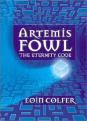 Artemis Fowl: The Eternity Code by Eoin Colfer
Thwonk* by Joan Bauer ("When A.J. is assigned to take the cover photograph for her school newspaper, she stumbles onto a stuffed cupid that comes to life and catapults her into love.") See Ms. Cognato for a copy to borrow over the summer - there are many at school.
Peter Pan* by Sir J.M. Barrie (�Join Wendy, John, and Michael Darling as they follow Peter Pan, the boy who never grows up, to a world where fairies live and children can fly. But beware -- danger abounds in this magical land of mermaids, Indians, and fairy dust. Captain Hook and his pirate crew want all children to walk the plank, especially Peter Pan. There is always an adventure to be had in Neverland. So come along with the Darling children as they soar into the night sky -- second to the right and straight on till morning!�)
A House of Tailors by Patricia Reilly Giff (�When thirteen-year-old Dina emigrates from Germany to America in 1871, her only wish is to return home as soon as she can, but as the months pass and she survives a multitude of hardships living with her uncle and his young wife and baby, she finds herself thinking of Brooklyn as her home. �)
 The Thief Lord by Cornelia Funke (�Imagine a Dickens story with a Venetian setting, and you'll have a good sense of Cornelia Funke's prizewinning novel The Thief Lord , first published in Germany in 2000. This suspenseful tale begins in a detective's office in Venice, as the entirely unpleasant Hartliebs request Victor Getz's services to search for two boys, Prosper and Bo, the sons of Esther Hartlieb's recently deceased sister. Twelve-year-old Prosper and 5-year-old Bo ran away when their aunt decided she wanted to adopt Bo, but not his brother. Refusing to split up, they escaped to Venice, a city their mother had always described reverently, in great detail. Right away they hook up with a long-haired runaway named Hornet and various other ruffians who hole up in an abandoned movie theater and worship the elusive Thief Lord, a young boy named Scipio who steals jewels from fancy Venetian homes so his new friends can get the warm clothes they need. Of course, the plot thickens when the owner of the pawn shop asks if the Thief Lord will carry out a special mission for a wealthy client: to steal a broken wooden wing that is the key to completing an age-old, magical merry-go-round. This winning cast of characters--especially the softhearted detective with his two pet turtles--will win the hearts of readers young and old, and the adventures are as labyrinthine and magical as the streets of Venice itself.�)
 Five Children and It by Edith Nesbit (�When four brothers and sisters discover a Psammead, or sand-fairy, in the gravel pit near the country house where they are staying, they have no way of knowing all the adventures its wish-granting will bring them.�)
 Any Small Goodness: A Novel of the Barrio by Tony Johnston (�This novel set in East Los Angeles provides a glimpse of the daily life of an extended Mexican-American family rich in relationships, if not in material possessions. Rather than a linear plot, the vignettes introduce readers to 11-year-old Arturo's family, school life, neighborhood occurrences, and holiday celebrations. Spanish words and phrases are sprinkled throughout as are descriptions of mouth-watering dishes constantly prepared by the boy's Mami and Abuelita. The characters are likable and warm, even if the voice of Arturo seems to be a bit too adult for his years. The message is positive and the episodes, while occasionally serious, are more often humorous and gratifying.�)
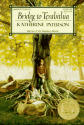 Bridge to Terabithia by Katherine Paterson
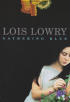 Gathering Blue by Lois Lowry (�Kira, newly orphaned and lame from birth, is taken from the turmoil of the village to live in the grand Council Edifice because of her skill at embroidery. There she is given the task of restoring the historical pictures sewn on the robe worn at the annual Ruin Song Gathering, a solemn day-long performance of the story of their world's past. Down the hall lives Thomas the Carver, a young boy who works on the intricate symbols carved on the Singer's staff, and a tiny girl who is being trained as the next Singer. Over the three artists hovers the menace of authority, seemingly kind but suffocating to their creativity, and the dark secret at the heart of the Ruin Song.�)
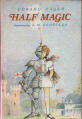 Half Magic by Edward Eager (�Edward Eager has been delighting young readers for more than 40 years with stories that mix magic and reality. Half Magic , the most popular of his tales about four children who encounter magical coins, time-travel herb gardens, and other unlikely devices, is a warm, funny, original adventure. The title refers to a coin that the children find. Through a comical series of coincidences, they discover that the coin is magic. Well, it's not totally magic--it's only (you guessed it) half magic. That means there's a certain logic to the wishes one must make to generate a desired outcome. Imagine the results emerging from inaccurate efforts: half invisible, half rescued, half everything!�)
 Jurassic Park* by Michael Crichton (It�s three times better than the movie!)
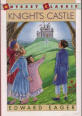 Knight's Castle by Edward Eager (�Roger, Anne, Eliza, and Jack find a magic way to go back into the time of Robin Hood, Rebecca, and Ivanhoe.�)
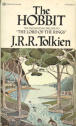
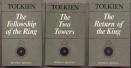 The Lord of the Rings Trilogy* by J.R.R. Tolkien
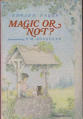 Magic or Not? by Edward Eager (�When the family moves to Connecticut, twins James and Laura make new friends and begin a series of unusual adventures after discovering an old well that seems to be magic in their backyard.�)
 Messenger by Lois Lowry (�Matty came to Village years ago when it was a safe haven. However, sinister changes are taking place. At Trade Mart, the citizens begin trading away their souls for their hearts' desires, and a wall is planned to keep out immigrants. Matty must journey into hostile, malevolent Forest to fetch his friend, Kira, before Village closes its borders.�)
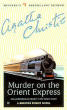 Murder on the Orient Express* by Agatha Christie (�Murder on the Orient Express is a tour-de-force variation on the theme of the English house-party, gathering a remarkable set of characters, each a secretive soul, for a journey on the fabled Orient Express train as it travels from Istanbul to Paris. On hand to resolve the murder of an American passenger is Hercule Poirot, the dapper Belgian detective, dependent only on his wit, who tucks away obscure, seemingly unrelated minutiae in his facile mind. When he determines that the corpse was a renowned child kidnapper/killer, he begins to wonder about connections between the passengers and the victim. A misplaced button, overheard conversations, a monogrammed handkerchief, and an elusive figure clad in a scarlet kimono all become clues as Hercule Poirot interrogates the snow-trapped travelers and comes to his own conclusions.�)
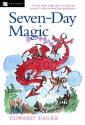 Seven-day Magic by Edward Eager (�A seven-day book of magic proves to be fractious for five children, who must learn the book's rules and tame its magic.�)
 Someone is Hiding on Alcatraz Island by Eve Bunting (�When he offends the toughest gang in his San Francisco school, Danny tries to elude them by going to Alcatraz only to find himself and a Park Service emoployee trapped by the gang in an old prison cell block.�)
Any of the Artemis Fowl series by Eoin Colfer
The Supernaturalist by Eoin Colfer (In a future dystopia, cities have become for-profit businesses. Orphanages are not exempt from the struggle to make money, and at the Clarissa Frayne Institute for Parentally Challenged Boys, kids are forced to endure product testing and frequently end up injured as a result. With orphans facing an average life expectancy of 15, 14-year-old Cosmo Hill knows that he is on borrowed time.)
The Teacher�s Funeral by Richard Peck (In rural Indiana in 1904, fifteen-year-old Russell's dreams of quitting school and joining a wheat threshing crew are disrupted when his older sister takes over the teaching at his one-room schoolhouse after mean, old Myrt Arbuckle.)
The Old Willis Place: A Ghost Story by Mary Downing Hahn (Tired of the rules that have bound them ever since "the bad thing happened," twelve-year-old Diana ignores her brother's warnings and befriends the daughter of the new caretaker, setting in motion events that lead to the release of the spirit of an old crazy woman who once ruled the old Willis place.)
The Outcasts of 19 Schuyler Place by E.L. Konigsburg (�Silent to the Bone (Atheneum, 2000), a grown-up Margaret Rose Kane helps her half brother, Connor, solve the mystery of why his best friend can't speak. Outcasts is her remembrance of her 12th summer. Pitched into camp by her parents while they travel in Peru, she is tormented by cliquish cabin mates and adopts a passive-aggressive stance that infuriates the overly rigid and money-grasping camp director. Rescued by her beloved elderly uncles and taken to their home, Margaret is appalled to discover that the city has ordered the soaring, artistic towers they have created in the backyard to be taken down because they don't adhere to the strictures of the now-historic district. Stung by the idea that real history and a work of art could be destroyed by profit-seeking interest groups manipulating governmental regulations, Margaret swings into action to fight an even larger tyranny than the one she had encountered at camp.�)
 The Chocolate War by Robert Cormier (�Does Jerry Renault dare to disturb the universe? You wouldn't think that his refusal to sell chocolates during his school's fundraiser would create such a stir, but it does; it's as if the whole school comes apart at the seams. To some, Jerry is a hero, but to others, he becomes a scapegoat--a target for their pent-up hatred. And Jerry? He's just trying to stand up for what he believes, but perhaps there is no way for him to escape becoming a pawn in this game of control; students are pitted against other students, fighting for honor--or are they fighting for their lives?�)
 The Enchanted Caslte by Edith Nesbit (�A plot summary makes this story sound ordinary by children's literature standards: the summer adventures of four children who discover an enchanted castle and a magic ring. But Edith Nesbit's adored classic (written in 1907) is so much more than the description suggests.�)
 The Firm by John Grisham (�Mitch McDeere, the appealing hero, is a poor kid whose only assets are a first-class mind, a Harvard law degree, and a beautiful, loving wife. When a Memphis law firm makes him an offer he really can't refuse, he trades his old Nissan for a new BMW, his cramped apartment for a house in the best part of town, and puts in long hours finding tax shelters for Texans who'd rather pay a lawyer than the IRS. Nothing criminal about that. He'd be set for life, if only associates at the firm didn't have a funny habit of dying, and the FBI wasn't trying to get Mitch to turn his colleagues in.�)
Pictures of Hollis Woods by Patricia Reilly Giff (�Abandoned at birth, Hollis Woods has lived in about a half dozen homes and has always wished for a family. A foster caretaker describes her as "a mountain of trouble." When Josie Cahill, a retired art teacher, takes the 12-year-old into her home on Long Island, NY, the two bond almost immediately. Hollis draws pictures with colored pencils and Josie carves branches into people. However, it soon becomes clear that Josie has trouble remembering things, and Hollis becomes the caregiver. When she stops attending school, a social worker comes by to investigate.�)
 The Giver by Lois Lowry (�a world with no poverty, no crime, no sickness and no unemployment, and where every family is happy, 12-year-old Jonas is chosen to be the community's Receiver of Memories. Under the tutelage of the Elders and an old man known as the Giver, he discovers the disturbing truth about his utopian world and struggles against the weight of its hypocrisy.�)
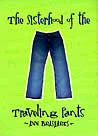 The Sisterhood of the Traveling Pants by Anne Brashares ("They were just a soft, ordinary pair of thrift-shop jeans until the four girls took turns trying them on--four girls, that is, who are close friends, about to be parted for the summer, with very different sizes and builds, not to mention backgrounds and personalities. Yet the pants settle on each girl's hips perfectly, making her look sexy and long-legged and feel confident as a teenager can feel. "These are magical Pants!" they realize, and so they make a pact to share them equally, to mail them back and forth over the summer from wherever they are. Beautiful, distant Lena is going to Greece to be with her grandparents; strong, athletic Bridget is off to soccer camp in Baja, California; hot-tempered Carmen plans to have her divorced father all to herself in South Carolina; and Tibby the rebel will be left at home to slave for minimum wage at Wallman's.")
The Farthest Away Mountain by Lynne Reid Banks (�Dakin, 15, is pretty, talented, and has a mind of her own. At age ten, she had set herself three goals: to go to the farthest-away mountain, to see a gargoyle, and to marry a prince. When she hears a voice from the mountain calling her, she responds at once. She is to free the mountain from the evil that has controlled it for 200 years , find the missing Ring of Kings before the evil Master does, and return it to the Prince.�)
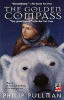 The Golden Compass (His Dark Materials, Book 1) by Phillip Pullman (�The protagonist of this complex fantasy is young Lyra Belacqua, a precocious orphan growing up within the precincts of Oxford University. But it quickly becomes clear that Lyra's Oxford is not precisely like our own--nor is her world. For one thing, people there each have a personal d�mon , the manifestation of their soul in animal form. For another, hers is a universe in which science, theology, and magic are closely allied.�)
Escape from Saigon: How a Vietnam War Orphan Became an American Boy by Andrea Warren (�At the end of the Vietnam War, eight-year-old Amerasian orphan named Long fled his country and found a loving home with his adoptive family in Ohio. With a new name, Matt Steiner, he grew up to be high-school valedictorian and athletic star, and now he is a doctor with his own happy family. But this stirring photo-essay is more than a rags-to-riches story. Always true to the child's viewpoint, Warren's clear narrative, with many documentary photos, begins as the boy struggles to survive in Vietnam, then describes the anguish of his abandonment by a loving grandmother no longer able to care for him; the kindness of rescuers at the orphanage, who arranged his adoption; and his terrifying evacuation on a plane under fire. The child-at-war story and the facts about the Operation Babylift rescue are tense and exciting.�
 The Great Gatsby by F. Scott Fitzgerald (�F. Scott Fitzgerald's novel The Great Gatsby is one of the greatest works of our time. Fitzgerald's portrayal of the money, romance and scandal remains unmatched to this day. The story is about the lives of two men Nick Carraway, and Jay Gatsby, and their high class lifestyle back in the Jazz Age in New York.�)
 The Adventures of Sherlock Holmes* by Sir Arthur Conan Doyle (�For those who love mystery stories this combined anthology of all of Sherlock Holmes Adventures and short stories is a desert island book for sure. Conan Doyle was THE author who developed the mystery genre as we know it today! His works are pure classics and each one is a masterpiece.�)
 The Phoenix and the Carpet by Edith Nesbit (�The four children acquired the magic carpet when they found a special fire egg -- it hatched in their nursery fireplace. The phoenix came from the egg, and when he saw their mother's new Persian rug, he showed them that it was a magical thing -- a flying carpet that would take them any time and that place they could wish for.�)
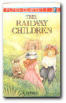 The Railway Children by Edith Nesbit (�When their father mysteriously disappears, three children and their mother leave London to seek a new life in the country, finding solace in the nearby railway station.�)
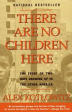 There Are No Children Here: The Story of Two Boys Growing Up in the Other America by Alex Kotlowitz
 Tuck Everlasting by Natalie Babbit (�The Tuck family discovers a spring which grants eternal life, decides to protect it for the sake of humanity, and finally meets challenges to their goals in the form of a ten-year-old's inquisitive mind and a greedy stranger who suspects their secret.�)
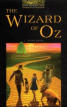 The Wizard of Oz by Frank L. Baum
Diary of a Fairy Godmother by Esme Raji Codell (�Hunky Dory is at the top of her class in charm school. She can make flowers wilt like wet spaghetti. She can make thunder rumble like a whale's bellyache. And she can turn any prince into a frog-but she always changes them back. That's when she knows there'll be a problem.�)
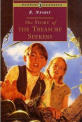 The Treasure Seekers by Edith Nesbit
Morning Girl by Michael Dorris (�A peaceful, tropical world is the setting for Morning Girl , a simple yet rich glimpse into the lives of a young sister and brother. Morning Girl and Star Boy grapple with timeless, universal issues such as experiencing simultaneous anger and love toward family members and the quest to discover the true self.�)
There Are No Children Here: The Story of Two Boys Growing Up in the Other America* by Alex Kotlowitz (�There Are No Children Here , the true story of brothers Lafeyette and Pharoah Rivers, ages 11 and 9 at the start, brings home the horror of trying to make it in a violence-ridden public housing project. The boys live in a gang-plagued war zone on Chicago's West Side, literally learning how to dodge bullets the way kids in the suburbs learn to chase baseballs. "If I grow up, I'd like to be a bus driver," says Lafeyette at one point. That's if , not when --spoken with the complete innocence of a child. The book's title comes from a comment made by the brothers' mother as she and author Alex Kotlowitz contemplate the challenges of living in such a hostile environment: "There are no children here," she says. "They've seen too much to be children." This book humanizes the problem of inner-city pathology, makes readers care about Lafeyette and Pharoah more than they may expect to, and offers a sliver of hope buried deep within a world of chaos.�)
The Wonderful Wizard of Oz by Frank L. Baum (and any other Oz books, esp. Ozma of Oz) (�One of the true classics of American literature, The Wonderful Wizard of Oz has stirred the imagination of young and old alike for over four generations. Originally published in 1900, it was the first truly American fairy tale, as Baum crafted a wonderful out of such familiar items as a cornfield scarecrow, a mechanical woodman, and a humbug wizard who used old-fashioned hokum to express that universal theme, "There's no place like home. Follow the adventures of young Dorothy Gale and her dog, Toto, as their Kansas house is swept away by a cyclone and they find themselves in a strange land called Oz. Here she meets the Munchkins and joins the Scarecrow, Tin Woodman, and the Cowardly Lion on an unforgettable journey to the Emerald City, where lives the all-powered Wizard of Oz.�)
The Watsons go to Birmingham by Christopher Paul Curtis ("Christopher Paul Curtis's alternately hilarious and deeply moving novel, winner of the Newbery Honor and the Coretta Scott King Honor, blends the fictional account of an African American family with the factual events of the violent summer of 1963. Fourth grader Kenny is an innocent and sincere narrator; his ingenuousness lends authenticity to the story and invites readers of all ages into his world, even as it changes before his eyes.")
Anything written by the following authors:
J.K. Rowling
Edith Nesbit
Edward Eager
C.S. Lewis (Narnia Chronicles)
L. Frank Baum
J.R.R. Tolkein
Eoin Colfer
Susan Cooper (The Dark Is Rising series)
Lloyd Alexander
T.A. Barron
Jonathan Shroud (Bartimaeus series)

Historical Fiction
Alanna: The First Adventure by Tamora Pierce ("Eleven-year-old Alanna, who aspires to be a knight even though she is a girl, disguises herself as a boy to become a royal page, a learning many hard lessons along her path to high adventure. Author of the Arthur trilogy.")
Caught in the Act by Joan Lowery Nixon ("Mike is afraid his new family is involved in murder in this adventure set in the mid-1800's. The Kelly children's adventures are told in other books in this series. Orphan Train series.")
My Brother Sam is Dead by James and Lincoln Collier ("Tells the tragedies of one family during the American Revolution. The Secret Soldier: The Story of Deborah Sampson by Ann McGovern A brief biography of the eighteen-year-old woman who disguised herself as a man and joined the Continental Army during the Revolutionary War. Please ask teacher for copy to borrow over the summer - we have plenty at school!")
Storm Warriors by Elisa Carbone ("In the post Civil War South, one of the few jobs that an able bodied African American man can hold in North Carolina is that of a �surfman,� one of the professional life savers that work to save floundering ships and crews during the winter storm season. Twelve year old Nate Williams wants to be one of those brave, before-Baywatch guys instead of a boring old fisherman, like his father. He can�t understand why dad is so against him becoming like one of his heroes, a �storm warrior.� Nate soon learns that father actually has his best interests at heart when he discovers that only the surf outpost on Pea Island, NC is open to African American workers. Nate could train to become a surfman--but he�d never be able to get another job off of Pea Island due to the prevailing racism of the day. Down but not out, Nate finds a way to help his community and himself in a totally different way that is just as brave as boogie-boarding out to shipwrecks. Full of daring rescues during wild and stormy nights, Storm Warriors is only for the bravest of sailors. Landlubbers should stick to Little House on the Prairie!")
Sweetgrass by Jan Hudson ("A young Blackfoot Indian girl saves her family from a smallpox epidemic. Set in Western Canada in the nineteenth century.")
The True Confessions of Charlotte Doyle by Avi ("In 1832, 13-year-old Charlotte sailed from England to her home in the United States. Although she was supposed to travel with friends of her parents, she went alone. Soon after the ship sailed, she heard threats against her life, then became involved in a plot against the insane captain who first seemed to be her friend.")
Witch Child by Celia Reese ("Brit author Rees knows how to stir up the cauldron a little--her story is about a girl who�s a REAL witch, the last of her kind in a long line of pagans who follow the Old Religion and worship nature. Mary Nuttall helplessly watches her own grandmother hung as a witch before a beautiful and mysterious benefactor whisks her off to the New World with a batch of Puritans. There, Mary thinks she will be free to be her witchy self, but she finds these pilgrims are even more Puritanical that the ones she left behind in merry old England. Now, she�s gotta watch her back as all the town elders start shooting black looks her way just because she happens to knows how to read and heal the sick. Can Mary keep these pinch-faced Puritans in the dark? Or will her secret identity be revealed? Written in diary form, this is one witch story will keep you riveted.")
The Witch of Blackbird Pond by Elizabeth G. Speare ("In this story of teenage isolation and self-discovery, Kit must leave the islands she calls home for the cooler culture of early New England. When she tries to help a reputed witch, Kit is suspected herself. Romance, adventure, and a vivid depiction of Puritan New England create an exciting story.")
Baseball Saved Us by Ken Mochizuki ("A Japanese American boy learns to play baseball when he and his family are forced to live in an internment camp during World War II, and his ability to play helps him after the war is over.")
Bold Journey: West with Lewis and Clark by Charles Bohner ("Private Hugh McNeal relates his experiences accompanying Captains Lewis and Clark on their 1804-1806 expedition in search of a northwest passage to the Pacific Ocean.")
Caddie Woodlawn by Carol Ryrie Brink ("Because Caddie was a sickly baby, she was raised with more freedom than her sister Clara. As a result, Caddie has a series of adventures with her two brothers on the Wisconsin frontier in which she gets herself into trouble then manages to get herself out again.")
Calico Bush by Rachel Field ("Soon after her arrival in the New World from France in the early 1700's, thirteen-year-old Marguerite's parents are killed and she is taken in as an indentured servant by the Sargent family. She acts heroically while living with the Sargents and, when later offered her freedom, decides to stay with them.")
Constance: A Story about Early Plymouth by Patricia Clapp ("Fourteen-year-old Constance does not want to leave England. From the time she first sees Plymouth, she resents the unfriendly looking land, the work she is asked to do, and the hardship the Pilgrims face during the first winter. After several years, however, she begins to appreciate the religious freedom that Plymouth offers and decides to stay.")
The Courage of Sarah Noble by Alice Dalgliesh ("Remembering her mother's words, an eight-year-old girl finds courage to go alone with her father to build a new home in the Connecticut wilderness and to stay with the Indians when her father goes back to bring the rest of the family.")
The Double Life of Pocahontas by Jean Fritz ("A biography of the famous American Indian princess, emphasizing her life-long adulation of John Smith and the roles she played in two very different cultures.")
Dragon's Gate by Laurence Yep ("When he accidentally kills a Manchu, a fifteen-year-old Chinese boy is sent to America to join his father, an uncle, and other Chinese working to build a tunnel for the transcontinental railroad through the Sierra Nevada mountains in 1867.")
The Drinking Gourd by F.N. Monjo ("A suspenseful story of a young boy who, along with his father, helps a slave family escape to Canada and to freedom.")
Emma's Journal: The Story of a Colonial Girl by Marissa Moss ("From 1774 to 1776, Emma describes in her journal her stay in Boston, where she witnesses the British blockade and spies for the American militia. Features hand-printed text, drawings, and marginal notes.")
A Gathering of Days: A New England Girl's Journal, 1830-32 by Joan Blos ("The journal of fourteen-year-old farm girl Catherine Hall records daily events in her small New Hampshire town in the 1830's, including her father's remarriage and the death of her best friend.")
Grandmother Bryant's Pocket by Jacqueline Briggs Martin ("Suffering from nightmares after her dog is killed in a fire, a young girl in eighteenth-century Maine goes to live with her grandparents.")
I Am Regina by Sally M. Keehn ("In 1755, as the French and Indian War begins, ten-year-old Regina is kidnapped by Indians in western Pennsylvania, and she must struggle to hold onto memories of her earlier life as she grows up under the name of Tskinnak and starts to become Indian herself.")
In the Shadow of the Wind by Luke Wallin ("In 1832, two teenagers, he, a white settler, she, a Creek Indian, try to preserve their love for each other despite the outbreak of hostilities between the disillusioned Indians being starved off their land and the frightened but adamant white settlers.")
Indian Captive: the Story of Mary Jemison by Lois Lenski ("In this fictional story (based on a true event), a 12-year-old girl is captured by Seneca Indians and made part of their tribe. Although she first struggles to remember her previous way of life, she adapts to Seneca culture and decides to stay with the Indians when she is later given the choice.")
Indian Chiefs by Russell Freedman ("Biographies of six Western Indian chiefs who led their people during times of trouble, for example when a decision had to be made about whether to fight or cooperate with the white pioneeers moving onto their hunting grounds. Nonfiction, includes photographs.")
Jenny of the Tetons by Kristiana Gregory ("Orphaned by an Indian raid while traveling West with a wagon train, fifteen-year-old Carrie Hill is befriended by the English trapper Beaver Dick and taken to live with his Indian wife Jenny and their six children.")
JIP: His Story by Katherine Paterson ("While living on a Vermont poor farm during 1855 and 1856, Jip learns his identity and that of his mother and comes to understand how he arrived at this place.")
Johnny Tremain by Esther Forbes ("A skillful silversmith's apprentice in eighteenth century Boston loses the use of his hand after some other apprentices try to play a practical joke. Despite this change in his life, Johnny joins in the fight against the British and gradually becomes less bitter, finding new strength and courage as he grows into a man. A classic, this story has challenging vocabulary.")
A Journey to the New World: The Diary of Remember Patience Whipple, Mayflower 1620 by Kathryn Lasky ("Dear America Series Twelve-year-old Mem presents a diary account of the trip she and her family made on the Mayflower in 1620 and their first year in the New World.")
Jump Ship to Freedom by James Lincoln & Christop Collier ("In 1787 a fourteen-year-old slave, anxious to buy freedom for himself and his mother, escapes from his dishonest master and tries to find help in cashing the soldier's notes received by his father for fighting in the Revolution. He soon finds himself forced aboard a ship headed for the West Indies, where he faces certain slavery.")
Katie's Trunk by Ann Warren Turner ("Katie, whose family is not sympathetic to the rebel soldiers during the American Revolution, hides under the clothes in her mother's wedding trunk when they invade her home.")
Lightning Time by Douglas Rees ("Fourteen-year-old Theodore Worth struggles with the decision to leave his home in Boston and join the controversial abolitionist John Brown in the fight against slavery.")
Lone Hunter's Gray Pony by Donald Emmett Worcester ("In this first in a series of stories about a young Oglala Sioux, a pony is stolen from the boy by Kiowas, he recovers it, and together he and the pony save their tribe from ambush.")
The Matchlock Gun by Walter Dumaux Edmonds ("In 1756, during the French and Indian War in upper New York state, ten-year-old Edward is determined to protect his home and family with the ancient, and much too heavy, Spanish gun that his father had given him before leaving home to fight the enemy.")
Night Journeys by Avi ("In the spring of 1768, twelve-year-old Peter, living with his Quaker guardian near the Pennsylvania-New Jersey border, joins in the search for two runaway indentured servants.")
Phoebe the Spy by Judith Griffin ("During the Revolution, Phoebe Fraunces has a chance to save the life of General George Washington while he has dinner at Mortier House in New York City. Originally Phoebe and the General, this is a quick read.")
Catherine Called Birdy by Karen Cushman
The Ballad of Lucy Whipple by Karen Cushman ("When California Morning Whipple's widowed mother uproots her family from their comfortable Massachusetts environs and moves them to a rough mining camp called Lucky Diggins in the Sierras, California Morning resents the upheaval. Desperately wanting to control something in her own life, she decides to be called Lucy, and as Lucy she grows and changes in her strange and challenging new environment. Here Karen Cushman helps the American Gold Rush spring to colorful life, just as she did for medieval England in her previous two books, Catherine, Called Birdy and The Midwife's Apprentice, which won Newbery Honor status and a Newbery Medal respectively.")
Rifles for Watie by Harold Keith ("Jeff Bussey, a Kansas farm boy, joins the Union army as a scout in the Civil War. On a spying mission he ends up in a Confederate outfit supplying guns to Cherokee Indians who are also fighting the north. He prevents a gun shipment, but falls in love with the chief's daughter to whom he returns after the war.")
Roanoke: A Novel of the Lost Colony by Sonia Levitin ("An English youth and an Indian girl are caught up in the events leading to the mysterious disappearance of the colony at Roanoke Island.")
Sam the Minuteman by Nathaniel Benchley ("An easy-to-read account of Sam and his father fighting as minutemen against the British in the Battle of Lexington.")
Sarah Bishop by Scott O'Dell ("Left alone after the deaths of her father and brother who take opposite sides in the War for Independence, and fleeing from the British who seek to arrest her, Sarah Bishop struggles to shape a new life for herself in the wilderness of Westchester County.")
Saturnalia by Paul Fleischman ("In 1681 in Boston, fourteen-year-old William, a Narraganset Indian captured in a raid six years earlier, leads a productive and contented life as a printer's apprentice. Although he is adopted by the printer and his family, he is increasingly anxious to make some connection with his Indian past.")
The Secret Soldier: The Story of Deborah Sampson by Ann McGovern ("A brief biography of the eighteen-year-old woman who disguised herself as a man and joined the Continental Army during the Revolutionary War.")
Sing Down the Moon by Scott O'Dell ("Between 1863 and 1865, Colonel Kit Carson and his soldiers forced the Navaho people to walk 300 miles from their homes in beautiful canyons in Arizona to Fort Sumner where they were held prisoner. Although 1,500 Navahos died, Bright Morning encourages Tall Boy to escape with her and their young son, returning to a cave near their home.")
The Slave Dancer by Paula Fox ("Thirteen-year-old Jessie Bollier, a white boy, witnesses the horror of the slave trade after he is kidnapped in New Orleans and forced to play music on board a slave ship. His fife songs were supposed to "dance the slaves," to give them exercise during their cruel journey from Africa.")
Streams to the River, River to the Sea by Scott O'Dell ("A young Indian woman, accompanied by her infant and cruel husband, experiences joy and heartbreak when she joins the Lewis and Clark Expedition seeking a way to the Pacific.")
Toliver's Secret by Esther Wood Brady ("During the Revolutionary War, a 10-year-old girl crosses from New York City to New Jersey in a boat full of English Soldiers to deliver a loaf of bread containing a message for the patriots.")
The Trail on Which They Wept: The Story of a Cherokee Girl by Dorothy and Thomas Hoobler ("Forced to leave their homes in Georgia in 1837, Sarah Tsaluh Rogers, her family, and other Cherokees make the long and difficult journey along the Trail of Tears to the ndian Territory in Oklahoma.")
Weasel by Cynthia DeFelice ("Alone in the frontier wilderness in the winter of 1839 while his father is recovering from an injury, eleven-year-old Nathan runs afoul of the renegade killer known as Weasel and makes a surprising discovery about the concept of revenge.")
The Winter of Red Snow: The Revolutionary Diary of Abigail Jane Stewart by Christina Gregory ("Eleven-year-old Abigail presents a diary account of life in Valley Forge from December 1777 to July 1778 as General Washington prepares his troops to fight the British.")
West Against the Wind by Liza Ketchum Murrow ("Fourteen-year-old Abby seeks both her father and the secret of a handsome but mysterious boy during an arduous journey by wagon train from the middle of the country to the Pacific coast in 1850." Please see Ms. Cognato for a copy to borrow over the summer - we have many!)
Witches' Children by Patricia Clapp ("Mary Warren, a teenage servant for a 1690's Salem family, tells about the group of young girls who listen to the stories and fortune telling of Tituba, a slave just brought to New England from Barbados. As the stories get more exciting, accusations of witchcraft lead to the famous Salem witch trials.")