Chapter 6 Cell Reproduction
6.1
Objectives: 1. Define chromatin.
- Describe the structure of a chromosome.
- Distinguish between haploid (n) and diploid (2n) cells.
- Explain how sex chromosomes are different than somatic chromosomes.
VOCABULARY:
DNA (Deoxyribonucleic acid) - Contains all the genetic information required to create an organism of a species. The DNA material in an organism provides the information that is passed on to offspring. Found in the nucleus of the cell.
Chromatin – Threadlike complex of DNA and proteins in the nucleus of a cell.
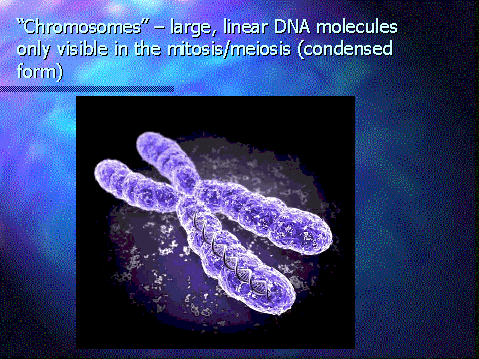
Chromosome – Compact structure of tightly coiled DNA that forms from condensed chromatin. Chromosomes are made of up thousands of genes.
Genes – Segment of DNA that codes for a trait (blue eyes, curly hair, etc.).
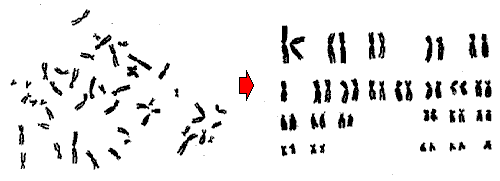
Karyotype – the set of chromosomes found in a cell arranged in order of size and shape.
Diploid – Cells having 2 copies of each chromosome.
Haploid – Cells having only one copy of each chromosome (sex cells).
Chromosomes
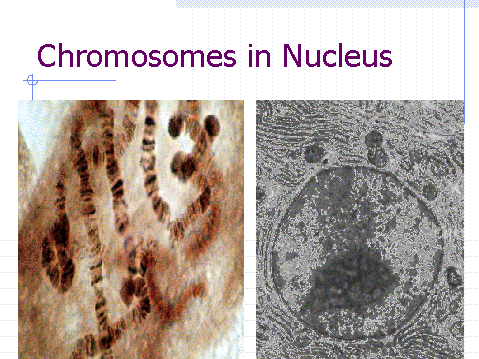
- Made up of chromatin (complex of DNA and protein)
- Found in the nucleus of eukaryotic cells
- Contain the information/instructions heredity traits (genes)
- Humans have 46 chromosomes or 23 pairs of chromosomes, except for sex cells. Human sex cells have 23 chromosomes that are not paired.
- In somatic cells, chromosomes are paired. They are diploid and known as 2n. In sex cells (egss and sperm cells) chromosomes are not paired. They are haploid and known as n (sex cells). In humans,
2n = 46 and n = 23.
- Chromosomes can be extracted from a cell, stained, photographed and paired for genetic analysis in the lab. This process results in a karyotype.
Sex Chromosomes
- One of the 23 pairs of chromosomes in your somatic cells, are sex chromosomes.
- If you are female, you have 2 X chromosomes.
- If you are male, you have 1 X chromosome and 1 Y chromosome.
- Mothers can only donate an X to their offspring, while fathers can donate either an X or a Y. Fathers determine the sex of their offspring.