Life is Cellular
ALL living things have CELLS.
Cytology—the study of cells.
1600’s
Anton van Leeuwenhoek—Holland
inventor invented the microscope. The first to observe microorganisms in
pond water.
Robert Hooke—Coined the
word "cell" after observing cork under the microscope.
1800’s
Matthias Schleiden—German
botanist concluded, "all plants are made up of cells".
Theodor Schwann—Another
German scientist concluded, "all animals are made up of cells".
Rudolf Virchow—German
physician who studied cell reproduction. Proposed the thought that all
cells come from existing cells.
Over the course of 200+ years and many contributions
from many scientists, the cell theory was born.
The Cell Theory
-
All living things are composed of
cells.
-
Cells are the basic units of structure
and function in living things.
-
New cells are produced from existing
cells.
What tool of science was instrumental in helping form
the cell theory?
Basic cell structures, common to most cells:
*Cell membrane
-
thin, flexible barrier around the cell
-
functions to hold the cell together
-
also functions to regulate flow of materials in and out
of the cell
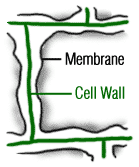
*Cell wall
-
strong layer around the cell membrane
-
found in plants, algae and some bacteria (not in animal
cells)
-
function to provide support and protection to the cell
*Nucleus
-
contains most of the cell’s genetic material
-
functions to control the cell’s activities
-
largest organelle of a cell
*Cytoplasm
-
all the fluid material inside the cell membrane, excluding
the nucleus
-
contains many important organelles
Biologists divide cells into two categories:
Eukaryotes—An organism
whose cells contain a nucleus.
Prokaryotes—An organism
whose cells do not contain a nucleus.
Cell Structures
Cell Wall
-
found in plants, algae, fungi, and almost all prokaryotes
except animals
-
function to provide support and protection for the cell
-
made from fibers of carbohydrates and protein
-
plant cell walls made of cellulose
Cytoskeleton
-
network of protein filaments that helps the cell maintain
its shape
-
provides support and aids in cell movement
-
made up of microtubules and microfilaments
Microtubules
-
hollow tubes of protein
-
form tracks that are important in moving organelles around
in the cell
-
help cell maintain its shape
-
help separate chromosomes in cell division
-
in some cells, form cilia and flagella, which enable cells
to move
Microfilaments
-
long thin fibers that support the cell and help the cell
to move
-
form tough, flexible framework that supports the cell
-
smaller, narrower than microtubules
Nucleus
-
controls most cell processes
-
contains the hereditary information of DNA
-
DNA holds the coded instructions for making proteins
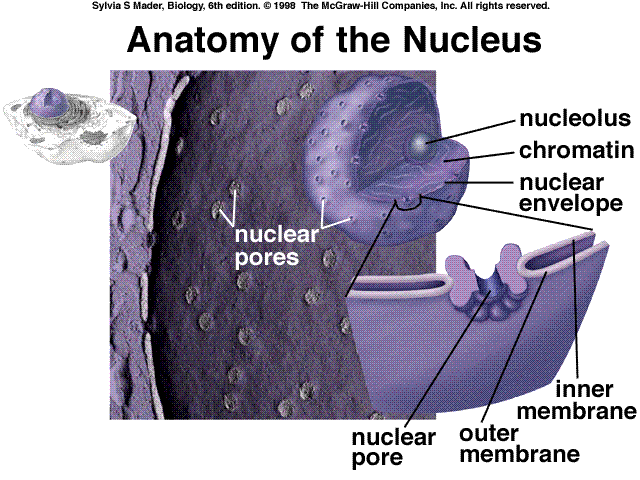
Chromatin
-
granular material within the nucleus
-
consists of DNA bound to protein
Chromosomes
-
condensed chromatin
-
threadlike structures contain the genetic information
that is passed from one generation of cells to the next
Nucleolus
-
small dense region of the nucleus
-
assembly of ribosomes starts here
Nuclear envelope
-
double membrane layer surrounding the nucleus
-
contains pores which allow material to move in and out
of nucleus
Organelles in the Cytoplasm
Ribosomes
-
small particles of RNA and protein
-
function to produce proteins
-
site of mRNA translation
-
translate mRNA into specific amino acids or polypeptide
chains
Endoplasmic Reticulum (ER)
-
internal membrane system
-
function to assemble cell membrane
-
also function to modify proteins
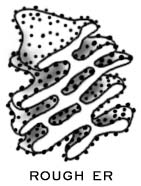
Rough Endoplasmic Reticulum (rough
ER)
-
function to synthesize proteins
-
proteins made by ribosomes are chemically modified in
the rough ER
-
has ribosomes on its surface
 Smooth Endoplasmic Reticulum (smooth
ER)
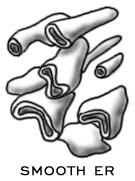
Smooth Endoplasmic Reticulum (smooth
ER)
-
does not contain ribosomes on its surface
-
contains collections of enzymes that perform specialized
tasks
Golgi Apparatus
-
stack of membranes
-
receive proteins made by rough ER
-
function to attach carbohydrates and lipids to proteins
by use of enzymes made here
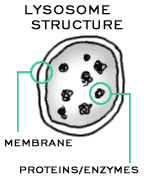
Lysosomes
-
small organelles filled with enzymes
-
function to break down lipids, carbohydrates, and proteins
from ingested food into smaller particles that can be used by the cell
-
also function to breakdown old organelles
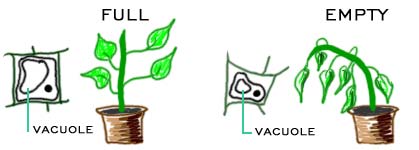
Vacuoles
-
saclike structures
-
function to store water, salts, proteins and carbohydrates
-
some vacuoles are involved with transporting substances
within the cell
-
plant cells have single large, central vacuole which provide
support for leaves and flowers
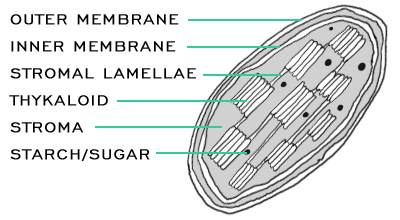
Chloroplasts
-
found in plant cells and some other organisms
-
never found in animal or fungal cells
-
function to use energy from sunlight to make food in the
process of photosynthesis
-
contain the green pigment chlorophyll in photosynthetic
membranes
-
contain some of their own genetic information in the form
of DNA
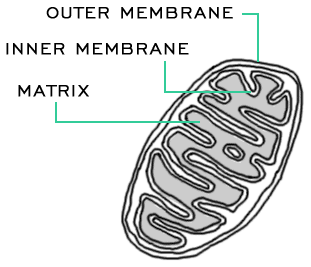
Mitochondria
-
function to release energy from stored food particles
-
use energy to make high-energy compounds that the cell
uses for growth, development, and movement
-
known as the powerhouse of the cell
-
found in most all eukaryotic cells
-
contain some of their own genetic information in the form
of DNA
The Parts Work Together
to Get the Job Done
*The cytoskeleton supports the
structure of the cell.
*The nucleus controls the activities
of the cell.
*The nucleus sends RNA to the
rest of the cell.
*RNA carries instructions for
the type of protein to be made.
*The ribosomes make the protein.
*Proteins are released to the
Golgi Apparatus.
*The Golgi apparatus attaches
carbohydrates and lipids to the proteins and transports them to their destination.
*The energy to accomplish all
of this comes from chloroplasts and/or mitochondria.
*The chloroplasts use energy
from the sun to make food molecules.
*Mitochondria use food to produce
high-energy compounds that the cell will use for energy.