 |
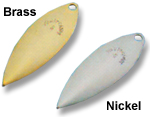
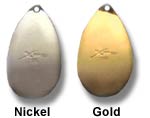
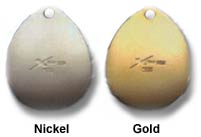
| Willowleaf The willowleaf is so named because of it's elongated, willowleaf shape. It's one of the best all-around blade styles you can throw when the water is warm (60 degrees plus) and water clarity is clear to off-color. The willowleaf's elongated shape comes through the water exceptionally well, so it doesn't produce as much vibration as some of the other blade styles. However, it does produce a tremendous amout of "flash" when it comes through the water. It's streamlined design also allows it to come through the various forms of aquatic vegetation with minimal hang-ups. Another situation when the willowleaf really shines is during the fall, when the bass are very active around scattered clumps of vegetation or laydown logs in shallow water. A fast, waking retrieve can be deadly medicine in this situation. And there's not a better set-up than a tandem willowleaf for bulging the surface. Willowleaf blades are available in sizes ranging from No. 1 to No. 8. When fishing for bass, I'll rarely use a blade larger than a No. 5, unless, of course, the lake is full of hawgs and I'm fishing for five big bites. In that case I may step up to a No. 6 or No. 7. Colorado The Colorado blade has more of an oval shape. It's what the guys on the pro tour sometimes refer to as the "thumper," mainly because of the thump, thump, thump sensation that's felt through the rod as the bait is retrieved. The Colorado will catch fish in clear, warm water. But it's best-suited for off-color or muddy water that's cooler than 60 degrees. Bass have a tendency to become somewhat lethargic once water temps dip into the 50's. They also tend to spend a high percentage of their time suspended around cover (timber, grass, etc...) at mid-range depths. Hence, they may need a little more time to react. The Colorado's cupped, oval shape allows you to retrieve the bait at a relatively slow pace and still keep it in the strike zone. It also puts off a lot of vibration, which can be a big strike enhancer when dingy water hampers the bass' ability to see. Indiana The Indiana blade is shaped like a tear drop. It produces some vibration - more than a willowleaf, but not quite as much as the Colorado. Indiana blades are extremely popular in brackish, riverine waters. It's fairly weedless, making it a satisfactory choice when fishing around aquatic vegetation, stick-ups, standing timber and other types of cover. |
| Spinnerbait Blades |
|
 |
 |
 |
|
 |