| Morgan Freeman |
 |
 |
 |
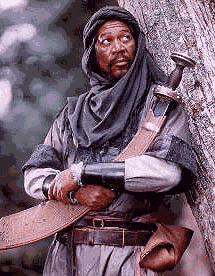 |
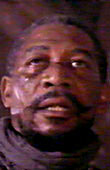
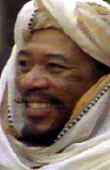
| John Watson (producer/co-writer) "We also wanted to introduce a new character into the legend and Pen's (Pen Densham, producer/co-writer) idea was this Moor, who's a man who was in prison with him and helped him escape, and in the escape, Robin saved his life. So the Moor, because of his Islamic background, believes that he now owes Robin a life and must travel with him back into England until he has saved Robin's life and therefore has become equal. So what we have is this fascinating image of a Moor, a sophisticated black man - advanced in the scienses and with a greater body of knowledge than anybody in England had, in the midst of these rustic, rural English faces in the forest." Starlog magazine #166 (may 1991) |
| Biography - www.hollywood.com Distinguishing himself onstage with an impressive range of parts, Freeman methodically worked his way from song-and-dance man to Shakespearean performer to the lead of a series of interesting, off-beat stage productions. Despite his impressive theatrical credits, for many years he was best known for his hip, good-humored role as Easy Reader on the PBS children's show, "The Electric Company". 5Despite making inroads in other media, film work proved elusive for the versatile actor. Freeman debuted in 1971's "Who Says I Can't Ride a Rainbow?" but nine years passed before some critics singled him out for his work in the tough prison drama, "Brubaker" (1980). Still, Freeman marked time in unworthy vehicles until he earned considerable critical acclaim and a Best Supporting Actor Oscar nomination for his work as the volatile pimp Fast Black in "Street Smart" (1987). A second Oscar nomination, and belated leading man status, came when he reprised his off-Broadway role as a Southern chauffeur in "Driving Miss Daisy" (1989). With his intense, expressive demeanor and unwavering dignity and grace, Freeman subsequently turned in outstanding performances in "Glory" (1989), the story of the first unit of black soldiers during the Civil War, and "Unforgiven" (1992), where he played the hard-boiled, no-nonsense foil to recidivist gunslinger Clint Eastwood. His role in the latter, as well as his part as Kevin Costner's sidekick in "Robin Hood: Prince of Thieves" (1991), have marked the still uncommon occasions when a black actor was cast in a role not initially created as a black character. In 1994, Freeman received his second Best Actor Academy Award nomination as Red, a prison lifer and "fixer" (a person who can acquire anything), in the moving prison drama "The Shawshank Redemption". He further proved his mettle as a veteran cop tracking a serial killer with novice partner Brad Pitt in "Seven" (1995) and as a mysterious benefactor of a university's research project in "Chain Reaction" (1996). The following year, Freeman returned to the right side of the law tracking another killer in "Kiss the Girls" and lent quiet dignity to the role of a fictional abolitionist in Steven Spielberg's earnest examination of a slave ship rebellion, "Amistad". The busy actor also garnered much praise as the US Chief Executive in the thriller "Deep Impact" (1998). |
| Driving Miss Daisy (1989) Glory (1989) The Bonfire of the Vanities (1990) Robin Hood: Prince of Thieves (1991) Unforgiven (1992) The Shawshank Redemption (1994) Outbreak (1995) Seven (1995) Amistad (1997) Hard Rain (1998) Deep Impact (1998) Nurse Betty (2000) Along Came a Spider (2001) |
| Select Filmography |