The Labor Market
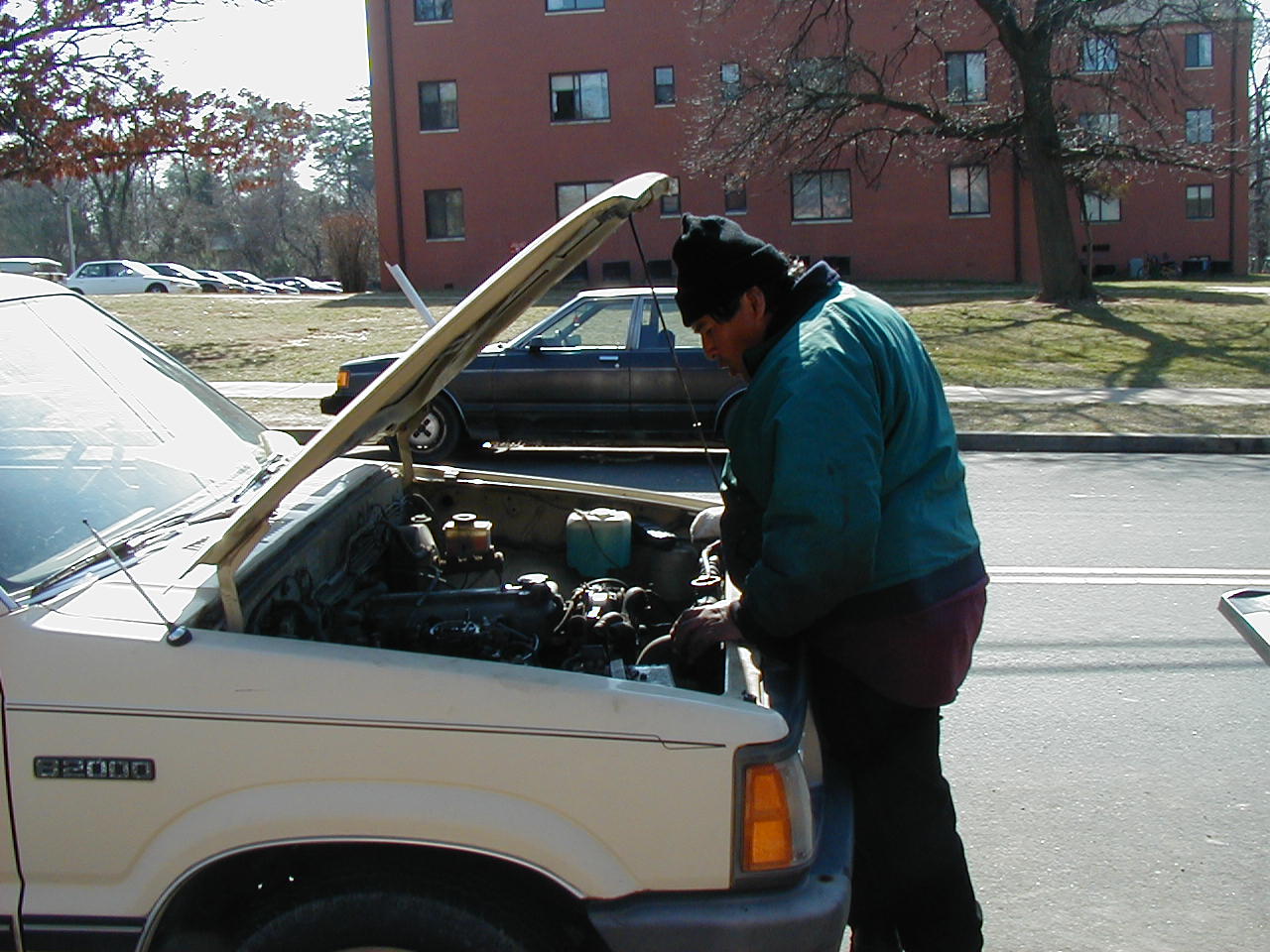
As far as any drawbacks in the business sector, shoplifting is not the only problem. While there are employment opportunities for legal residents within the business arena, it is an entirely different story for an illegal immigrant. In most areas within the U.S., standing outside of the local community stores is not a common way to search for employment. Usually, an individual would have to go and search for a job. Instead, the process of job searching is different in the areas such as Culmore. One plausible explanation for this course of action stems from the socioeconomic structure of their home country, El Salvador, where, “many Hispanic workers participate in the rapidly emerging ‘informal sector’ working at odd jobs outside the formal economy” (Smith and Skidmore, 2001, 400) (see figure 5). In Culmore, individuals organize a labor market in the parking lot of the local 7-Eleven, which is within sight of Parkwood Apartments. People who need odd jobs done, such as lawn care, painting, or gardening can drive up to the parking lot and acquire a worker.
According to a manager of the 7-Eleven, employers looking for workers come by, between 6 a.m. to 9 a.m. to hire day laborers for a day (s), weeks, or even permanently (Personal interview.2002). The manager also went on to say that: "In fact, every time a car drives into the 7-11, from my observation, a mob of Hispanics start crowding around the car if it doesn't go directly to a parking space. That's kind of like the signal for them, if a car goes into our parking lot and stands there for maybe 15 seconds, then the Hispanics know it's not a 7-Eleven customer but a guy looking for laborers (Personal interview. 2002)."
Also, this type of job seeking not only makes the area distinctive but it brings about other issues that are more common within the community of Culmore than in other places. However, we received more information on the matter from a local Fairfax County police officer who, is not Hispanic, speaks Spanish very well and communicates with the residence of Culmore on a consistent basis. For example, with the “day laborers” no written contracts are passed out or signed. Therefore, with jobs that require more than a day’s work, workers are often told they will be paid after their work is done, but the employer, wanting to save money often does not show.
Conflicts within the Community
“A lot of these people are ghosts, they have no
papers, or documentation on them.”
- Fairfax County Police Officer
Ordinarily, when employers cheat employees, the employees can take legal action against the swindlers to pay their dues. However, the officer explained to us that the Hispanic workers faced with this problem do not complain to labor enforcement authorities or to the police. According to the officer, the residents of Culmore “dominate the area but they have no political power. They don’t know the rules [of the law]. They can’t vote “ (Personal interview.2002). Instead, they ignore the issue concerning unpaid wages since many are unauthorized to work. In addition, the employers that stop pass the 7-Eleven are there major source of labor that everyone within the neighborhood is tapping from.
Before concluding the discussion with the Fairfax police officer, we asked him if there were any major problems within the community. He went on to explain that the neighborhood had problems with parking violations and violence. It seems that many of the individuals who drive tend to park anywhere, especially on public lots. The officer also pointed out that due to the language barrier between the Hispanics and public officials it is sometimes hard to enforce the law. There is also a perceived fear from neighbors outside the community. For example, we talked to two Asian teenagers, Sara and Chenda Nak who stated, “We don’t really feel safe driving through there. We get witnesses and catcalls and find the Hispanics rude” (Personal Interview 2002). The Nak sisters reflect a cultural riff between the residents in the community and those outside of it that serves to further cement the borders of Culmore as distinct from its neighbors.
The police officer’s stories about the problems definitely were credible. For example, as we walk through the community, we saw many parking and traffic signs. Some were even in Spanish.