
-or-
"What in the heck are all these ropes for?"
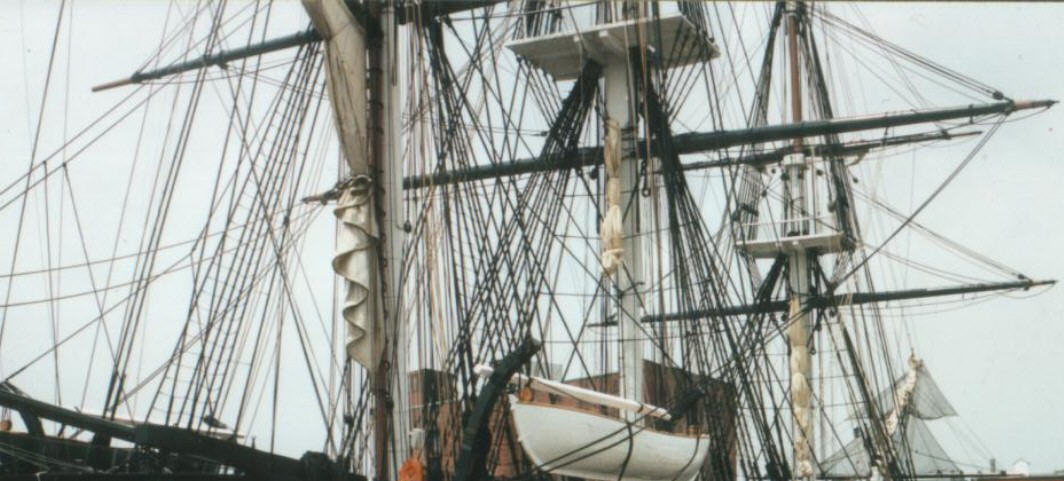
A sailing vessel be a complex machine, but once ye know the parts and see how they work together, ye can see the order and logic of the thing.
All lines on ship do one of two basic jobs - they keep the masts from fallin', or they control the sails. The lines what support the masts be called standing rigging. Those what be put in motion to sail a vessel be called running rigging.

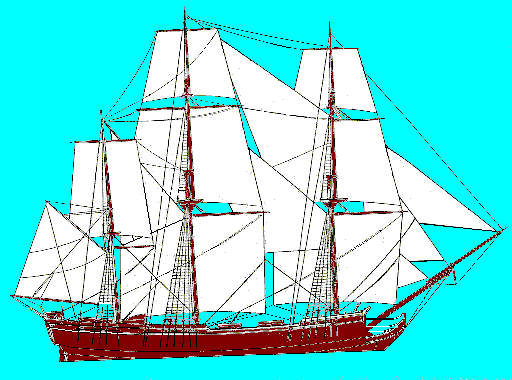
Firstly, instead of trying to figger out 14 sails at once, let us look at just one. Since six of those sails be square sails, we will start there.
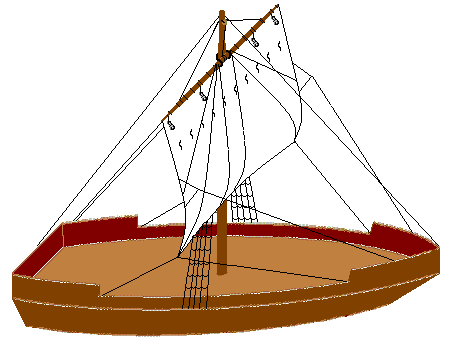
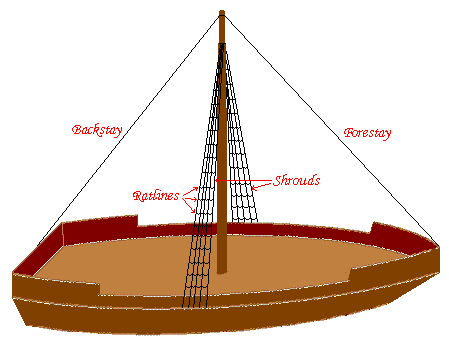
Shrouds - The lines or cables, running aloft from the deck to points on the masts, used to support a mast from side to side (port to starboard).
Stays - Lines or cables used to support the masts fore-and-aft. Backstays run from a mast to aft. Forestays run from a mast to forward.
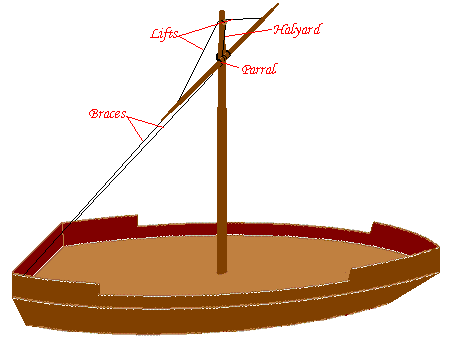
Halyard - Evolved from "haul yard." Line by means of which a sail, yard, gaff, flag, etc. is hoisted.
Lift - A rope or tackle, going from the yardarms to the masthead, to support and move the yard.
Parral - The rope by which a yard is confined to a mast at its center.
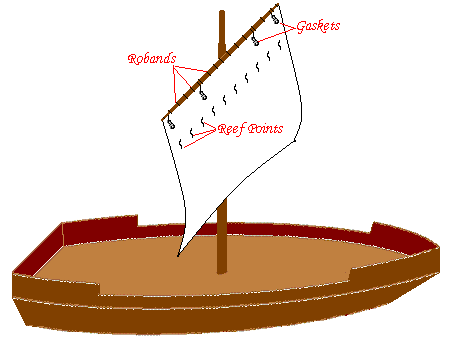
Reef-points - Short lengths of line passing through eyelets in a sail in one or two rows. These be tied around the yard when high winds make shortenin' the sail adviseable.
Robands - Small pieces of line, used to hold the head of the sail to the yard or gaff.
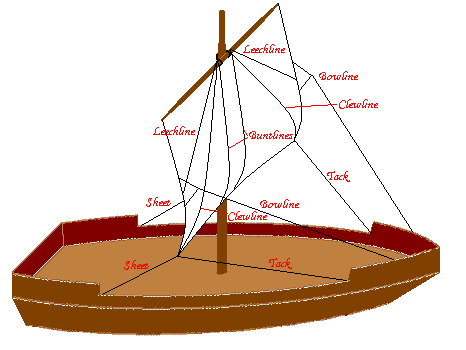
Buntlines - The lines attached to the middle of the foot of the sail used to haul the bunt up to the center of the yard.
Clewlines - The lines attached to the clews and used to haul those corners upward to the yard fer furlin'. The clewlines should run behind the sail, but if'n I drew 'em that way ye'd not be able see what I be talkin' about.
Leechlines - The lines attached to the leech and used to haul that edge upward to the yard for furling.
Sheet - The line connected to the clew of a sail that hauls it out when set, either to the yard below it or (on a loose-footed sail) to a point aft on the deck. On a loose-footed sail, the sheet on the windward side be slack and thus called the lazy sheet, while the sheet on the leeward side be taught and called the active sheet.
Tack - A line connected to the clew of a loose-footed sail that pulls it forward. Properly trimmed, the tack on the leeward side be slack and thus called the lazy tack, while the tack on the windward side be taught and called the active tack.