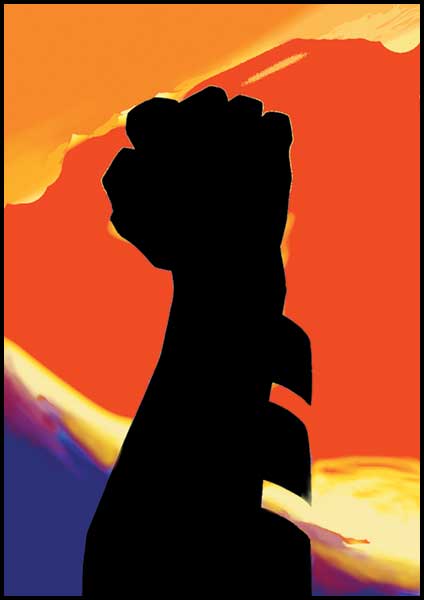
Miller At The Bat: Strike
One!
The Dark Knight Strikes Again
Issue no.1
Well, folks, this is one of the Big Events of 2001/2002. Was it worth the wait for you?
Okay, as of this writing I've yet to see the remaining two thirds, but I can't say this opening chapter's given me much of a thrill. Still, I let it sit for a few weeks after the first reading and have come back to it, somewhat refreshed, as I go through it again for the purpose of this piece .
What are the best things I can say about this series?
It presents us with a future based on a pre-Crisis timeline. The Flash is Barry Allen. Hal Jordan left Earth as a hero, calmly leaving at the apparent request of an Earth that rejected its superheroes. The others were taken out of circulation one way or another. Lex Luthor - apparently more in the evil scientist mode than the post-Byrne businessman, though this is more implied by the other continuity than anything else - is in league with Braniac. Probably best of all, we're given some reason for why Superman is at odds with Bruce Wayne/Batman and doing the bidding, while always keeping just out of sight, of the powers that be.
Unfortunately, the reason doesn't wash well for me.
This story takes place three years after the events of The Dark Knight Returns, and as matters are laid out it's vague whether some or all of the heroes were neutralized via hostages before or after that earlier storyline. If after, then we have to wonder why Superman was being such a stooge back then, and why so many of the heroes were otherwise out of circulation.
Even if the hostage scheme (the bottled city of Kandor holding Superman in check, the rest of the Amazons apparently vulnerable, too, and Mary Marvel and Iris Allen hostages keeping Captain Marvel and the Flash as hidden servants) is only two years old - or even a single year - it's an insult to these characters that they've allowed themselves to be held at bay so long. It's also an insult to the deductive and strategic skills of the Batman that he didn't trip to all of this well before and come to the liberating aid of his old comrades. I suppose Miller is telling us this is due to bad blood that goes back to times when Superman and some of the others compromised while Batman refused to, but I can't quite get myself to buy into that. Given the circumstances that seems beneath even pettiness.
I'm particularly interested in how some take the interpretation of The Question that's presented here. While still donning his faceless costume he contents himself with observing and documenting, recording events and trying to forge them into a manifesto that he hopes will eventually challenge the minds of those who read it, and lead them to the Truth. Refusing to personally yield to the pressures to conform and be sedated by the tawdry pleasures this society offers, he also refuses to challenge those in charge directly, assured that he would be killed. A character born of Randian ideals, he has become a new Ayn Rand of sorts, hoping to show people with his words alone the path out of the darkness and to higher ideals of "Reason. Truth. Justice. Freedom."
Stylistically, the best elements of the story are all of the video infotainment intercuts, linking sex, violence and money in a populace-pacifying techno-spin on the Romans' circuses (as in bread and circuses), but I've seen it all done before, and so much better, in Chaykin's American Flagg! series of the early 80's.
The political commentary is perhaps the most painful of all, as it's so obviously aimed at our current political scene. It isn't that I disagree with his choice of targets, but it's done so ham-handedly that it's almost embarrassing.
I'm going to let it all go at that for now, as I'll no doubt be rehashing much of this anyway when I can look back over the entire story arc. In the meantime I'll be curious to hear what the rest of you have to say.
As ever, feel free to drop me some email or post some comments on the messageboard.
---MJN