 |
| Diversity by Peter Wood |
| Editorial Reviews
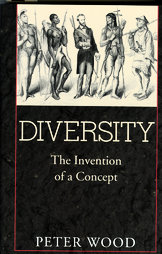
From Booklist Anthropology professor Wood examines two kinds of diversity. Diversity as physical and cultural variation among humans was propounded by nineteenth- and early-twentieth-century systematic anthropology. Diversity as the conviction that physical and cultural traits should determine one's eligibility for admission to college, career advancement, and bestowal of government largesse arose from Supreme Court Justice Lewis Powell's freestanding decision in Regents of the University of California v. Bakke, in which he allowed that differences in race, gender, and other traits--designated as diversity--were worthy of consideration in distributing social goods. The new diversity quickly became an aggressive ideology, damaging American institutions and poisoning public discourse with "identity politics." Wood blames the Left for using diversity to undermine democracy and faintly praises the marketplace for trivializing it into a matter of lifestyle choice. But the marketplace is interested in making money off diversity, not quashing it. "We will be left," he sadly concludes his otherwise surprisingly congenial survey, "for a long while still, with the reign of diversity's pasteboard stereotypes." Ray Olson Book Description Diversity is America's newest cultural ideal. Corporations alter their recruitment and hiring policy in the name of a diverse workforce. Universities institute new admissions rules in the name of a diverse student body. What its proponents have in mind when they cite the compelling importance of diversity, Peter Wood argues in this elegant work, is not the dictionary meaning of the word�variety and multiplicity�but rather a set of prescribed numerical outcomes in terms of racial and ethnic makeup. Writing with wit and erudition, Wood has undertaken in this entertaining book nothing less than the biography of a concept. Drawing on his experience as a social scientist, he traces the birth and evolution of "diversity." He shows how diversity sprawls across politics, law, education, business, entertainment, personal aspiration, religion, and the arts, as an encompassing claim about human identity. It asserts the principle that people are, above all else, members of social groups and products of the historical experiences of those groups. In this sense, Wood shows, diversity is profoundly anti-individualist and at odds with America's older ideals of liberty and equality. Wood warns that as a political ideology, diversity undercuts America's long effort to overcome racial division. He shows how the ideology of diversity has propelled the Neo-racialists on the political Right as well as those on the multi-culturalist Left. But even if the diversity movement did not exacerbate racial and social division, he believes that it would be a questionable cultural ideal. As Wood points out, "Our liberty and our equality demand that we hold one another to common standards and that we reject all hierarchy based on heredity�even the hierarchy that comes about when we grant present privileges to make up for past privileges denied." --This text refers to the Hardcover edition. |