





The EM CRAT helps teachers quickly and accurately evaluate students' reading abilities and skills. The extensive reports support lesson planning and curriculum development, and help monitor student progress. The result is that teachers have the student information they need to teach, and teachers can also see the pregress as it occurrs.




The computer presents the test material, scores and interprets response, and prints reports. The computer measures and records each student's response time and determine automaticity and fluency. The detailed, dated reports assist the teacher in planning reading instruction for the students.

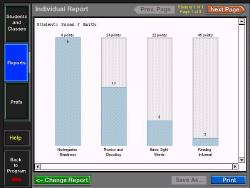
The first section of the test determines basic kindergarten readiness, including phonological awareness.
The second section evaluates phonics and decoding skills, ranging from kindergarten to sixth grade levels and higher.
The third section includes the student's ability tead sight words. (Dolch 220)
The forth section utilizes the Burns/Roe Information Reading Inventory to evaluate reading comprehension, rate and fluency, to perform miscue analysis, and to provide Independent, Instructional, and Frustration Reading Levels.