Marianne Bradman
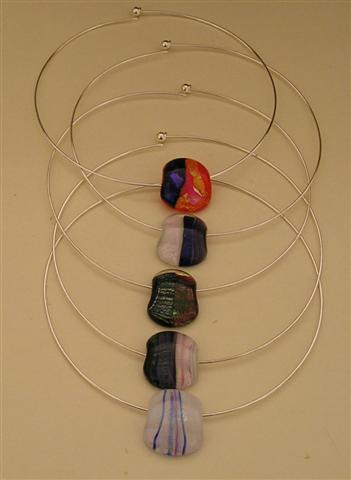
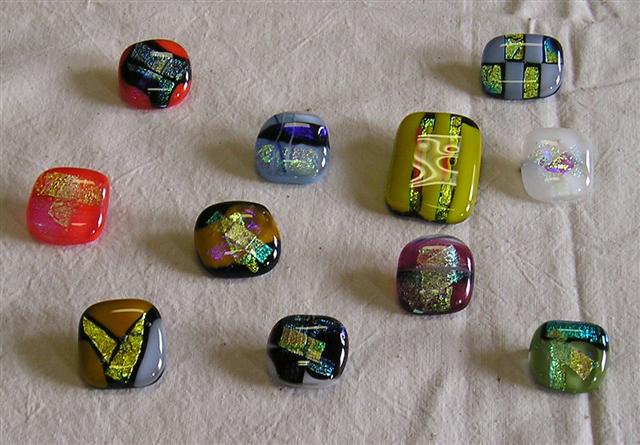
Fused dichroic jewellery:
Dichroic (di-crow-ik) glass is valued and prized in the art glass world.
Dichroic glass is designed to reflect and transmit light at the same
time.
Your eye sees very crisp and vibrant colours which change when seen
from different angles.
Dichroic glass is made in a heated vacuum chamber where aluminium,
chromium, silicon, titanium and zirconium are applied to the glass in
varying layers, depending on the colour desired.
Dichroic glass was originally created for the aerospace industry.
Each piece of dichroic jewellery has been fired in a kiln several times
to bring out the beauty of the dichroic glass.
Mosaic:
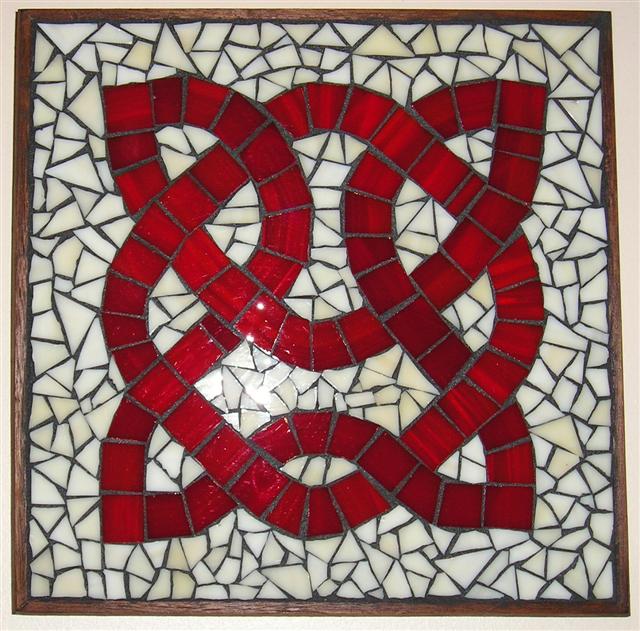
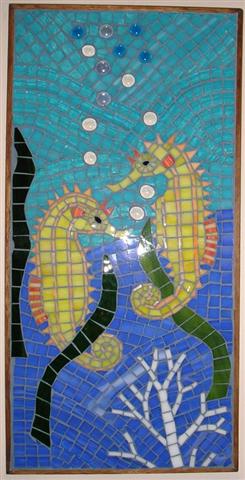
A mosaic is created from hundreds of individual pieces. This has often
caused people to comment that making a mosaic is just like doing a
jigsaw puzzle. Mosaic and jigsaw puzzles are completely different. A jigsaw puzzle has one pre-determined solution. If you gave a handful of people the same jigsaw puzzle, the finished results would all look exactly the same. But if you asked that handful of people to make a mosaic based on the same picture, each mosaic would be unique with a style of its own. Even if the same person tried to create the same mosaic twice, the results would be different.
Mosaics on display at MRACC are all made from stained glass. Stained glass offers a wide range of colours and textures. No two pieces of opaque stained glass are ever the same as two or more colours have been mixed together to create the glass. Glass at opposite ends of the sheet can be totally different shades, offering a wide palette of colour for a mosaicist.
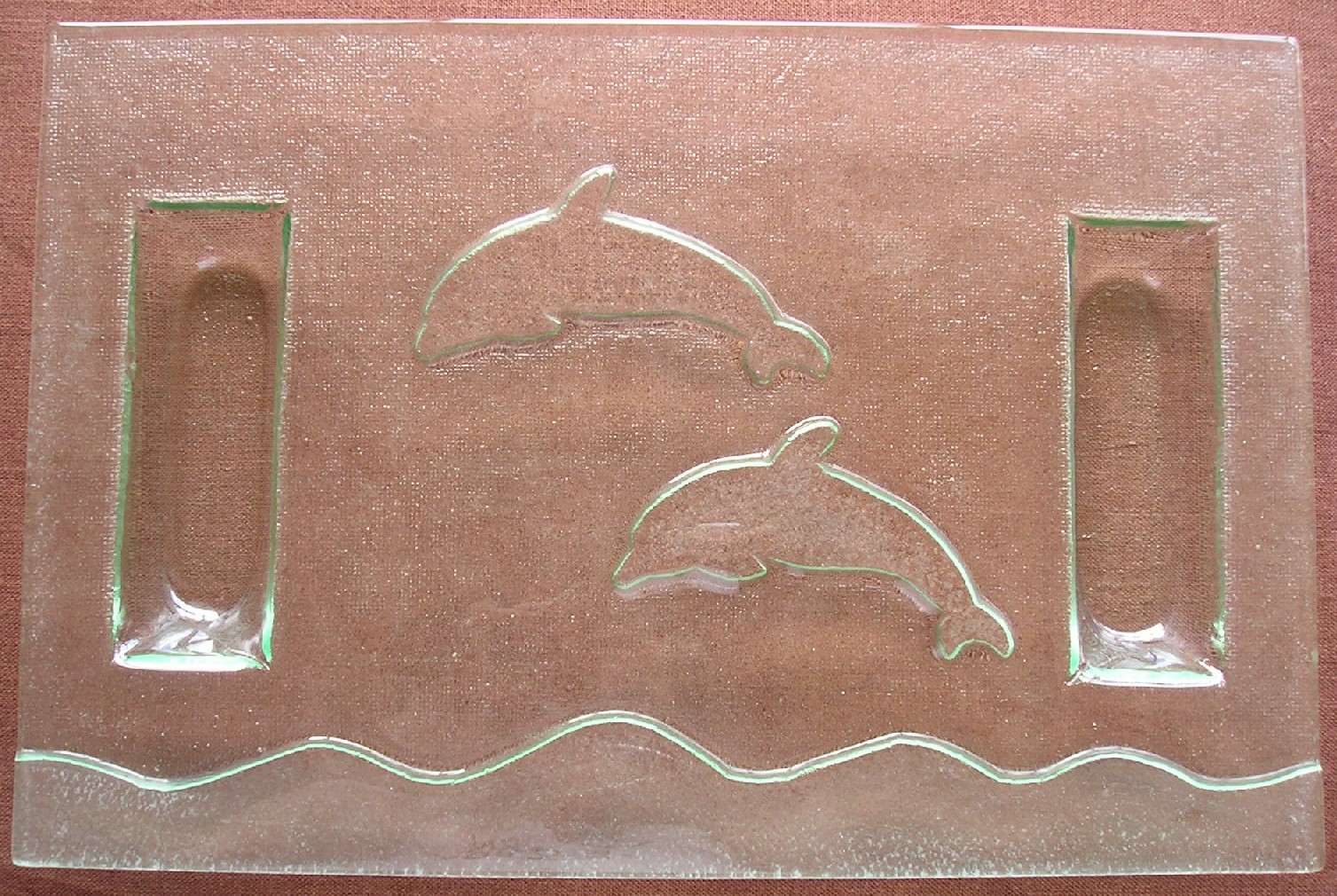
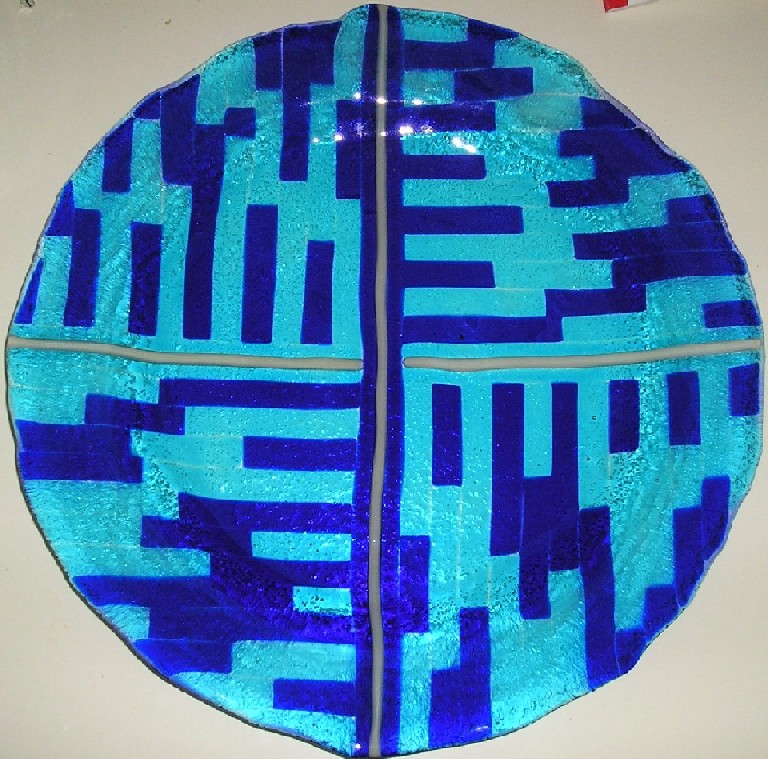
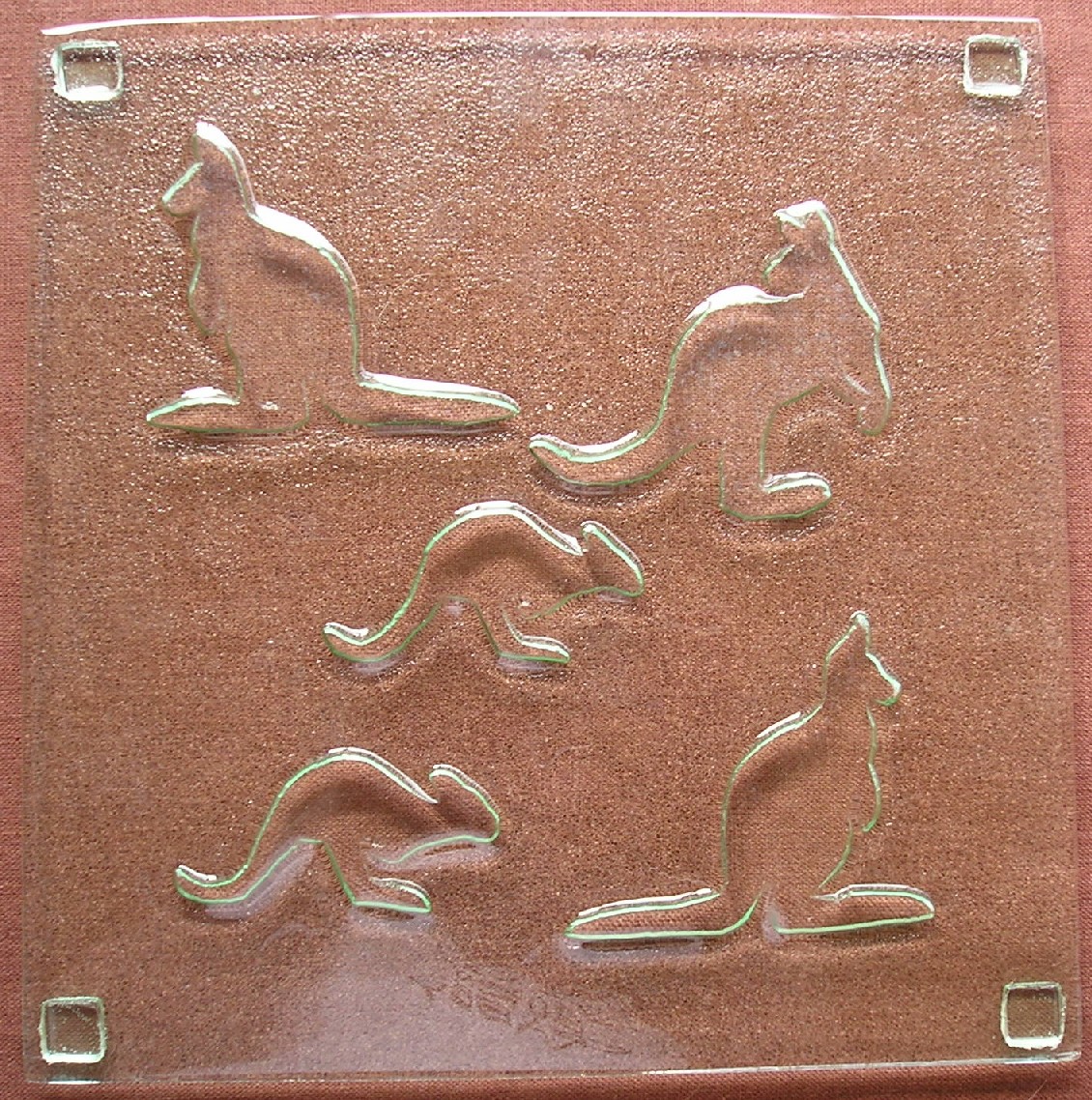
Glass fusing and Slumping:
Glass fusing is the process of using a kiln to join together pieces of glass. When you apply sufficient heat to glass, it will soften and become more fluid. Two or more pieces of glass will fuse together. The fusing process results in a relatively flat piece of glass. Bending and shaping glass using a kiln is called slumping. Usually a mould is used to cause already fused glass to take the shape of the mould. Fusing usually takes place at a higher temperature than slumping so it is important to fuse first, then slump. If you slump (shape) the glass first and them fuse at a higher temperature, you will lose the shape taken on during slumping.
The pictured blue platter was first fused and when cool, slumped into a mould. The clear platters were slumped only.
Copyright © 2004 - 2007 materials and items owned by MRACC
No part of this page may be reproduced or duplicated without prior permission, please contact us for permission