|
|
|
|
|
|
|
|
|
|
|
|
|
|
|
|
|
|
|
|
|
|
|
|
|
|
|
|
|
|
|
|
|
|
|
|
|
|
|
|
|
|
|
|
|
|
|
|
|
|
|
|
|
|
|
|
|
|
|
|
|
|
|
|
|
|
|
|
|
|
|
|
|
|
|
|
|
|
|
|
|
|
|
|
|
|
|
|
|
|
|
|
|
|
|
|
|
|
|
|
|
|
|
|
|
|
|
|
|
|
|
|
|
|
|
 |
|
|
|
LUXOR TOUR |
|
|
|
|
|
|
|
DAY 1 : |
|
|
|
 |
|
|
|
|
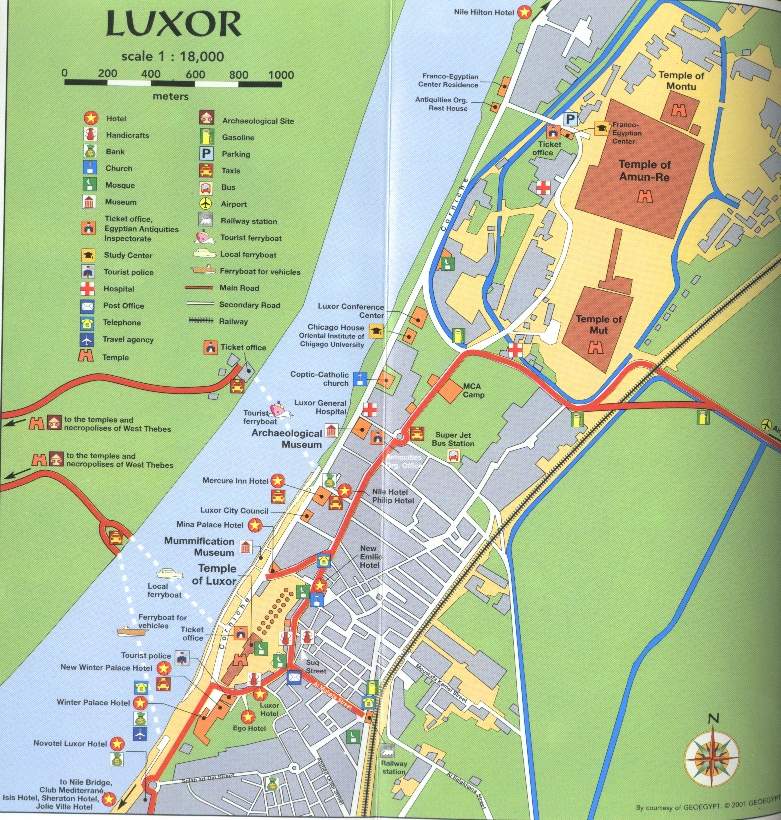
Luxor Map |
|
|
|
|
|
ARRIVAL TO LUXOR |
|
|
|
|
|
|
|
|
|
|
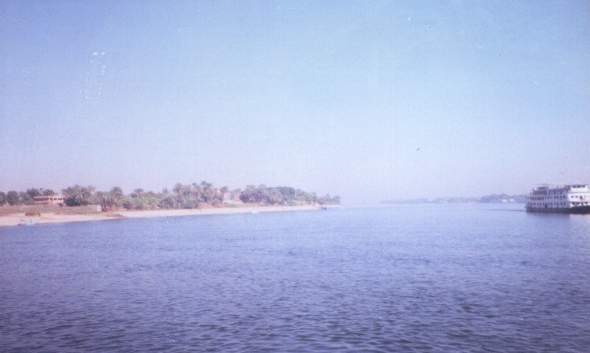
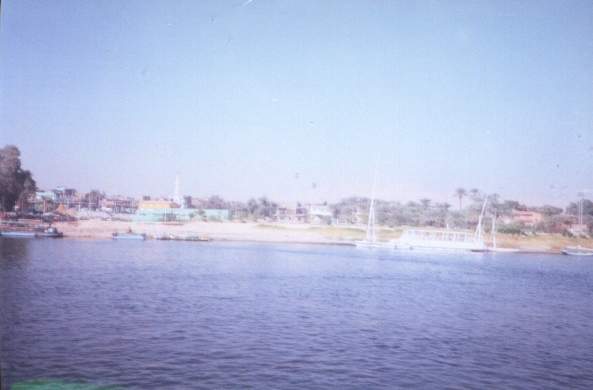
SIGHTSEEING IN CORNICHE ST |
|
|
|
 |
|
|
|
 |
|
|
|
|
|
DAY 2: |
|
|
|
1-VALLY OF THE QUEENS |
|
|
| The Valley of the Queens is located on the West Bank at Luxor (ancient Thebes). There are between 75 and 80 tombs in the Valley of the Queens, or Biban al-Harim. These belong to Queens of the 18th, 19th and 20th Dynasties. These include |
|
| The Tomb of Queent Titi (Tomb 52): She is probably the queen of a 20th Dynasty. She is depicted with the sidelocks common to the Egyptian young of the period and in the presence of the gods Thoth, Atum, Isis and Nephthys. In the next chamber the queen is shown making offerings to Hathor the cow, and in the last chamber the gods Neith, Osiris, Selquit, Nephthys and Thoth. |
|
|
| The Tomb of Khaemwese (Tomb 44): Scenes in Khaemwese's tomb show him being presented to the guardians of the gates to the afterlife along with his father. He is making an offering in the scene, and is dressed in a robe, wearing a necklace and the sidelocks of youth. |
|
| The Tomb of Amenhikhopeshef (Tomb 55): Amenhikhopeshef was a son of Ramesses III and scenes show him with his father and the gods Thoth, Ptah and others. He was probably about nine years old when he died. Scenes show him being presented to various gods, including Anubis, the Jackal-headed god of the dead, by his father, Ramesses III. A premature baby was also found in to tomb. This belonged to this mother, who aborted upon learning of Amenhikhopeshef's death. |
|
|
| The Tomb of Nefertari (Tomb 66): One of five wives of Ramesses II, Nefertari was his favorite and the tomb here has been is said to be one of the most beautiful in Egypt. The tomb is completely painted with scenes though out. In most of these, Nefertari, known as 'the most beautiful of them', is accompanied by gods. She is usually wearing a golden crown with two feathers extended from the back of a vulture and clothed in a white, gossamer gown. Be sure not to miss the side room where one scene depicts the queen worshipping the mummified body of Osiris. Near the stairs to the burial chamber is another wonderful scene with Nefertarti offering milk to the goddess Hathor. |
|
|
|
2-DIR EL MADINA |
|
|
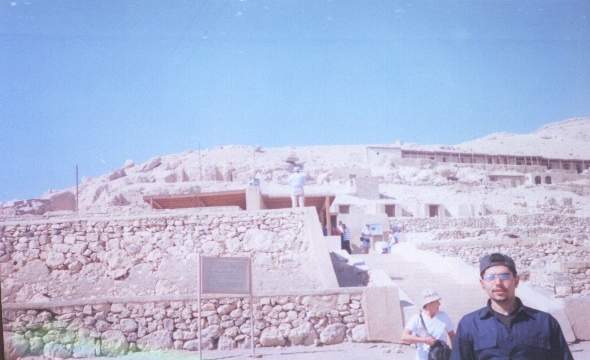
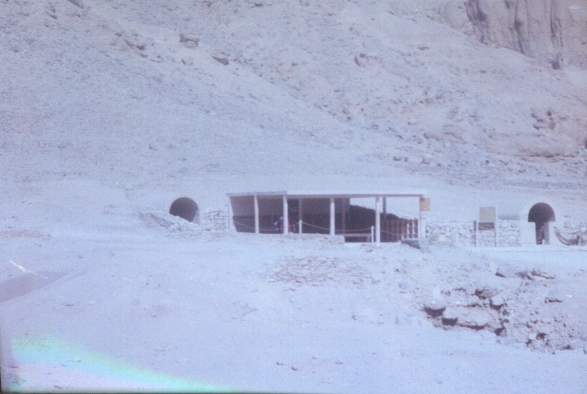
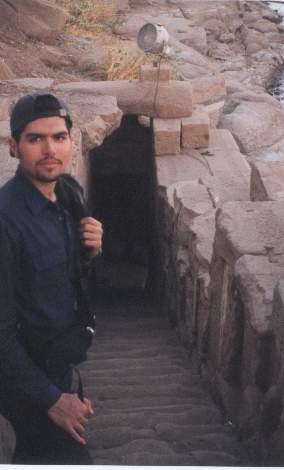
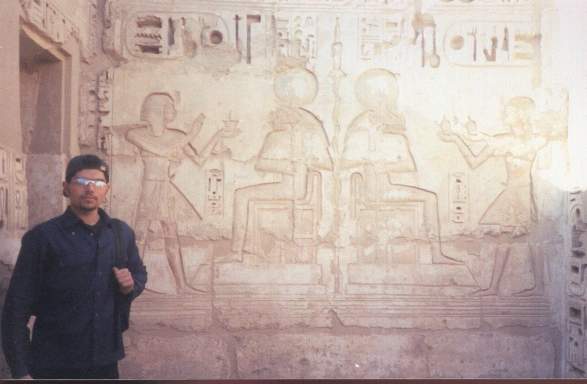
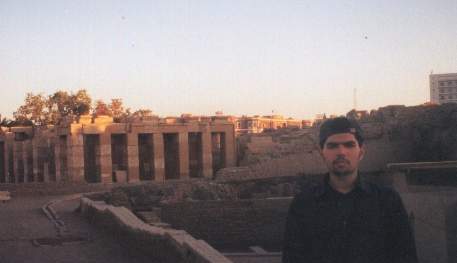
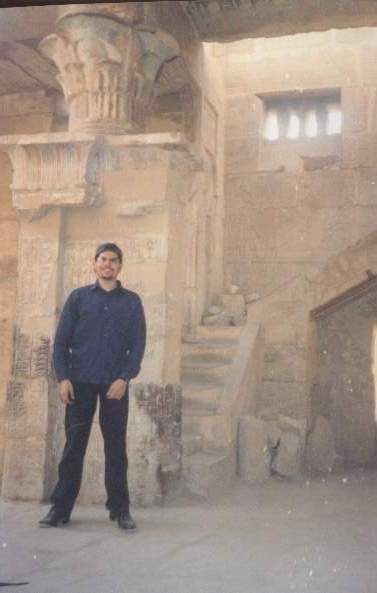
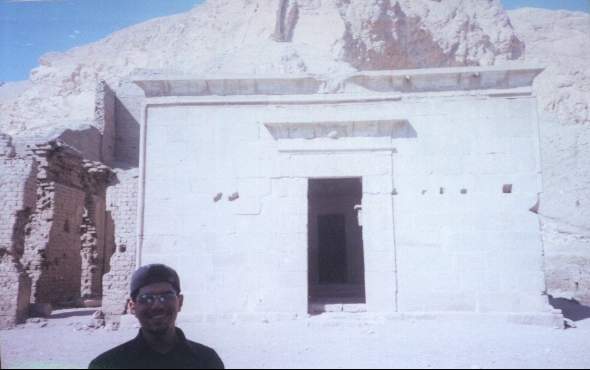
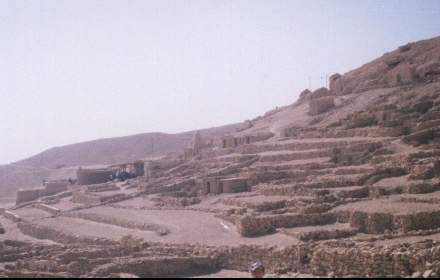
| Deir el-Medina occupies a small hollow in the foothills to the northwest of Amenhotep III's temple. It was a community of workers and craftsmen who constructed the royal tombs in the Valley of the Kings. Most of the temples associated with Deir el-Medina are located on the north side of the village |
|
|
|
 |
|
|
|
 |
|
|
|
|
 |
|
|
|
|
|
|
|
 |
|
|
|
|
 |
|
|
|
|
|
|
|
|
|
 |
|
|
|
|
 |
|
|
|
|
|
 |
|
|
|
|
|
|
|
3-MADINET HABU |
|
|
|
|
|
|
|
|
|
|
 |
|
|
|
 |
|
|
|
|
 |
|
|
|
|
|
|
|
|
 |
|
|
 |
|
|
|
|
|
|
4-COLOSSI OF THE MEMNON |
|
|
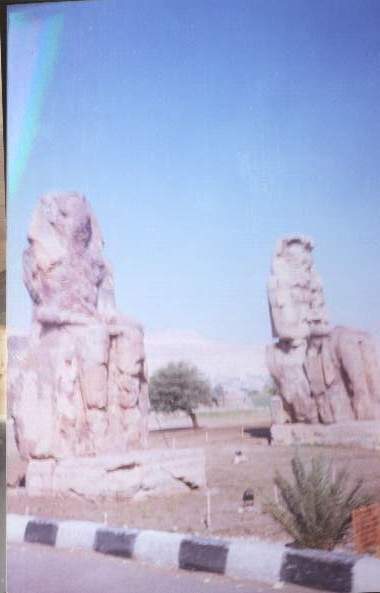
| Amenhotep III (18th Dyn) built a mortuary temple in Thebes that was guarded by two gigantic statues on the outer gates. All that remains now are the 23 meter (75 ft) high, one thousand ton statues of Amenhotep III. Though damaged by nature and ancient tourists, the statues are still impressive. |
|
|
| Due to an earthquake in 27 BC, these statues became known for a bell like tone that usually occurred in the morning due to rising temperatures and humidity. Thus they were equated by the early Greek travelers with the figure of Memnon, the son of Aurora who's mother, Eos, was the goddess of dawn. To be granted a song meant that you were very much in favor of the gods. Visitors came from miles around to hear the music, including Emperor Hadrian, in 130 A.D. The Roman emperor Septimius Severus, seeking to repair the statues in 199 AD, inadvertently silenced them forever. |
|
|
| Ancient Egyptians called the southern of the two statues "Ruler of Rulers". Later travelers called them "Shammy and "Tammy", which may have been a corruption of the Arabic words for "left" and "right". Today they are known locally as "el-Colossat", or "es-Salamat". The statues are made from carved blocks of quartzite quarried either at Giza or Gebel es-Silsileh. The Northern statue depicts Amenhotep III with his mother, Mutemwia, while the southern statue is of Amenhotep III with his wife, Tiy and one of his daughters. On the sides of the statues are reliefs depicting Nile gods joining together plants symbolizing Upper and Lower Egypt. |
|
|
|
 |
|
|
|
5-MUMMIFICATION MUSEUM |
|
|
| The Mummification Museum is a new, and located near the Mina Palace Hotel. |
|
|
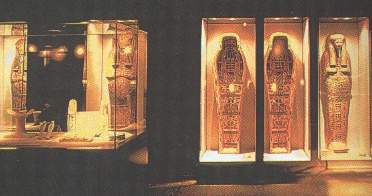
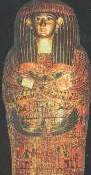
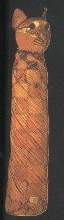
| The museum's features displays of both human and animal mummies. However, there are also displays of tools used in the mummification process, as well as artifacts of items buried along with the mummies for use in the afterlife. Almost anything one ever wanted to know about mummification can be learned here, including the mummification process itself. There is a statue of Anubis, the jackal-god who presided over the dead, at the entrance to the museum. |
|
|
|
 |
|
|
 |
|
|
|
|
|
 |
|
 |
|
|
|
|
|
|
|
|
|
|
|
|
DAY 3: |
|
|
|
1-THE RAMESSEUM |
|
|
|
 |
|
 |
|
|
|
|
 |
|
|
|
|
|
|
|
|
2-VALLY OF THE KINGS |
|
|
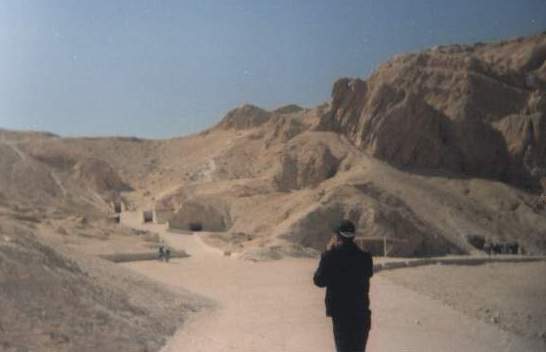
| (The Egyptian belief that "To speak the name of the dead is to make him live again" is certainly carried out in the building of the tombs. The king's formal names and titles are inscribed in his tomb along with his images and statues. Beginning with the 18th Dynasty and ending with the 20th, the kings abandoned the Memphis area and built their tombs in Thebes. Also abandoned were the pyramid style tombs. Most of the tombs were cut into the limestone following a similar pattern: three corridors, an antechamber and a sunken sarcophagus chamber. These catacombs were harder to rob and were more easily concealed. Construction usually lasted six years, beginning with the new reign. The text in the tombs are from the Book of the Dead, the Book of the Gates and the Book of the Underworld. See also a history and overview of the Valley of the Kings. |
|
|
|
 |
|
|
|
 |
|
|
|
|
|
3-DIR EL-BAHARI TEMPLE (HATSHEPSUT TEMPLE) |
|
|
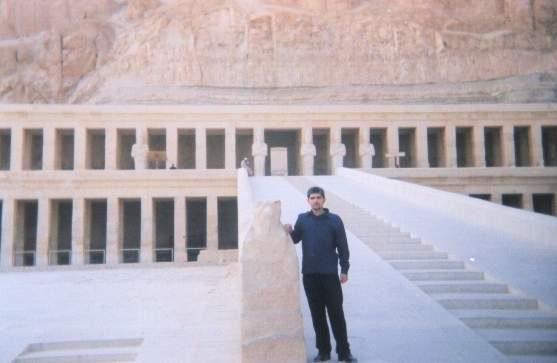
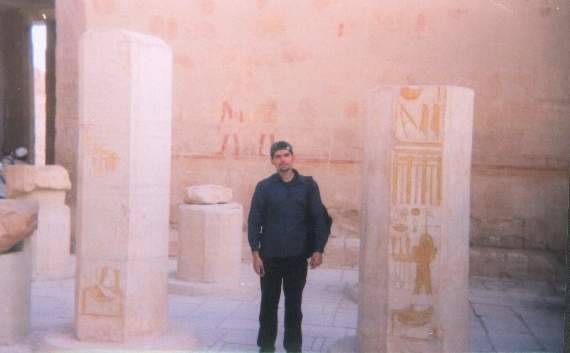
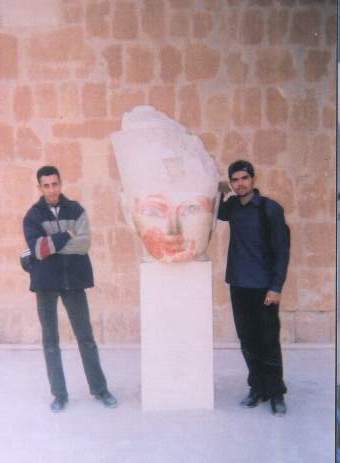
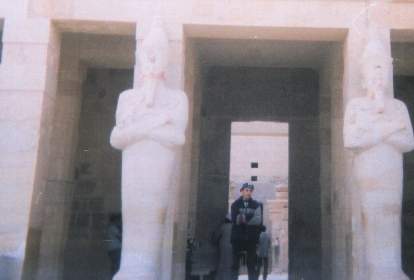
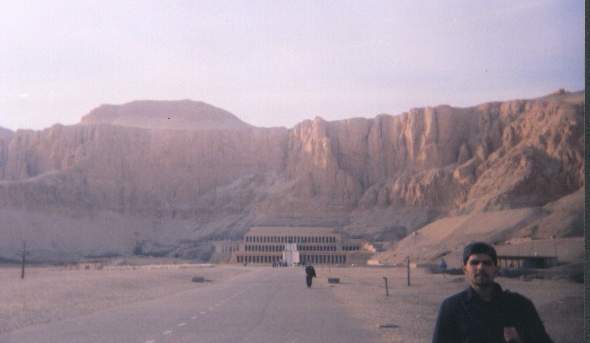
| The mortuary temple of Queen Hatshepsut is one of the most dramatically situated in the world. The queen's architect, Senenmut, designed it and set it at the head of a valley overshadowed by the Peak of the Thebes, the "Lover of Silence," where lived the goddess who presided over the necropolis. A tree lined avenue of sphinxes led up to the temple, and ramps led from terrace to terrace. The porticoes on the lowest terrace are out of proportion and coloring with the rest of the building. They were restored in 1906 to protect the celebrated reliefs depicting the transport of obelisks by barge to Karnak and the miraculous birth of Queen Hatshepsut. Reliefs on the south side of the middle terrace show the queen's expedition by way of the Red Sea to Punt, the land of incense. Along the front of the upper terrace, a line of large, gently smiling Osirid statues of the queen looked out over the valley. In the shade of the colonnade behind, brightly painted reliefs decorated the walls. Throughout the temple, statues and sphinxes of the queen proliferated. Many of them have been reconstructed, with patience and ingenuity, from the thousands of smashed fragments found by the excavators; some are now in the Cairo Museum, and others the Metropolitan Museum of Art, New York. |
|
|
|
 |
|
|
|
 |
|
 |
|
|
|
|
|
|
|
 |
|
 |
|
|
|
|
|
|
|
|
|
4-LUXOR MUSEUM |
|
|
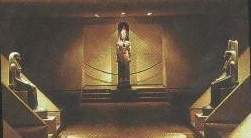
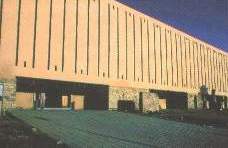
| The Luxor Museum is surprisingly entertaining. Displays of pottery, jewelry, furniture, statues and stelae were created by the Brooklyn Museum of New York. They include a carefully selected assortment of items from the Theban temples and necropolis. |
|
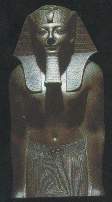
| There are a number of exhibits from Tutankhamun, including a cow-goddess head from his tomb on the first floor and his funerary boats on the second floor. However, some of the real attractions include a statue of Tuthmosis III (circa 1436 BC) on the first floor, and 283 sandstone blocks arranged as a wall from the ninth pylon of the Karnak Temple. |
|
|
|
 |
|
|
 |
|
|
|
 |
|
|
|
|
 |
|
|
|
|
|
|
|
|
|
|
|
|
DAY 4 : |
|
|
|
1-KARNAK TEMPLE |
|
|
|
 |
|
 |
|
|
 |
|
|
|
|
|
|
|
|
|
|
 |
 |
|
 |
|
|
 |
|
|
|
|
|
 |
|
|
|
|
|
|
|
|
|
|
|
|
|
2-LUXOR TEMPLE |
|
|
|
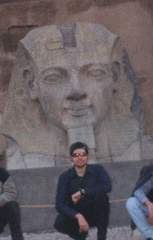
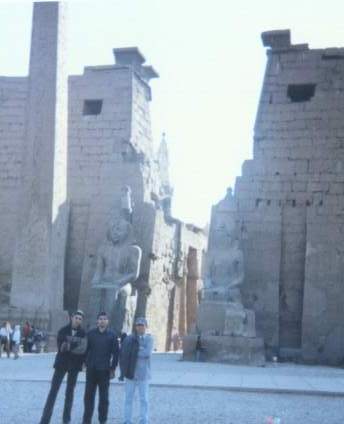
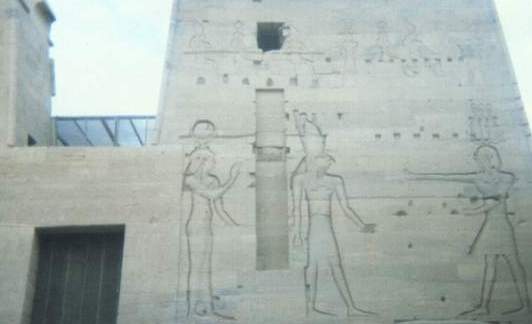
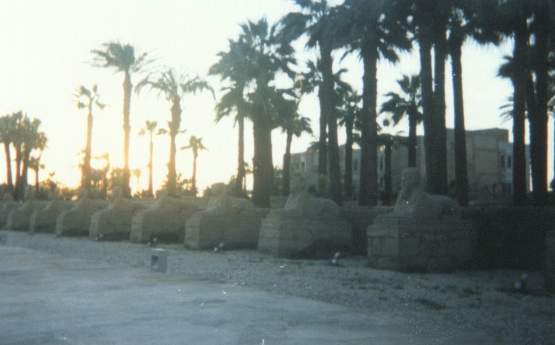
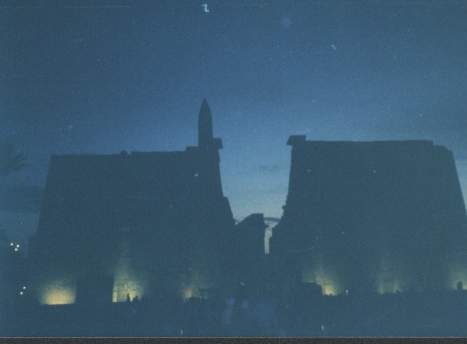
Many festivals were celebrated in Thebes. The Temple of Luxor was the center of the most important one, the festival of Opet. Built largely by Amenhotep III and Ramesses II, it appears that the temple's purpose was for a suitable setting for the rituals of the festival. The festival itself was to reconcile the human aspect of the ruler with the divine office. During the 18th Dynasty the festival lasted eleven days, but had grown to twenty-seven days by the reign of Ramesses III in the 20th Dynasty. At that time the festival included the distribution of over 11,000 loaves of bread, 85 cakes and 385 jars of beer. The procession of images of the current royal family began at Karnak and ended at the temple of Luxor. By the late 18th Dynasty the journey was being made by barge, on the Nile River. Each god or goddess was carried in a separate barge that was towed by smaller boats. Large crowds consisting of soldiers, dancers, musicians and high ranking officials accompanied the barge by walking along the banks of the river. During the festival the people were allowed to ask favors of the statues of the kings or to the images of the gods that were on the barges. Once at the temple, the king and his priests entered the back chambers. There, the king and his ka (the divine essence of each king, created at his birth) were merged, the king being transformed into a divine being. The crowd outside, anxiously awaiting the transformed king, would cheer wildly at his re-emergence. This solidified the ritual and made the king a god. The festival was the backbone of the pharaoh's government. In this way could a usurper or one not of the same bloodline become ruler over Egypt. |
|
|
|
 |
|
|
 |
|
|
|
 |
|
|
|
|
 |
|
|
|
|
|
|
|
|
|
|
 |
|
|
|
 |
|
|
|
|
|
3-SIGHTSEEING IN LUXOR |
|
|
|
|
|
|
  |
|
|
|
 |
|
|
|
|
Home |
|
|
|
|
|
TOUR & PICTURES BY MOHAMED REDA |
|
|
|
|
|
|
|
|