| PRODUCTS |
 |

|
| THE BRAIN TRUST Dr. David Staebler is a consultant to Nanergy. Dr. Staebler is an experienced technical manager with a demonstrated record of successes in corporate R&D, industrial product development, and government laboratories. His previous management career was at RCA, Thomson Consumer Electronics, and the National Renewable Energy Lab (NREL). At NREL, he was Manger of the Materials Science Branch, which was responsible for programs in hydrogen storage in carbon nanotubes, and well as other fundamental work in support of materials for renewable energy. Dr. Staebler received his PhD in EE from Princeton University. Dr. Zoltan Kiss is a physicist and entrepreneur. He serves on the Nanergy board and also supports R&D directions for the corporation. He started his career at RCA where he was responsible for programs in solid-state lasers, electrochromic materials, and cathodochromic materials. He has started several companies based on electrochromic and photovoltaic technology. He initiated the current effort on Carbon Nanotubes at Terrasolar. He holds a PhD in Physics from the University of Toronto. He will serve as chief scientist of the program. Dr Richard Williams serves as a consultant for Nanergy in areas of hydrogen storage. He holds fundamentals patents in hydrogen storage based on formic acid, developed during a 40-year career at RCA, and has developed approaches to increase the storage capacity of carbon nanotubes. He holds a PhD in Physical Chemistry from Harvard University. Dr. S�ndor Kulcs�r is a world-class battery and electrode expert at Nanergy Hungary with more than 30 years experience in the field. He holds key technology patents and has more than 22 publications. He has a dipl. engineer Degree from the Technical University of Budapest. He will be the overall technology leader of the program, focussing on the electrode technology and testing, and the transfer of the technology to the Nanergy US facility. Gabriella Feh�r an employee of Nanergy in Hungary, graduated from the Semmelweis Medical University, Budapest, and has had over 5 years experience in the study, design, and fabrication of Nickel Metal Hydride batteries. She developed the prototype of a 20 Ah capacity metal-hydride accumulator of the leading international technology, for which she earned the �Genius prize� in year 2000 at the 2nd Inventor�s Olympics and was bronze-medal winner at the Geneva Technological International Investor�s Fair. Ms. Feh�r will carry out much of the technology work on the fabrication and test of the electrodes. Dr. L�szl� P. Bir� is the department head of the Research Institute for Technical Physics and Materials Science in Budapest Hungary. He is an expert in the microscopy of nanotubes, and has carried out a number of works in the use of Scanning Tunneling Microscopy of carbon nanotubes for the present Nanergy program. Dr. Bir� holds a PhD in Physics from Babes-Bolyai University, Cluj, Romania. Dr. Bir� will be the leader of the analysis task of the carbon nanotubes. Dr. Imre Kiricsi is a professor at the Applied and Environmental Chemistry Department, University of Szeged, Hungary. Professor Kiricsi has a PhD in Chemistry from the University of Szeged, Hungary, and is a specialist in carbon nanotubes and zeolites, with over 30 years of experience in the field. He holds 12 patents. Professor Kiricsi will serve as the project leader of the fabrication of the carbon nanotube materials. Dr. Klara Hernadi is a professor at the Applied and Environmental Chemistry Department, University of Szeged, Hungary. Dr. Hernadi is a specialist in catalytic synthesis of carbon nanotubes, and has already produced materials for Nanergy�s nanotube program, and will serve as the key R&D person in the fabrication of the nanotubes for this program. Professor Hernadi has a PhD in Chemistry from the University of Szeged, Hungary. Link |
| UPDATED DECEMBER 10, 2005 |
 |
 |
| PV House Number Sign |
| PV Always Light |
| PV Combo Security Detector Smoke + CO + Burglar Shortly |
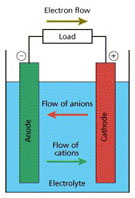
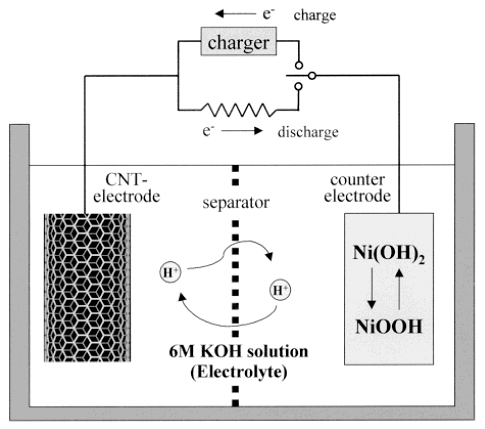
| FOCUSED LONG TERM R&D STORAGE OF H2 IN CNTs This is accomplished using an electric field acting through a CNT electrode. The CNT electrode is part of a Ni/CNT battery assembly. Not only is H2 stored but a novel battery is produced as well, one that can compete with Nickel-Metal Hydride batteries. |
 |
| PATENTS KISS Patents and patents-pending for Photovoltaic Consumer Products: � �Interconnect Schemes for CIGS-based Photovoltaic Modules on a Metal Substrate,� Z. Kiss � �Protective Coatings for Thin Film PV modules on a Metal Substrate for portable power applications,� Z. Kiss � �Elimination of Shorting on Thin-Film PV Modules on a Metal Substrate,� Z. Kiss Link PEACOCK Thermal Acoustic Methods for Production of Carbon 60, Kimberly Peacock Buckminster Fullerenes or Buckey balls for the efficient storage of hydrogen Link 1 Link 2 KULCSAR, FEHER CARBOHYDRID BATTERY Hungary P0300511 The essence of the invention is a carbon hydride electrode, produced by mixing a mixture of different carbon modifications consisting of 0 to 30 % of carbon nano tubes, 10 to 90 % of graphite and 0 to 30 % of active carbon i with a mixture of cobalt oxides of 10 to 95 % of the total quantity of materials, wherein the proportion of cobalt suboxide (CoO) is 50 to 100 %. The mixture of carbon and metal oxides is fastened onto an electric conductor advantageously with plastic and electrodes are manufactured using the metallic conductor, which are connected by a known method with a nickel or air electrode to obtain accumulators working in alkaline medium. The main advantages of the carbon hydride electrode of the invention and the accumulator made with it are that they are manufactured from carbon and metal oxides produced in large scale, there is no fire hazard in manufacturing, the product works without nano tubes (however, the usage of nano tubes improves the functioning) and the price is lower than that of generally used metallic hydrides, consequently it is suitable for production. Link (choose 'Patents', enter 'Accusealed', hit 'Search', click 'Lista', click 'P0300511') |
| NanoSign� |
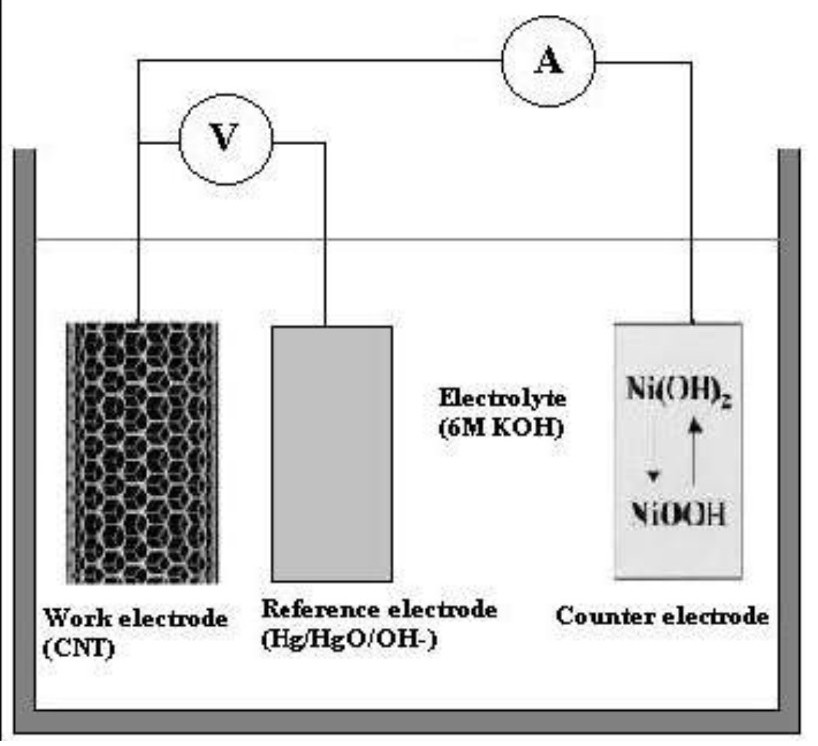
| BACKGROUND TECH USING CNTs TO STORE H2 Motorola, USP 20040096607, May 20, 2004 Fabric/CNTs/H2 storage/Flexible/Battery/H2 storage at Anode Link Motorola, USP 20050035003, February 17, 2005 Fabric/CNTs/H2 Storage/Flexible/Battery/H2 storage at Anode Link Motorola, USP 20050053836, March 10, 2005 Fabric/CNTs/H2 Storage/Flexible/Battery/H2 storage at Anode Link Air Products and Chemicals, USP 20050118091, June 2, 2005 SWNT diameters from 0.4 to 1.0 nm, and the average length of the single wall carbon nanotubes is less than or equal to 1000 nm. Link Sony, USP 20040241079, December 2, 2004 CNT containing Bucky Balls (pea pod) with H2 storage in the intersticial spaces between the CNT and C60 balls, which intersticial spaces (3) are of a size to neatly accommodate a H2 molecule (7-See para.[0067]). Link Institute of Metal Research of The Chinese Academy of Sciences (Shenyang, CN) USP 6,517,800, Cheng , et al., February 11, 2003 CNT, H2 Storage, Acid bath Link Tsinghua Univ., CN1538543 Publication date: 2004-10-20 Inventor: LIU JING (CN); MAO ZONGQIANG (CN); PAN WENYU (CN) CNT, copper, teflon, after dipping in HF solution, nano-carbon tube in concentrated H2SO4 and HNO3 is boiled, high capability of storing hydrogen, specific capacitance 1200-1710mAh/g and stable charging and discharging capability. Link Catalytic Materials, USP 5,653,951, August 5, 1997 Layered nanostructures (CNTs) possessing: at least some crystallinity, interstices from about 0.335 nm to 0.67 nm, H2 is chemisorbed into the interstices of the nanostructures. Link UK Scientists Synthetic materials including a blue solid containing carbon, nickel, nitrogen and a little oxygen which together form a crystalline "tongue and groove" structure. Within this lattice there are tiny gaps that are millionths of a millimetre in size where the hydrogen can sit. What is more, these pores are protected by "windows" that "close" once the hydrogen is inside. Link The Wondrous World of Carbon Nanotubes Eindhoven University of Technology/Philips/Feb. 27, 2003 5. Energy storage Two elements that can be electrochemically stored in CNTs are hydrogen and lithium. Hydrogen can also be stored in CNTs by gas phase intercalation. 5.1 Electrochemical storage of hydrogen 5.1.1 Experimental studies There are two methods to store hydrogen atoms reversibly in CNTs. One method is called gas phase intercalation and it is explained in section 5.3. The second method described in this section is based on a electrochemical charge-discharge process, in which the hydrogen absorption is controlled by the potential. The hydrogen storage capacity of the CNT samples is analysed by means of electrochemical galvanostatic measurement in a 6 M KOH electrolyte. There are commonly three electrodes in the setup: a work electrode (negative), often made of a mixture of gold or nickel with the nanotube material pressed into a pellet, a reference electrode (Hg/HgO/OH-) and a counter electrode, usually made of nickel. In Figure 5-1, the reference electrode is left out. Instead, a polymer separator separates the working and the counter electrode. 5.3 Gas phase intercalation of hydrogen 5.3.1 Experimental studies Gas phase intercalation of hydrogen in CNTs concerns the adsorption of H2, called physisorption instead of chemisorption (involving H+ and chemical bonds). This adsorption of H2 (other gases are possible too) on the surface of CNTs is a consequence of the field force at the surface of the solid, called the adsorbent, which attracts the molecules of the gas or vapour, called adsorbate. The forces of attraction emanating from a solid can be either physical (Van der Waals) or chemical (thus chemisorption, involving the electrochemical storage of hydrogen). This section is about the storage due to the physical forces. Carbon nanotubes have attracted considerable interest due to several reports of high hydrogen storage capacities at room temperatures, even higher than the goals set for vehicular storage by the Department Of Energy (being an H2-storage capacity of 6.5 wt% and 62 kg H2/m3). Link Applications of Carbon Nanotubes Pulickel M. Ajayan1 and Otto Z. Zhou2 1 Department of Materials Science and Engineering Rensselaer Polytechnic Institute 2 Curriculum in Applied and Materials Sciences Department of Physics and Astronomy University of North Carolina at Chapel Hill 2.2 Hydrogen Storage The potential of achieving/exceeding the benchmark of 6.5wt% H2 to system weight ratio set by the Department of Energy has generated considerable research activities in universities, major automobile companies and national laboratories. At this point it is still not clear whether carbon nanotubes will have real technological applications in the hydrogen storage applicationsCan carbon nanotubes store significant amounts of hydrogen under practical conditions? It depends on whom you ask--and therein lies the controversy area. The values reported in the literature will need to be verified on wellcharacterized materials under controlled conditions. What is also lacking is a detailed understanding on the storage mechanism and the effect of materials processing on hydrogen storage. Link Shenyang National Laboratory Electrochemical hydrogen storage in carbon nanotubes SWNTs synthesized by a semi-continuous hydrogen arc discharge method and (MWNTs synthesized by a floating catalyst method, were employed for electrochemical hydrogen storage experiments. The electrochemical measurements were carried out with an Arbin BT-2000 system with a three electrode system using CNTs as working electrode, Ni(OH)2/NiOOH as counter electrode and Hg/HgO as reference electrode in 6M KOH electrolyte under normal atmosphere. Link The hydrogen-storage mystery Can carbon nanotubes store significant amounts of hydrogen under practical conditions? It depends on whom you ask--and therein lies the controversy. Link Nanalyze Link NanoHydrogen page Link DOE, EERE (Energy Efficiency and Renewable Energy), H2 and CNTs Link |
 |
 |
| Note: This site is about NANERGY but is not by NANERGY. It is my doing completely, with certain elements copied from the NANERGY site as well as from various other sources. donpatent/nanopatent/donpat/mr_module |
| CIGS - Copper Indium Gallium Selenide NREL - National Renewable Energy Laboratory The CIGS systems are not the first portable PV systems available. Others, based on amorphous silicon technology, have been on the market for a few years. But the new CIGS portable PV technology has many advantages over these other systems. Compared to them, for example, the CIGS systems: Are lighter, more flexible and portable; Are more efficient and reliable; Have two to three times the power-to-weight ratio; Have more than 5 times the power-to-volume ratio; Cost less; and Are inherently self-repairing due to the natural tendency of copper atoms in the CIGS material to spread into damaged areas, thereby repairing the crystal structure. In fact, CIGS modules can even take a bullet hole and continue to operate. Another advantage of the CIGS technology is that it is extremely versatile in that the modules may be fabricated on a variety of substrates - flexible, rigid, or substrates that can conform to many surfaces. As such, the CIGS systems can be included on all kinds of structures, such as signs, bus shelters, sun roofs, or awnings; or they can be integrated into building applications and be used on metal roofs, as roof shingles, or in architectural fabrics or facades. Link DAIMLERCHRYSLER Here's an interesting offering from DaimlerChrysler - a thin film flexible CIGS solar panel applied to a car body panel: (57)The invention relates to a body part of a vehicle provided with a support and with a transparent covering layer. A thin-film solar cell is applied to said support. The support, together with the thin-film solar cell, is covered by the transparent covering layer. The transparent covering layer consists of a paint layer, particularly a clear varnish layer. The thin-film solar cell is a CIS-, CIGS-, CIGSS-, CdTe- or an Si-based (particularly Si/SiGe) thin-film solar cell. Link |
| PRODUCTION OF CNTs & FULLERENES NANO-C - Industrial Production of Fullerenes Becomes a Reality �After 12 years of exciting research on fullerenes forming in flames at MIT,� Jack Howard recalls, �my greatest thrill was seeing almost pure fullerenes coming directly from the combustion chamber at Nano-C.� Link WITH ACOUSTIC FEATURE United States Patent 6,451,175, Lal, September 17, 2002 What is claimed is: 1. A method of forming carbon nanotubes comprising: (a) establishing an electrical arc between a carbon anode and a cathode to deposit carbon material including carbon nanotubes onto the cathode; and (b) longitudinally vibrating the cathode while the arc is established between the anode and cathode and carbon material is deposited on the cathode. The vibration of the cathode face also results in acoustic streaming to thereby focus the plasma at the face surface. The vibration of the cathode may also be carried out to develop vibrational nodes and antinodes on the face of the cathode, allowing arc current to be focused and stabilized in location at the antinodes of cathode vibration, which enhances the formation of longer nanotubes. Further in accordance with the invention, substantially all of the particles on the cathode face may be driven off by applying a stress pulse from the driver to the cathode which has a sufficient amplitude to dislodge the entire carbon boule from the face of the cathode. This creates new space for another nanotube boule to be formed. In this manner, continuous carbon nanotube production can be achieved which is limited only by the anode carbon supply, eliminating the need to stop the process to dislodge the carbon from the face of the cathode or to rotate the cathode or otherwise scrape the cathode to remove the carbon boule. Avoiding the need to scrape the cathode also avoids the mechanical damage to the cathode that can be caused by scraping. Link |