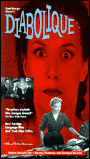
The book "The Making of Psycho" mentions that the film Diabolique was one of the reasons why Hitchcock made Psycho in the first place. The book states that Hitchcock was so impressed by the film that he wanted to make a picture that topped it. Psycho was his attempt to make the King of All Thrillers. Of course, most filmgoers, including myself, agree that Hitchcock succeeded. But if you consider that Psycho may never have been made if it weren’t for Diabolique, then maybe it is Diabolique’s influence on the suspense/thriller genre that rightfully deserves the crown of King of All Thrillers.
Okay, on to the film.
I think Diabolique is an exercise in deception. From the opening credits to the head-spinning plot twists to the shocking finale, it kept me guessing all the way. With that said, Diabolique may have been the first true thriller – the godfather of suspense that gave birth to the genres’ great classic like Psycho and Marathon Man, to name a couple. I think its style still has an influence on filmmakers today (if they know it or not).
One of the key elements Diabolique may have introduced is the final climatic "shock scene." Many have copied it. The ones that immediately come to mind include Carrie (hand from the grave), Friday the 13th (Jason popping out of the water), and, of course, Psycho’s shower scene. I’ve even read where the shower scene was a deliberate attempt to outdo Diabolique’s bathtub scene. All of these unforgettable movie moments have one thing in common – they all come completely unexpectedly, which I believe adds to their mind-boggling results.
Unfortunately, I was already aware of the bathtub scene. Even so, it was still chilling to watch. And when the schoolmaster took out his eye slits, it confused me for a moment, and reminded me of your infamous story of the Crying Game – when Jaye Davidson walked out of the bathroom and you asked Julie, "Why does she have a dick?
In hindsight, when I thought back to the beginning of Diabolique, I realized I was being set-up from the start. This thought drummed up many questions, including was the schoolmaster ever abusive to the mistress?
There are several films that have successfully deceived the audience into believing what the characters are saying is true. In recent years, the one that did it best for me was The Usual Suspects. And Kevin Spacey’s convincing performance earned him an Oscar!
What director Henri-Georges Clouzot had me believing from the start of Diabolique was that these two women had a legitimate reason for killing the schoolmaster. This immediately had me siding with the victimized women. The wife, who was once a nun (or considering to be), is the film’s consciousness. The audience trusts her. I trusted her. After the husband slaps her around the second time and she decides to go through with the plan, you almost feel the murder is justified, especially after such convincing lines by the lover like, "You better not miss your chance. You can bet he won’t."
Although the first half hour drew me in, it was the events that unravel following the murder that had me hooked. From the tenant helping carry the b-"casket" to the car to the drunken GI trying to hitch a ride, I knew I was going to have to endure an hour’s worth of edge-of-my-seat suspense. And I was excited about it.
The first of several plot twist came when the pool was drained and the body was missing. Again, knowing the final bathtub scene, I wondered how the schoolmaster would get his revenge on the "two devils" (another set up by Clouzot, which makes you believe the title is referring to the two women, rather than the schoolmaster and his lover).
The image of the schoolmaster in the photo and the story told by the boy with the slingshot were both enough to raise the hairs on the back of my neck.
By the final evening of the film, I was pretty much putty in Clouzot’s hands. Had I not known about the bathtub scene, I felt I would have been in the same situation as the wife – asking myself who was blackmailing her (could it be Keyser Soze?).
As the terrified, but curious wife walked through the long, dark hallway, it reminded me of Vera Mile’s slow decent to Norman Bates’ basement. After she screams and runs into the bathroom, Clouzot traps the audience into believing that she is safe (as did Hitchcock when he placed Marion Crane in the warm, soothing shower). But after the lamest dab of water to the face in the history of filmmaking, that’s when the thrills begin.
I actually liked her death scene. It was very surreal. The poses she made as she died were very strange, but convincing. It was at that point that I knew I had been deceived. I knew the other woman was involved. The funny thing is even though I thought I knew the ending, Clouzot still had a few surprises up his sleeve.
I liked when the inspector came out of the shadows after listening to their story. It reminded me of Rod Serling walking out of the Twilight Zone to sum up the episode.
I found the final request by the director – asking the audience not to tell others about what they had just seen – very similar to Hitchcock’s marketing gimmick for Psycho. As you may or may not know, when Psycho was released, Hitchcock made sure that all theatre owners did not let people in after the movie started. It added to the intrigue and mystery of the film. Plus, if somebody was to arrive 30 minutes late, they would never have known Janet Leigh was in the picture.
Unlike Double Indemnity, which I felt was a great 1940s picture but lacked several element to make it one of the best of all time, I think Diabolique ranks as one of the all-time best thrillers for several reasons. It was a groundbreaking film that introduced many elements to the thriller genre, including the "it’s not over ‘til it’s over" concept, which left the audience questioning whether or not the wife faked her death (I can hear the theme from the Twilight Zone already). Although I thought the film had many outstanding qualities, I would give Diabolique 5 stars for its influence alone.