 |
|
|
|
|
|
|
|
|
|
|
|
|
|
|
|
|
|
|
|
|
|
|
|
Talented Hawaiian Island Boy makes it in Hollywood Movies! |
|
|
|
Mr. James P. Spencer was a very vigorous contributor in the "Golden Age" of Hollywood. He was active in film production and in acting at MGM and other major studios. He had a wonderful film legacy. Mr. Spencer was a native Hawaiian, born on January 2nd, 1893 in Honolulu. His English & Scot's father was credited with bringing in the first sewing machines by clipper ships. A young Jimmy Spencer grew up and knew well the Hawaiian Republic with it's Honolulu royal family. His childhood was a happy one. When Mr. Spencer reached early adulthood, he migrated to Los Angeles. There he joined the US Army to fight in WW1. His army unit was the 39th field artillery of the 13th Division. His unit was constituted into the National Army as Battery A, 39th Field Artillery. The battalion was organized at Camp Lewis, WA. His Army service was exemplary and he rose to the rank of corporal. He was given an honorable discharge. |
|
|
|
Upon returning home, he became even more active in the local Southern Californian Polynesian community and it's many cultural events. Southern California had become an important focal point for Polynesian peoples. Mr. Spencer was a native Polynesian singer, musician, and dancer. He spoke Hawaiian and several other Pacific island languages. He was very proud of his island native culture. By now after the first world war, many of his old Honolulu friends had also migrated to "The Mainland". Jimmy Spencer had many childhood friends now in the ranks of that day's popular Polynesian performers and athletes. One of his most famous pals was Duke Kahanamoku. 'The Duke", Hawaiian Olympic Gold Medal swimmer and famous surfer often spent time with Mr. Spencer. One of their favorite past times was abalone diving off Palos Verde and off Catalina Island's reefs. Large groups of Polynesian friends would gather for beach parties consisting of entertaining each other with their songs and dances from their home island cultures. |
|
|
|
 |
|
|
|
|
|
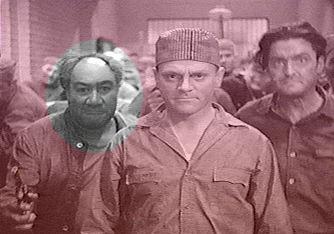
Jimmy Spencer and George Raft in film "Each Dawn I die". |
|
|
|
|
|
Around this time, Mr. Spencer started a family by marrying Ms. Erma Johns. They had two wonderful daughters. Jimmy Spencer and Duke Kahanamoku contributed to making the southern Californian Polynesian community a strong viable group of the southern Californian landscape. In the late 1920's and the early 1930's, Hollywood began to produce a great many "South Sea Island" films. This genre of film was very popular with the Depression Age film-going public. Many great many new up-coming actors got their starts in these island films. Some of those actors were Clark Gable, Jon Hall, Joan Crawford and Loretta Young. Mr. Spencer became a useful contributor to these exotic productions due to his personal Polynesian knowledge and artisitics contacts. Mr. Spencer worked initially in casting and set direction with these "South Seas" Polynesian films. His duties were casting Polynesian islanders for daily "bit" parts and to cast large amounts of background performers [extras]. |
|
|
|
Most of his early work was for the studio giant, Metro Goldwyn Mayer. Some of his more legendary MGM films were: � "Rain"('31), Walter Huston and a new Joan Crawford. � "Bird of Paradise"('32), Joel McCrea and a new Delores Del Rio. � "The Hurricane"('37), a new Dorothy Lamour. � "Mutiny on the Bounty"('35), Charles Laughton. � "Call of the Wild"('35), a new Loretta Young and Clark Gable. |
|
|
 |
|
|
|
|
|
|
Email me HERE |
|
|
|
|
A. Genovese webpage of LINKS |
|
|
|
|
|
Website content copyright A. Genovese 05 |
|
|
|
|
|
|
|
|
|
|