


The Battle at Garvagh is said to have been the only resistance to O'Neill of any consequence; it took place just south of Garvagh on a hill near the hamlet of Ballinameen on the 12th and 13th of December 1641. A report of the events of these two days is contained in a report written at the time by Mr Vesey, the rector of Coleraine. It must be explained that Mr Vesey did not like the Scots and this may account for the fact that he attaches most of the blame for the failure of the force at Garvagh to Edward Rowley and not to William Canning, the son of George Canning, who was the Ironmongers agent at Agivey, and who was English. The following is part of Vesey's account preserved in Trinity College, Dublin:
" A command of two or three hundred men having been committed to the charge of Edward Rowley Esq. of Castleroe, a garrison was planted at Garvagh, a small village seven miles from Coleraine, to repress the inroads into the Barony of Coleraine and to suppress the rising Irish within it.
The garrison, being twice assaulted, fought prosperously to the loss of near two hundred mens lives, whereof divers were of note and remarkable in the country and among them the said Edward Rowley, the Commander of the company. This defeat happened on December 13th 1641.
Mr Vesey went on to report that Rowley had been absent from his command on December 12th and, on returning felt obliged to continue on the 13th, despite being outnumbered by ten to one, and as a result was 'overpowered by the multitude'. We know that the conflict took place at Rowellan's or Revelyn's hill, just south of Ballinameen, that the Irish under the command of Cormick O'Hagan numbered about one thousand armed men and that on the evening of the second day the settlers were defeated by sheer numbers. A story is still told of how William Canning, while trying to escape the mob, scattered a bag of coins on the road in the hope that those who were chasing him would stop to pick up the money and so he could make good his escape. This did not work and, according to tradition, he was killed near Desertoghill Old Church and beheaded.
George Canning, William's father, continued to hold out at Agivey Castle but, after some time, he was forced to withdraw across the river Bann. It may be of interest to recall that the Irish army at Agivey was not commanded by O'Hagan but by Manus Roe O'Cahon, who held the townland of Garvagh as a native freehold.
The battle of 1641 had a long effect on the 'folk memory' of past events and was still talked about within living memory. A very long poem recalling the battle called ' Friends and Foes' was written by Samuel Perry in 1850.


The wintry sun askance has thrown some straggling beams which fitful shone
O'er Garvagh's hamlet and disclosed a scene of beauteous parts compossed
A vale hemmed in by many hills, green slopes from which the frost distills
Bestudded o'er with stately trees, bold oaks the sons of centuries with ash and fir and chestnut stand and wide their mighty arms expand.
Agivey's water rolls along, here smooth and calm there rushing strong
And many's a cottage roof pours forth, a line of smoke towards the north
The Hermitage attracts the eye, no castle fort or flag staff high,Gives hint of feudal pomp or power, in shelter of baronial tower,
T'is there the Canning dwells, and he protects the infant colony.
Who speeds from Ballintemple down, and skips o'er Gorrey's fallow ground?
T'is he the scout last evening sent, when rumour reached that ill intent
Was brooding o'er the peaceful dell, and now he comes dark news to tell;
How, joined to fierce Sir Phelims' force, O'Kanes strong sept pursued their course
To meet the Antrim band of war, that lovely spot with gore to mar,
Where Garvagh's village clustered stands, to drive the flocks and waste the lands.
And e're noon's hour can intervene, the woodhill's top presents a scene,
Which might appal a larger band than that which Canning can command;
From far Dungannon rolls a tide, with conquest flush'd in warlike pride,
From kennaught's plains with swords and spears, a formidable host appears,
And there to mingle in the fray, the Antrim men have urged their way.
Night falls around the rendezvous, the Canning leads his followers true
In silent march across the stream, up from the vale the morn's first beam disclosed
Where on each other frowned the hosts, encamped on equal ground.
Loud shouts rolled Rav'lin's troops among and thus the chief addressed the throng;
"My countrymen! behold the knaves, who come to grind us as their slaves,
Behold this landscape, fair and broad, there had our fathers their abode.
But there no tree a shelter lends, to dwelling of your father's friends;
The tyrant gave to stranger bands, our hearths, our homes and fertile lands,
By force maintained, they've held them long, but now they're weak and we are strong,
Then spare them not, nor quarter give, to crown revenge not one shall live;
They robbed us, therefore let their breath departure take in felon's death
Our holy altars they've profan'd, with native blood the land they've stained
My soul for retribution longs, rise! and revenge your country's wrongs,
Extirpate all, by fire and brand, who would pollute our fathers' land,
From Ulster's plains the Saxon name, erase with scorch of nitrous flame
Pursue the Scot and cut him down, or dogs' death give him, hang or drown!
Tis honour calls us to the fray, our fathers' ghosts forbid delay;
'Tis patriotic ardour drives our swords, our energies, our lives,'Tis love of holy things impels, our arms to clang funeral knells,
O'er slaughtered hecatombs of those, our own or our religion's foes;
Then shall our isle again return to palmy days, for which we mourn.
When strangers' breath no longer taints our air, or tongue blasphemes our holy saints
Again we'll call this land our own, and reap the harvest which we've sown."
Once more there echoed long and loud, the war shout from that eager crowd
And many a blade, in grasp of brawn, with formidable sweep was drawn.
The Canning on the neighb'ring height, thus cheered his soldiers to the fight;
"See yonder hords who crowd the hill, who come our Saxon blood to spill,
Half armed but not half civilized, tis meet that they should be chastised
Who the Blackwater pil'd with slain, not manful pierced on battle plain,
But butchered, murdered by brood, of Tophet, in deliberate mood.
By ruffians driven, the mother led her babes to swell the pile of dead,And coward cruelty swept on, till infants' ghosts with sires had gone,
And who were those who died to sate, the savage kerne's unholy hate?
They were our breth'ren by the ties of faith - of country; loudly cries,
Their blood for vengeance on this crew, who causeless and unpitying slew
The man, the mother and child, who on the skien unconscious smiled;
And these are they who come to do, the like to-day to yours and you,
But let us teach the murd'ring hords, such knowledge as our strength affords,
We strike not only for our lives, but fight for little ones and wives,
For faith and all that's dear to man, then let us do what soldiers can."
He ceas'd, then rose a deaf'ing cheer, sweet music to the warrior's ear,
And ere the sound had died away, 'twas mixed with clangour of the fray;
Deep booming came on fresh'ning air, the hoarse reports of howitzer,
And strong the sulph'rous stench beccame, as matchlocks flung their sheets of flame,
And ere in conflict close they bent, full many a dauntless heart was spent.
Oh public taste! what thing art thou, to which th' unthinking many bow?
How would the mouths denounce the wretch, who'd dare his impious hand to stretch,
With daub the landscape to defile, fresh painted in superior style?
What name would coin from him who'd mar, the Sculptor's work with bloodless scar?
But gore may stain the work of heaven, whil'st thou the dauber hast forgiven!
And now the sycophant has played, to him who mars what God has made!
Shame on thee! - but I cease to blame - thou'rt blind, and canst not see thy shame!
Wild rings the steel and wilder still, rise noises which the welkin fill;
The direful tubes their entrails pour, and thick flies the metallic show'r,
Now cluster thick, now spread the foes, and here they wheel and there they close
And many a stream, from unsluiced veins, the prickly gorse with crimson stains.
As rain - swollen streams o'erflow their banks, so swell the files of Phelim's ranks,
For neighb'ring clans to ensure the day, throng on, promiscuous, to the fray,
But, as the dwindled streamlet runs, its springs parched up by scorching suns
The Canning's band fatigued and few, in phalanx round their chieftin drew,
Who saw with deep regret, whar raid the foe on that stout band had made.
"Retreat," he cried "ere all be slain!, quick hie to Desertoghill's fane,
From the walls of which we may defy those wolves, until our friends come nigh."
Well may the chieftain's gallent grey, have borne him safely from the fray
The mark he seemed for thousands' wrath, who pressed on that retreating path,
But no - he scorned to rob his band of serviice in his powerful hand,
Behind his troop and next the foe, he keeps as to the fane they go.
Ha! rally, or your chieftain's lost, ye fragments of a broken host,
See! where the gleam from many a blade, proclaims the rising ambuscade!
They hem him round and now his steed, has failed him in his hour of need,
Beswamp'd, he plunges, sprained and lame, he scarce supports his master's frame,
Who leaps afoot amid the foes, and wide the glittering coin he throws,
In hope that avaricious mood, may take the place of lust for blood.
But no, the golden treasure lies, untouched till falls the sacrifice,
Nor long the struggling victim stands, the hew-block for a hundred brands.
As when some bark, 'neath tempest's roar, is hemmed by crags close on the shore;
When by the boats, the storm-tossed crew, have landing made they stand to view,
The stately craft, which lately stood, their bulwark on the raging flood;
Belaboured sore by wind and wave, without the power to shield or save;
So watch the few who gained the walls, the vortex where the leader falls
And louder still the victors yelled, when high the severed head was held;
And still the ruddy features glowed, and still the graceful ringlets flowed,
But soon that noble countenance, a relic sad of war's mischance.
Rolled on the ground, a gory ball, to exercise their feet withal,
And fierce 'twas struck by many a clown, Who erst had cow'rd
beneath its frown.
The fight is won and thousands hie, to spend the night in revelry,
Resolved, next day, on marching where, behind the sheltering spears of Blair
The weak and helpless ones had sped, when hope, with Canning's'
soul had fled.
Night gathers on the clustering host, by late excitement strangely tost
And warlike song and ringing laugh are heard, as flowing cups they quaff;
The guards are set, secure they lie, the mirth goes round, no foe is nigh.
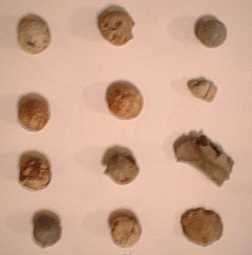
Other weapons that were used were Pistols, as there is evidence of this, by some pistol ball shot being found. Mounted troops commonly had these weapons, though others probably carried them as well as a back up firearm. Farm imlements were commonly used as well by gather ups who had joined the ranks, these would have included Pitch forks, bladed tools and large knives etc.
This poem is harrowing reading and it shows how brutal the fighting was and the scale of the battle. The murderous and bloody intent towards the Protestants was babaric in the way they butchered the corpses after they were killed. It tells of how William Canning's head was cut off and kicked about! In other descriptions in other events of the time, people were sliced open and their entrails left for the dogs to eat! , as well as other graphic cruelty to man woman and children.

This page is a Tribute to all those brave Loyal men of Ulster, Scotland & England, who settled and built this country, who took part and died in this Battle to try and save our forefathers from the Irish Mudering Scum who attacked Garvagh and went on the rampage, pilliaging and murdering man woman and child and laying waste to the whole countryside in this terriable historic event in our history. God rest their souls. Least we forget!
In Memory
In the Year of our Lord
12th & 13th December 1641
