 |
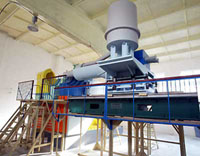
An electron positron collider running for 15 years at the Institute of High Energy Physics under the Chinese Academy of Sciences is undergoing a major upgrade involving 640 million yuan (US$77.29 million).
The International Committee for Future Accelerators (ICFA), meeting during an international physics conference in Beijing last week, endorsed the recommendation of a panel of physicists on the technology choice for a proposed future international particle accelerator.
The 12-member International Technology Recommendation Panel (ITRP), chaired by Barry Barish of the California Institute of Technology of the United States, recommended the superconducting technology be adopted for the proposed International Linear Collider.
The superconducting technology has been developed by an international
collaboration centred on the DESY lab in Germany.
The rival technology, which operates accelerating structures at room
temperature, has mainly been developed in the United States and Japan.
According to the recommended proposal,
the collider would occupy a tunnel of
up to 40 kilometres long with experimental areas located at the midpoint, where
the electrons and positrons collide.
"A decade ago such a high-energy linear collider was just a dream - a vision
for a revolutionary tool to answer some of the most fascinating and compelling
questions about the nature of our universe," said Cornell University's Maury
Tigner, chair of the International Linear Collider Steering Committee, which
appointed the panel.
Particle research
During their research, physicists discovered the
universe, from stars, earth and trees to everything we see around us, is made up
from a small number of basic building blocks, which are termed by scientists as
elementary particles.
Some are stable and form the normal matter but others may live for just
fractions of a second and then decay to the stable ones. All of them coexisted
for an instant after the Big Bang.
In order to look back in time and to get a glimpse or even study how the
universe, the stars, the earth or even ourselves are formed, scientists have
attempted to recreate an environment somehow similar to the Big Bang.
What do they do? They have found that the environment similar to the Big
Bang, or an enormous concentration of energy,
can be reached somehow in an
accelerator.
Today, it is estimated there are around 10,000 particle accelerators in the
world. Over half of them are used in medicine and only a few in fundamental
research.
In medicine, accelerators are used
to obtain better imaging for more accurate
diagnosis and to engage in therapy, fixing only to definite tissues or organs.
Accelerators are also
indispensable assistants to researchers who have
unravelled the structure of viruses like HIV, the age of artifacts like ancient
cave paintings and the events that happen in the epicentre of stars.
Accelerators are used in industry as well. Engineers have turned to
accelerators to
improve the quality of manufactured goods, to sterilize medical
equipment and food, to make semiconductors for the computer industry, to refine
aircraft engines and artificial hips, to investigate how car engines wear out,
to look for contraband in harbours and airports, and to help survey for
underground tunnelling.
New international accelerator
However, scientists need to go further in
their studies of the compelling questions about dark matter, the existence of
extra dimensions and the fundamental nature of matter, energy, space and time,
and eventually about ourselves.
The proposed international linear collider may help.
Thus, the ITRP's decision is viewed as opening the way for the world particle
physics community to unite behind one technology and concentrate their resources
on the design of a superconducting-technology linear collider.
Chinese contribution
Chinese scientists, represented by the Institute of High Energy Physics (IHEP) under the Chinese Academy of Sciences, also participated in the international particle research, according to Chen Hesheng, director of the institute.
In fact, one spin-off of the international co-operation has enabled the IHEP to introduce the Internet to China.
Chen said at a press conference that Chinese physicists will get more involved in the future.
The institute also hosts an electron positron collider that has been running for 15 years.
"With the experience gained from our previous work with the collider, we are willing to make more contributions to this exciting project of building the international linear collider," said Chen.