| Ball Python Python regius |
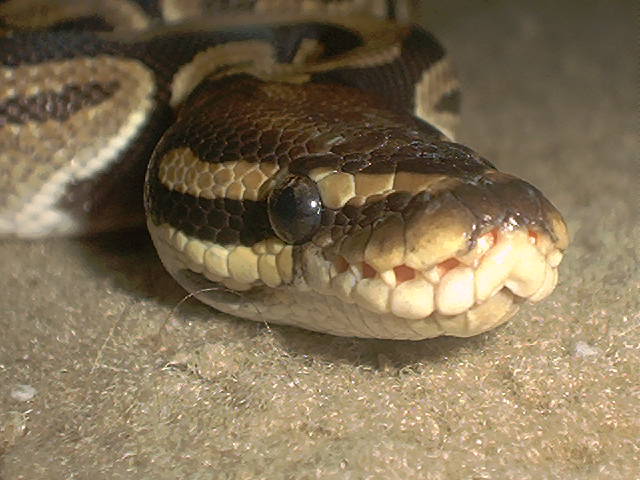
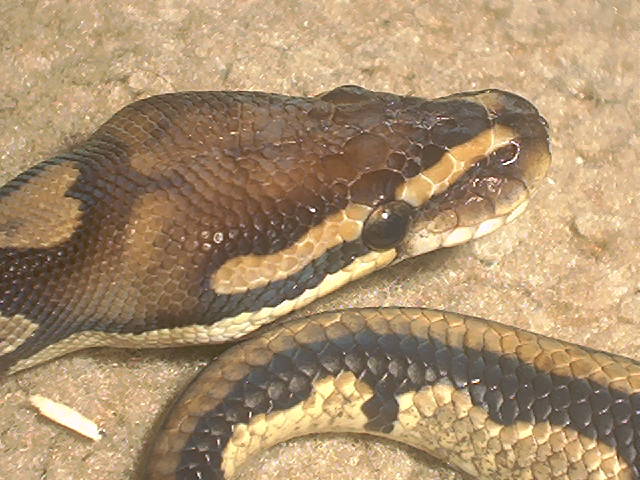
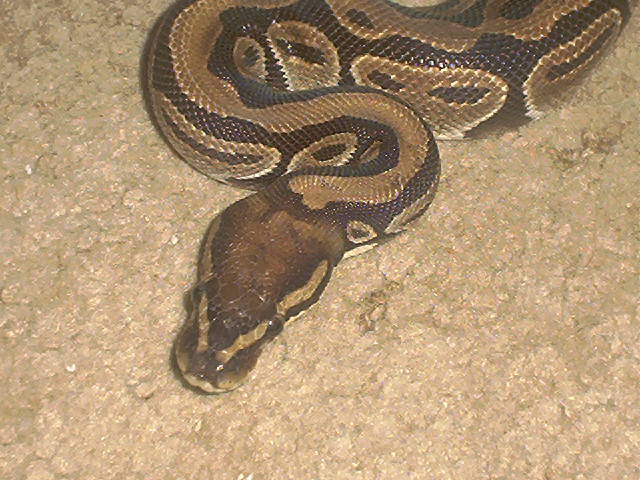
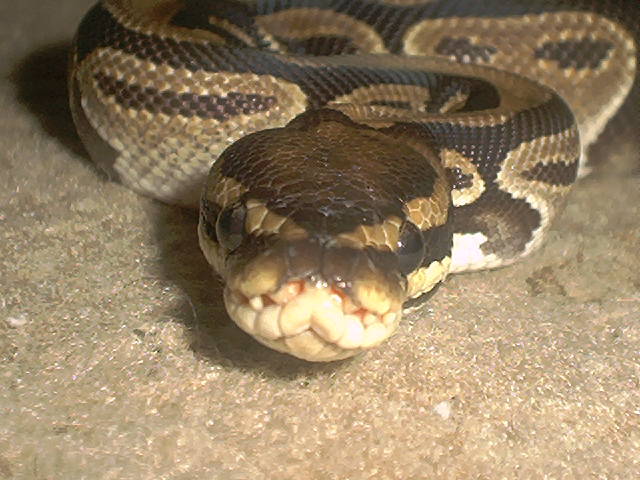
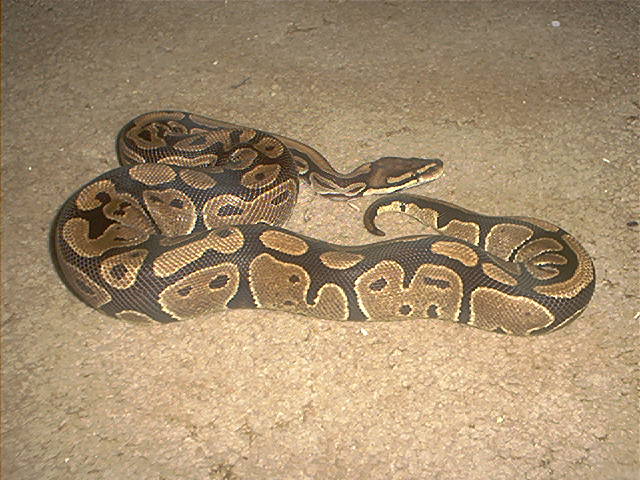
| Basic Facts: Ball pythons are an excellent animal for a novice to keep provided it is captive born(CB). They are very gentle, good tempered pythons. The normal coloration of ball pythons is a golden to brown pattern with a even darker brown or black. There are many beautiful morphs such as albino(there are several forms of albinism), striped(Buyer beware: some striped specimens may be striped because of incubation temperatures and not genetics),labyrinth and jungle(they look essentially the same though there might be some differences), piebald(which is my absolute favorite morph), axanthic, xanthic, melanistic, shatter pattern(sadly the only individual that has been found exhibiting this unusual color has died), ghost, clown, leucistic(which is completely white with blue to black eyes), banded, tiger, spider, and platinum(every year, there is usually one new morph). There are also particularly nice specimens of normal balls. Ball pythons are fairly small pythons yet just big enough to be an handful. The biggest specimens are about 6 feet long, other balls rarely ever exceed 5 feet. The smallest size is about 3 feet with perhaps a few individuals a little shorter than 3 feet. Hatchlings average about 9-11 inches in length. Also, novices should know that balls are very secretive and sedentary. They might not be the most exciting snakes in the world to watch, so don�t just buy one hoping you�ll see interesting behavior from it all the time. Balls will hide in their hide boxes for most of the time, except when they�re hungry or feeling active(which is not often) so expect to not see your pet out in the open and moving around often. |
 |
| Availability: You can get a captive born ball fairly easily any time of year. I would not recommend acquiring a wild caught(WC) ball. They have parasites, diseases, and are shipped in horrid conditions. Also, WC specimens will not acclimate as well to captivity as CB balls while captive borns adapt well to captivity,eat readily,and are usually well cared for. And wild caught balls are next to impossible to breed, because their natural habitats and seasonal changes need to replicated to near perfection while CB balls don�t really need all that because they�ve never experienced it. So, basically the breeding conditions are up to you except for the very basics. |
 |
| Cages: Ball pythons need a secure, well ventilated cage. A glass aquarium(not the kind for fish)with a locking lid(I use padlocks as well because balls are very good escape artists and besides you don�t want somebody else opening the cage and taking out the animal without your permission) will be suitable. Balls can be kept in 20-30 gallon aquariums comfortably their whole lives though you should get as big a tank as you can afford(but don�t be extravagant because ball pythons can get stressed in too big cages). |
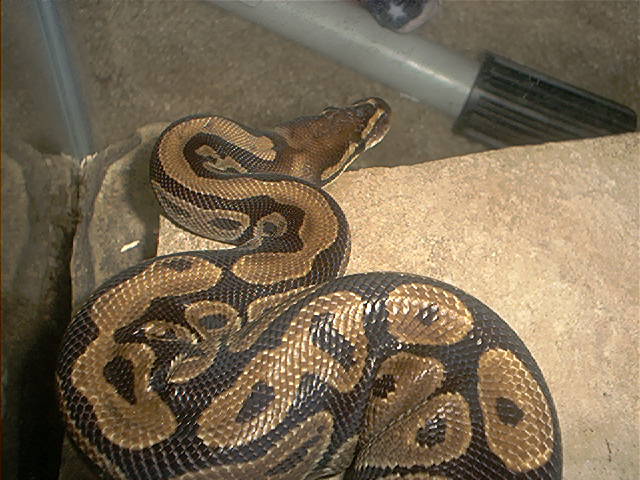 |
| Cage Decorations and Substrate: Ball pythons need a branch even though they may rarely use it. It also adds to the aesthetic appeal to a terrarium. They also need a hiding area. I used to have a cardboard box for a hiding area but now I�ve made a naturalistic hiding area by making an cave out of rocks that I collected. Another approach to making a naturalistic hide area is to hollow out a large branch. You can also plant some plants in the snake�s cage. It can greatly add to the appeal of the cage and also makes the snake feel more secure. Just make sure that you can care for both animal and plant. I would recommend looking for magazine articles in Reptiles magazine for information on this. And of course, balls need fresh water like any other animal. Clean it about two times per week. If the animal defecates in the bowl, wash the bowl well, then refill(sometimes snakes find it easier to defecate in water so don�t blame the little guy). You can use a variety of substrates. Newspaper and paper towels being the most unnatural looking, however easier to clean. Aspen is another good choice. I personally use ESU Lizard Litter. It�s sanitary, easy to clean up, very absorbent, and is digestible. Also, its reasonably attractive. |
 |
| Temperatures: Ball pythons like temperatures of between 85 to 90 degrees Fahrenheit during the day. The temperatures can safely drop to the lower eighties Fahrenheit without harm to the snake at night. Ball pythons need these temperatures to thrive and digest their prey properly. Also, I recommend having a temperature gradient(a temperature gradient is where one end of the cage is warmer than the other end of the cage) in your ball�s cage because snakes like to choose their own body temperature...after all, who can best decide what�s best for the snake? The snake him/herself! I recommend a temperature gradient of about 88-90 degrees at one end and about 85-86 degrees at the other end(another reason to have a fairly large cage because there will be a better opportunity for a good temperature gradient). |
 |
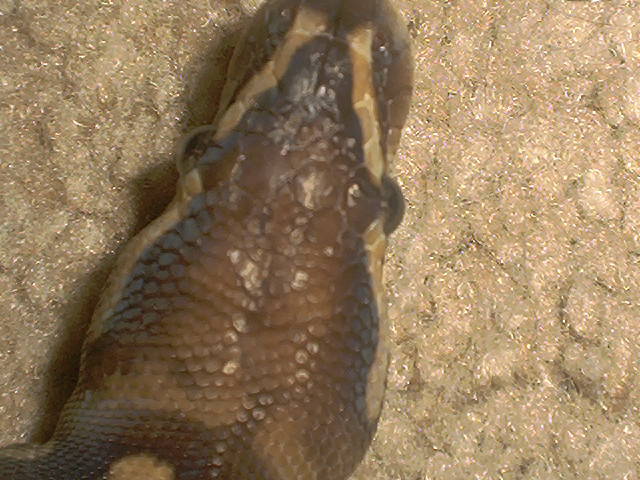
| Shedding and Humidity: Balls don�t need high humidity though I mist the snakes when they�re shedding because slightly higher humidity assists in shedding. Don�t overdo it when misting. The cage shouldn�t be dripping wet. It should dry within at least a hour or two. If there is stuck shed skin on a snake, soak it in shallow, fairly warm water(for a couple hours), though don�t make it too warm but not too cold. After soaking, pull the stuck shed skin gently off. It should come off easily after soaking. Also, a ball might benefit from a water bowl large enough to soak in so that if it wants higher humidity at a given time, it�ll have it. Balls are known to have shedding problems, the most common being retained eye caps, so a shed should be checked for the eye caps. To correct it, soak the ball in water(if you want to try, you could make the water slightly soapy), and then gently grab a corner of a eye cap with tweezers(again I emphasize gently) and pull very slowly. If the eye cap doesn�t come off easily, you could always try soaking again and don�t be over-zealous in getting it off. |
 |
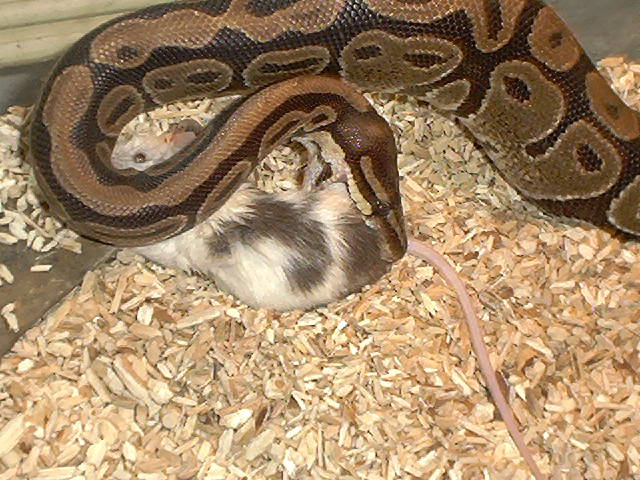
| Feeding: Ball pythons should not be exposed to temperature extremes if they have food in their digestive systems. They can tolerate temperature extremes better if their digestive systems are empty. I do not normally handle my snakes for 2 days after they have fed because regurgitation can occur because of stress. They do this because it is a safety measure against becoming another animal�s dinner. Large meals can slow down a snake that needs critical speed to escape. But, in captivity, this can have adverse effects on a snake because snakes are not built for regurgitating. Sometimes when they regurgitate, some of the half digested food can get into their lungs causing a respiratory infection. Now that I have cautioned you against the dangers of handling to soon after feeding, I will discuss the actual process of choosing what to feed, how to feed, and when to feed. The food of choice for Ball pythons is mice and rats. Rats and mice make better meals for captive snakes because they are easy to obtain and do not carry the parasites that lizards and other animals carry(chicks are a good alternative to rodents though snakes usually have more pungent and runny stools, also chicks could possibly transmit Salmonella to your pets, chicks are also only for large full grown specimens for reasons of size). Sometimes, there will be an occasional hatchling that insists upon eating lizards, so before purchasing a Ball python, question the seller on its feeding preferences and make sure it is feeding on mice. Hatchlings should be fed young mice or rats(choose a size that seems right to you). Large adult specimens typically feed on adult rats. Medium sized specimens can feed on mice or small rats. One appropriately sized rodent per week makes a good feeding schedule. I prefer to feed young Balls fuzzies because I tend to get better results . The four sizes for rodents are pinkie, fuzzy, hopper, and adult. If one rodent doesn�t quite make a full square meal, you can feed two. They seem to prefer large fuzzies or just weaned mice over pinkies. They quickly grow big enough to accept small adult mice. Rodents are typically sold as alive or frozen(you have to thaw them out). I prefer frozen because theycan easily be stored in your freezer, they can be ordered in bulk which makes them cheaper, the dead rodents can�t hurt your snake,and frozen rodents don�t carry parasites because the freezing process kills them. I don�t order more than my snakes can eat in 6 months at a time because they sort of �expire� and they�re not really good for the snake. And don�t freak out when I say they can be put in your freezer because it really isn�t different from storing meat that you eat in the freezer. Follow the same procedures for storing frozen rodents as you would with any other meat. Don�t microwave them to thaw them out because they�ll explode(which makes for a really nasty mess to clean up). I thaw them out slowly by putting them under my snakes heat lamp on top of the recipient�s cage. The scent also lures my snake out of his hide area ready for feeding. Don�t make the rodent too warm because sometimes it can break open during feeding. The rodent should be at about room temperature. Also make sure that there�s no frozen core within the rodent because that can be detrimental to the snake as it is digesting the rodent. Please try not to feed live to your snake because a rat or mouse can bite and even sometimes kill the snake. A rodent�s mouth has all kinds of toxins and bacteria that can harm your snake. A live rodent can also carry parasites that could harm the snake. If you offer a ball food during the day and he/she refuses, try at night because balls are nocturnal(which means that they do their activities at night like hunting,mating,etc) and the little snake may just prefer to do it under the cover of darkness. |
 |
| Suggested Reading: The Ball python Manual by Phillippe de Vosjoli, Dave&Tracy Barker, and Roger Klingenberg |
 |
| Article By: John Veazey |