|
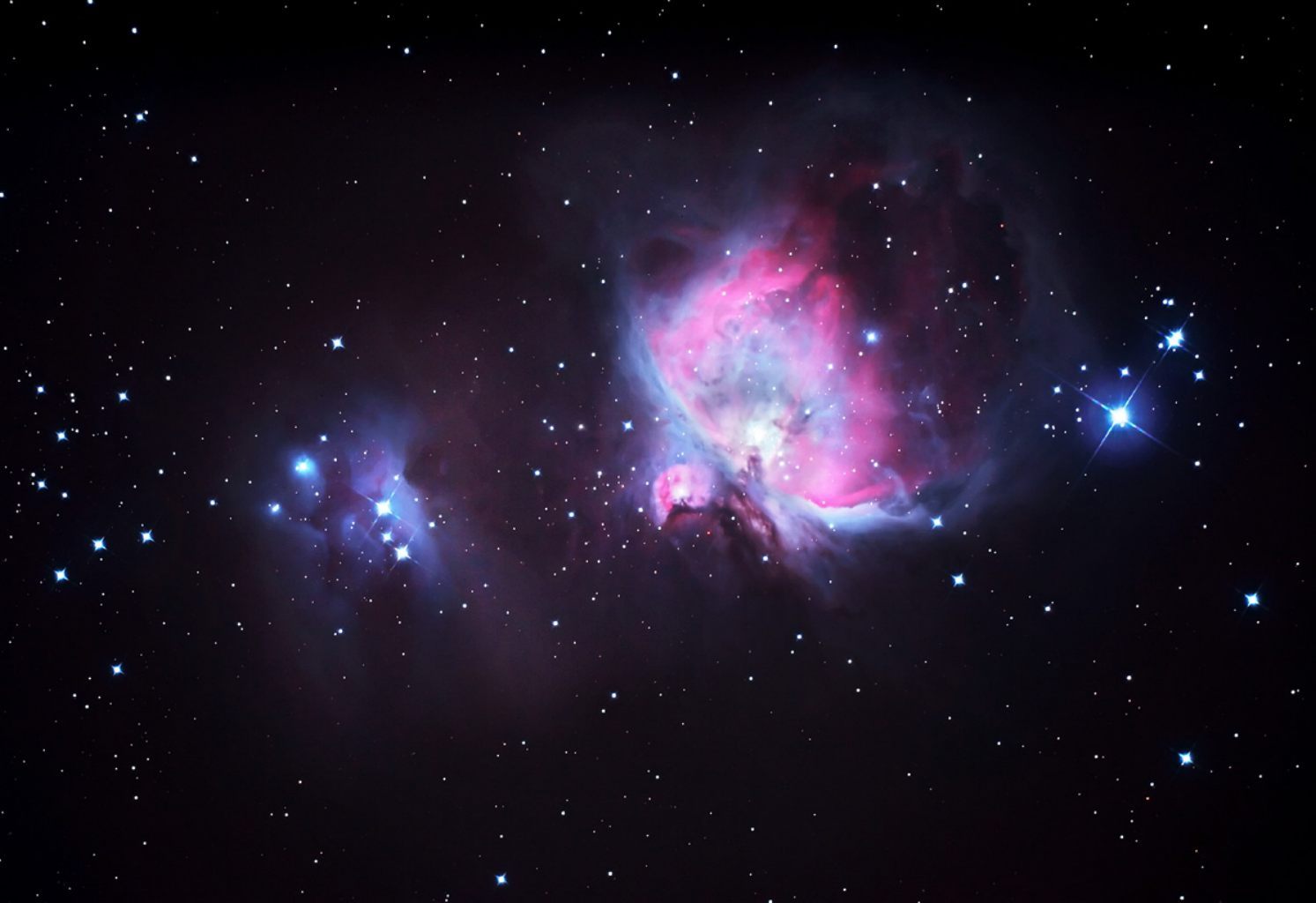
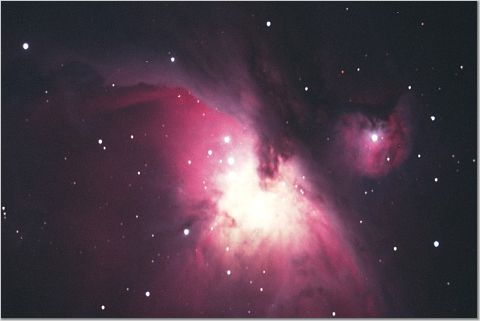
This is every budding astrophotographers first target in the Northern Hemisphere. On winter evenings, when the air is at its driest and clearest, this nebula is naked eye visible as the second "star" in Orion's sword. Very easy to spot, and for those who have looked at this and thought their eyes were failing them as they could not make out a single distinct point of light, now you know why, it's not a star, but rather a huge star nursery. This nebula is approximately 1500 lights years away and is one of the most active regions in our galaxy (the milky way) creating stars from intersteller dust. The red nebulosity is what's know as an emission nebula and the blue nebulosity to the left is what's called a reflection nebula, thus named because it is actually intersteller dust reflecting the light of nearby blue stars. For more information on the orion nebula, click here.
Technical Data
Scope: Takahashi E-160
Camera: Canon 20d
Composition: 3 x 7 min + 3 x 2 min + 3 x 30sec, the shorter exposures were feathered into the core of M42 to allow for more detail of the trapezium region. Composition done in Registar and Photoshop, field flattening done with PixInsight and noise reduction with the NoiseNinja plugin.
Mount: Losmandy G11
Filter: Hutech IDAS LPS |
|