The history of European tourism can perhaps be said to originate with the medieval pilgrimage. Although undertaken primarily for religious reasons, the pilgrims in the Canterbury Tales quite clearly saw the experience as a kind of holiday (the term itself being derived from the 'holy day' and its associated leisure activities). Pilgrimages created a variety of tourist aspects that still exist - bringing back souvenirs, obtaining credit with foreign banks (in medieval times utilising international networks established by Jews and Lombards), and making use of space available on existing forms of transport (such as the use of medieval English wine ships bound for Vigo by pilgrims to Santiago De Compostela). Pilgrimages of one sort or another are still important in modern tourism - such as to Lourdes or Knock in Ireland. But there are modern equivalents - Graceland and the grave of Jim Morrison in Pere Lachaise Cemetery.
In the course of the sixteenth century, it became fashionable in England to undertake a Grand Tour. The sons of the nobility and gentry were sent upon an extended tour of Europe as an educational experience. The eighteenth century was the golden age of the Grand Tour, and many of the fashionable visitors were painted at Rome by Pompeo Batoni. The modern equivalent of the Grand Tour is the phenomenon of the backpacker, although cultural holidays, such as those offered by Swann-Hellenic, are also important.
Health tourism has always existed, but it was not until the eighteenth century that it became important. In England, it was associated with Spas, places with supposedly health-giving mineral waters, treating diseases from gout to liver disorders and bronchitis. Bath was the most fashionable resort, but Buxton, Harrogate, and Tunbridge Wells, amongst others, also flourished. Of course, people visited these places for the balls and other entertainments, just as much as 'the waters'. Continental Spas such as Karlsbad attracted many fashionable travellers by the nineteenth century.
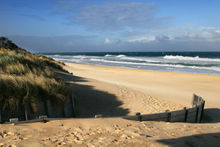
It could be argued that Britain was the home of the seaside holiday. In travelling to the coast, the population was following in the steps of Royalty. King George III made regular visits to Weymouth when in poor health. At the time, a number of doctors argued the benefits of bathing in sea water, and sea bathing as a widespread practice was popularised by the Prince Regent (later George IV), who frequented Brighton for this purpose.